





















































The global education technology (EdTech) landscape has reached a pivotal moment in 2025. After years of experimental expansion, the sector has entered a phase of mature, hyper-specialized integration, driven by generative AI, a widening global skills gap, and the establishment of digital-first educational models. The EdTech and smart classrooms market is projected to grow from $214.73 billion in 2025 to $445.94 billion by 2029, with a compound annual growth rate (CAGR) of 20.0%. Longer-term projections suggest the total market could reach $705.75 billion by 2034, maintaining a steady 15.5% CAGR between 2025 and 2034.
This growth coincides with a shift in startup maturity. Analysis of the 2025 Global EdTech 1000 reveals that only 7% of companies are very early-stage (three years old or younger), down from 14% in 2024. Instead, growth-stage startups—typically four to six years old—now dominate, particularly in Europe, where they make up nearly half of leading companies. These firms are distinguished by proven unit economics and sophisticated technology integration, including extended reality (XR) and proprietary AI systems.
Technology pillars driving EdTech in 2026
- Generative AI: Personalized content creation, real-time feedback, and AI-driven lesson planning.
- Immersive Reality: VR and XR for vocational, soft skills, and STEM education. Notable companies: Loft Dynamics, Labster, TransfrVR, VRAI, Uptale.
- Learning Analytics: Predictive intervention through integrated student performance data, enabling proactive support. Tools include Otus, ParentPulse, and SchoolStatus.
Top global education startups of 2026 – curated List
1. Codemao (China)
A leading STEAM and coding education platform for children, Codemao combines visual programming with AI personalization. Its curriculum prepares learners for future coding careers while keeping engagement high through project-based learning and adaptive challenges.
2. Youdao (China)
Originally known for dictionary and language tools, Youdao has evolved into a broad AI-driven learning ecosystem. It offers personalized study tools, language learning, and test prep that adapt in real time to student needs using data analytics.
3. TAL Education (China)
A major educational group specializing in STEAM, language learning, and supplementary K–12 tutoring. TAL has shifted toward AI-powered content and personalized learning pathways to support students across China and internationally.
4. Headway Inc (Cyprus)
Micro‑learning reimagined. Headway transforms screen time into meaningful knowledge with bite‑sized learning apps that span book summaries, brain training, social skills coaching, and AI‑powered conversational modules for general knowledge.
5. Xiaohe (China)
An adaptive learning platform focused on personalized lesson planning and student assessment. Xiaohe uses machine learning to tailor entire curricula to individual strengths and weaknesses, increasing retention and learning speed.
6. Meishubao (China)
Blending traditional education with AI support, Meishubao offers digitized classroom tools, assessment engines, and personalized tutoring. Its suite helps teachers manage large classrooms while students receive tailored guidance.
7. Aixuexi (China)
AI‑driven supplemental education platform with strong traction in both live and self‑paced online learning. Aixuexi’s strength lies in its use of learning analytics to track progress and optimize lesson delivery.
8. Ten Thousand Coffees (Canada)
Not a traditional classroom tool but a career network powered by AI, pairing learners with industry mentors and organizers to cultivate professional development. It bridges the gap between education and employment.
9. Arduino (Italy)
World‑famous maker platform redefines hands‑on STEM learning with open‑source hardware and curriculum support. Arduino continues to enable learners and educators to build real projects, fostering creativity and engineering confidence.
10. Stepful (USA)
An AI‑powered provider of fast‑track vocational training in healthcare. Stepful’s programs focus on certifications for high‑demand roles (e.g., medical assistant, phlebotomy technician) with strong job placement outcomes and employer partnerships.
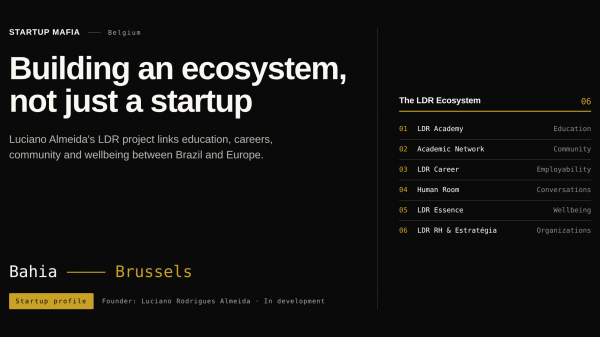
11. Cogna (Brazil)
One of Latin America’s largest educational ecosystems, Cogna blends in‑class and digital learning across multiple education levels with analytics and adaptive tools to improve student outcomes.
12. Wiley (USA)
A legacy educational publisher transformed into a digital learning powerhouse with interactive content, adaptive learning platforms, and professional certification programs that help learners from K–12 through workforce development.
13. Passage (Canada)
A platform focused on skills‑based learning and credentialing, enabling learners to build portfolios of verified skills through project‑based assessment and integration with employers.
14. Ellucian (USA)
Provides enterprise software solutions for colleges and universities, focusing on student information systems, analytics, and institutional efficiency at scale.
15. Vitru (Brazil)
Specializes in supplemental curriculum tools with a focus on blended learning, incorporating personalized content, assessments, and data dashboards for educators.
16. Elice (South Korea)
Tech‑focused learning hub with immersive coding bootcamps and project‑oriented instruction. Elice bridges conventional education gaps with real‑world software development experiences.
17. Yellowbrick (USA)
A next‑generation corporate training and skills development platform that emphasizes data‑driven learning paths and measurable outcomes tied to employee performance.
18. Mathflat (South Korea)
AI‑powered K–12 math tutoring platform that personalizes content to each learner’s pace and learning style, giving detailed insights into strengths and areas needing improvement.
19. Udacity (USA)
Renowned for its “Nanodegree” programs, Udacity partners with leading tech companies to deliver practical, job‑focused learning in AI, data science, cloud, and autonomous systems.
20. Thinkific (Canada)
Course creation and monetization platform that helps educators and entrepreneurs launch online courses with built‑in analytics and community engagement tools.
21. Goodwall (Switzerland)
A social learning network targeting Gen Z, enabling young learners to showcase achievements, join peer communities, and connect with opportunities in education and employment.
22. Classover (USA)
AI‑assisted platform for student success that tailors learning plans to individuals and supports teachers with automated content creation and predictive learning insights.
23. Lecturio (Germany)
Medical and professional education platform with video lectures, question banks, and clinical case simulations for students and professionals preparing for licensing exams.
24. Emeritus (Singapore)
Partners with top universities to deliver executive education and professional certificates online, combining academic rigor with flexible digital delivery.
25. Spark Education (China)
Localized adaptive learning platform using AI to support student progress, particularly in high‑stakes testing environments.
Global leadership and competitive rankings
In 2025, East Asian firms, particularly Chinese and South Korean companies, continue to dominate the EdTech landscape. Their focus on personalized and supplementary learning platforms has attracted millions of users. North America remains a hub for workforce readiness, while Europe excels in immersive training and AI-powered content creation.
Top 10 global EdTech startups (2026)
| Rank | Company | Headquarters | Score |
| 1 | Codemao | China | 99.8 |
| 2 | Youdao | China | 98.7 |
| 3 | TAL Education | China | 95.7 |
| 4 | Headway Inc | Cyprus | 95.7 |
| 5 | Xiaohe | China | 95.6 |
| 6 | Meishubao | China | 95.5 |
| 7 | Aixuexi | China | 95.2 |
| 8 | Ten Thousand Coffees | Canada | 94.4 |
| 9 | Arduino | Italy | 93.9 |
| 10 | Stepful | United States | 93.8 |
Chinese firms like Codemao, Youdao, and TAL Education continue to lead in STEAM and vocational education. Meanwhile, Headway Inc and Stepful illustrate global demand for micro-learning and accelerated healthcare vocational training.
Rising stars: rapidly growing innovators of 2026
These startups are smaller but gaining significant traction:
AASOKA (India)
A full K‑12 blended learning ecosystem that integrates curriculum‑aligned lessons with AI assessment and analytics, particularly influential in India’s school system.
Copyleaks (USA)
AI‑based academic integrity platform that detects content reuse or plagiarism at scale, supporting educators and institutions with real‑time authenticity checks.
uLesson (Nigeria)
Mobile‑first curriculum support tailored to African markets, with localized video lessons and assessment modules aligned to regional educational standards.
UNIVO (India)
Online higher education provider offering degree programs and professional certificates in partnership with recognized institutions.
Scaler (India)
Upskilling platform targeting tech professionals, with mentor‑led cohorts focused on software engineering and advanced tech competencies.
Workera (USA)
Skill intelligence engine that assesses learner competencies and maps personalized pathways toward real‑world industry roles.
Quizizz (USA)
Gamified assessment platform widely used in classrooms to boost engagement through quizzes, live challenges, and adaptive learning insights.
Promova (Ukraine)
Personalized language learning using adaptive AI pathways, tailored to the learner’s goals and proficiency.
SATs Companion (UK)
Exam prep platform using adaptive learning to help students prepare for standardized exams with dynamic practice content.
GoMyCode (Tunisia)
Bootcamp‑style skills training focusing on tech bootcamps and real‑world projects that help learners transition directly into careers.
Emerging rising stars and regional disruptors
The 2026 cohort of “Rising Stars” includes mobile-first, localized solutions in South Asia, Africa, and the Middle East, often targeting high-growth K-12 and tech skills markets.
| Rank | Rising Star Company | Headquarters | Focus |
| 1 | AASOKA | India | K-12 Smart Ecosystem |
| 2 | Copyleaks | USA | AI Detection & Integrity |
| 3 | uLesson | Nigeria | K-12 Curriculum Support |
| 4 | UNIVO | India | Online Higher Education |
| 5 | Scaler | India | Tech Skills & Upskilling |
| 6 | Workera | USA | Skill Intelligence |
| 7 | Quizizz | USA | Gamified Assessment |
| 8 | Promova | Cyprus | Personalized Language Learning |
| 9 | SATs Companion | UK | Primary Exam Prep |
| 10 | GoMyCode | Tunisia | Tech Bootcamps & Skills |
AASOKA’s success highlights India’s digital transformation in K-12 education, while uLesson and GoMyCode emphasize Africa’s investment in mobile-friendly learning solutions.
Unicorns and valuation trends
EdTech unicorns demonstrate the sector’s return to fundamentals, with high revenue predictability and sustainable business models. Notable 2025 unicorns include:
| Company | Region | Focus Area | Valuation |
| Grammarly | Ukraine/USA | AI Writing Assistant | $13.0B |
| BetterUp | USA | Corporate Coaching | $4.7B |
| Guild Ed | USA | Workforce Education | $4.4B |
| Synthesia | UK | AI Video Generation | $4.0B |
| Handshake | USA | Career Placement | $3.5B |
| Go1 | Australia | Corporate Upskilling | $3.5B |
| ApplyBoard | Canada | International Recruitment | $3.2B |
| Physics Wallah | India | Tutoring & Prep | $2.8B |
| upGrad | India | Higher Ed Partners | $2.3B |
| Kajabi | USA | Training Platforms | $2.0B |
Valuation multiples grow sharply once a startup demonstrates repeatable scalability, reflecting investor preference for revenue efficiency over sheer capital deployment.
Conclusion: Blueprint for 2026 and Beyond
The best EdTech startups of 2025 are transitioning from disruption to indispensability, emphasizing:
- Specialized AI: Proprietary, research-backed solutions.
- Institutional Partnerships: Deep B2B engagements ensuring recurring revenue.
- Outcome-Focused Learning: Prioritizing job placement, skill mastery, and measurable results.
The next decade will see a focus on Agentic Learning, where AI tutors, assistants, and career coaches create a continuous, personalized education journey, bridging the digital divide while maintaining rigorous academic integrity.