






























































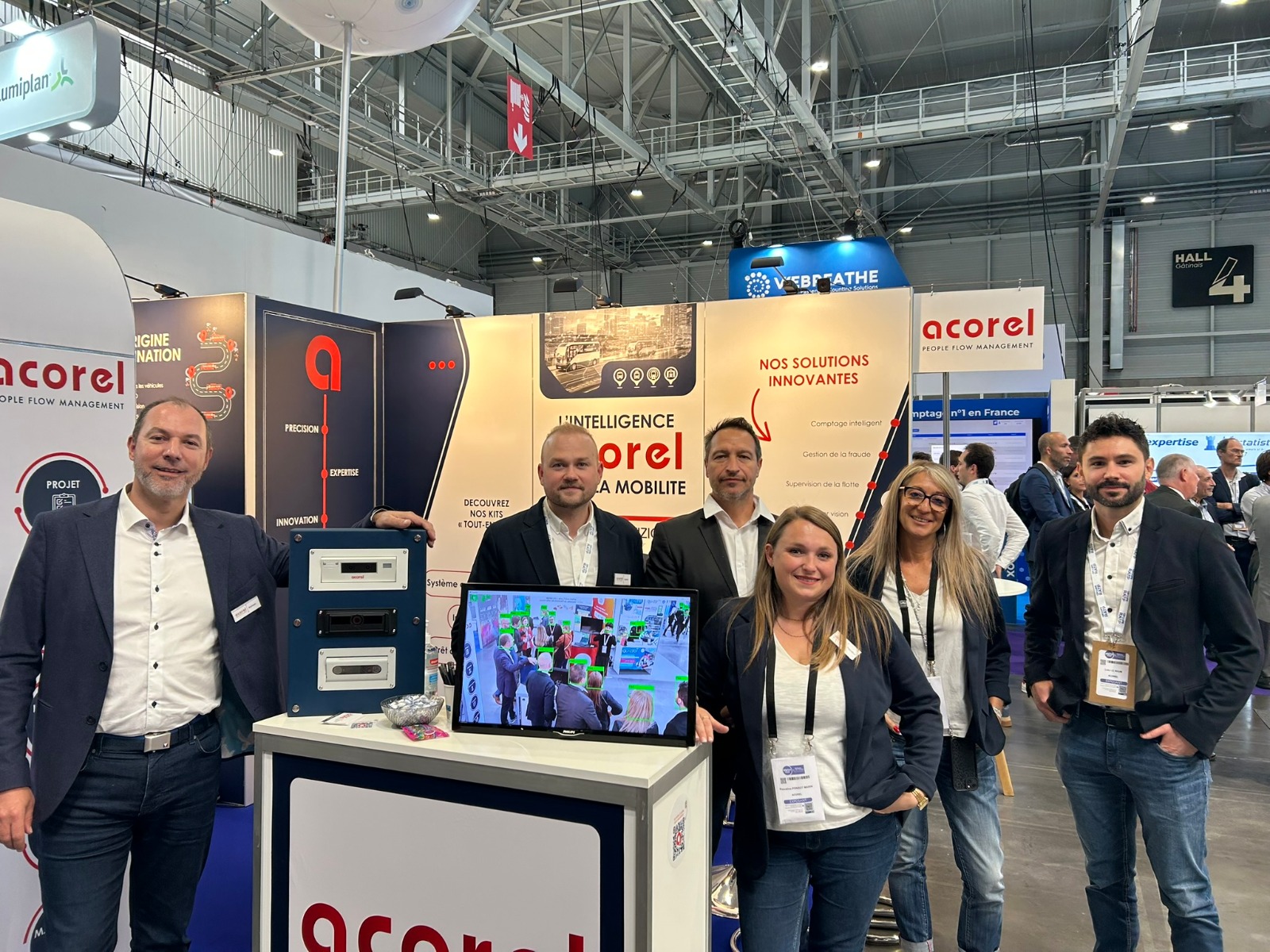
Acorel, a French specialist in passenger flow management, has unveiled a new Origin-Destination solution that combines AI-driven journey reconstruction with real-time counting data — giving transport authorities a clearer picture of how passengers actually move across their networks.
Saint-Péray-based Acorel, founded in 1989, is making a significant step beyond traditional passenger counting with its latest product. Where legacy systems can tell operators how many passengers board a vehicle, the new Origin-Destination solution answers the harder question: how do people travel — where they start, where they end up, and which connections slow them down along the way.
From Raw Counts to Strategic Intelligence
At the heart of the solution is a combination of AI-powered counting cameras, an onboard Counting and Concentration Unit (CCU), and a dedicated reporting platform. The system logs boarding and alighting at every stop, tracks real-time vehicle occupancy, and reconstructs individual journeys using fully anonymized identifiers — no personal data, no video storage, full GDPR compliance.
The resulting data allows transport operators and authorities to optimize route planning based on real usage patterns, identify inefficient transfers, analyze passenger travel distances and times, and even measure the environmental footprint of their mobility policies. For a sector under growing pressure to justify every euro of operational and capital spending, that kind of granular evidence is a meaningful upgrade.
A Governance Tool, Not Just an Operational One
Dimitri Rudenko, Business Development & Project Director at Acorel, frames the product explicitly as a strategic asset: “Origin-Destination data provides objective insight into how a network is used. It allows decision-makers to prioritize actions based on evidence rather than assumptions.”
That positioning — moving passenger data from back-office reporting into boardroom KPIs — signals where Acorel sees the market heading. Transport authorities across Europe are increasingly being asked to demonstrate return on investment, reduce emissions, and improve service quality simultaneously. Having reliable, network-wide journey data makes all three easier to defend.
Built for Real-World Transit Conditions
The solution is designed to work across buses, trams, and trains, and is built to handle the variable environments that public transport inevitably involves. Its architecture is modular enough to be integrated into existing operational frameworks without requiring a full infrastructure overhaul.
For startups and scaleups working in mobility, smart cities, or urban infrastructure, Acorel’s move is a good indicator of where B2G transport tech is heading — away from simple telemetry and toward decision-support systems that speak the language of planners, investors, and policymakers.
Acorel is headquartered in Saint-Péray, France, and has been active in intelligent mobility systems since 1989. More information is available at acorel.com.