
























































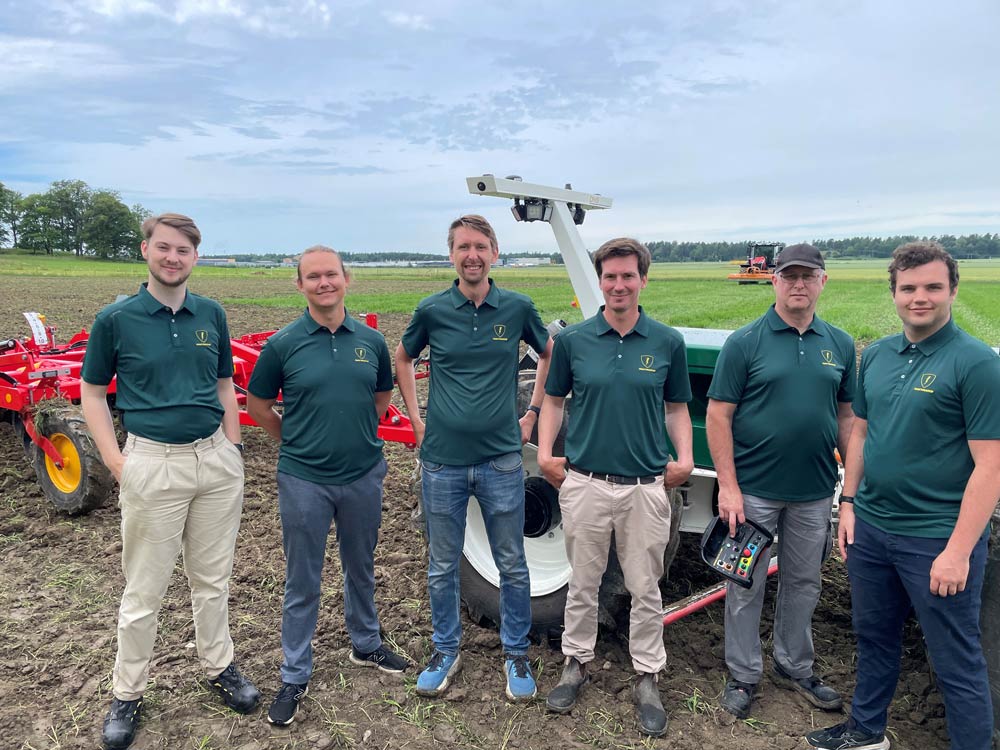
Swedish agritech innovator Traktorarvid has secured SEK 7 million in fresh funding, primarily from existing investors, to continue developing its electric autonomous vehicle designed for heavy agricultural workloads.
Reinventing Heavy Work on the Farm
Based in Uppsala, Traktorarvid is building an autonomous electric machine capable of handling demanding hauling tasks in agriculture—an area traditionally dominated by diesel-powered equipment and manual operation.
The company’s solution aims to combine automation and electrification to reduce emissions, lower operating costs, and address labor shortages in farming.
A New Generation of Agricultural Machinery
Heavy-duty transport and hauling remain some of the most resource-intensive operations in agriculture. Traktorarvid is targeting this challenge with a machine designed to:
- Operate autonomously in farm environments
- Replace fossil fuel–based machinery with electric alternatives
- Increase efficiency in repetitive, labor-intensive tasks
By focusing on real-world use cases rather than experimental prototypes, the company is positioning itself within the next wave of practical agri-automation.
Continued Support from Existing Investors
The SEK 7 million round comes largely from existing investors, signaling sustained confidence in Traktorarvid’s long-term vision and technical progress.
Follow-on funding at this stage often reflects validation of both the team and the underlying technology—especially in capital-intensive sectors like AgriTech and hardware.
Why This Matters
Agriculture is undergoing a dual transformation: decarbonization and automation. Farmers are under increasing pressure to reduce emissions while maintaining productivity—and often with fewer available workers.
Solutions like Traktorarvid’s autonomous electric machines sit at the intersection of these trends, offering a path toward more sustainable and efficient operations.
What’s Next
With new funding secured, Traktorarvid will continue refining its technology and moving closer to real-world deployment.
As the demand for smarter, cleaner agricultural machinery grows, the company is positioning itself to become part of the next generation of farming infrastructure.