














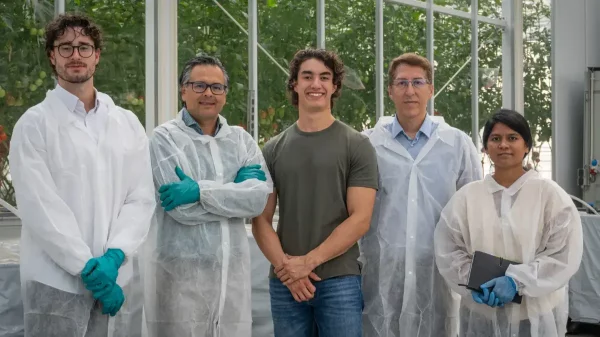





















































Tozaro, a Bedford-based biotech company developing polymer-based solutions to dramatically cut the cost of cell and gene therapy production, has closed a €6.9 million (£6 million) funding round — bringing its total capital raised to date to €27.2 million (£23.7 million).
The round was led by Mercia Ventures, investing from the Midlands Engine Investment Fund II alongside its own funds, with participation from existing investors. The capital will be used to form new commercial partnerships and advance Tozaro’s mission to make breakthrough gene therapies accessible to far more patients.
The cost problem at the heart of modern medicine
Gene and cell therapies represent some of the most exciting advances in modern medicine — but also some of the most expensive. CAR-T therapies, which have shown remarkable efficacy against leukaemia, lymphoma, and multiple myeloma, can cost over €425,000 per patient. Other gene therapies targeting rare genetic diseases — including some forms of childhood blindness and conditions like Huntington’s disease — can exceed €1.1 million per treatment. For health systems and patients alike, those price tags represent a profound access barrier.
The core issue is not science but manufacturing. Producing gene therapy vectors — the biological delivery mechanisms at the heart of these treatments — is complex, low-yield, and expensive. Tozaro’s bet is that smarter chemistry can change that equation.
Smart Polymers: more chemical space, lower costs
Founded in 2015 as MIP Discovery, Tozaro uses molecular modelling and machine learning to design stable, cost-effective polymers that bind to gene therapy vectors with high specificity and selectivity. The company’s Smart Polymer platform draws on more than 500 chemical groups to develop binding compounds — a vastly larger chemical space than traditional protein and peptide-based technologies, which are typically limited to around 20 amino acids.
The practical result is a purification and manufacturing approach that improves yields and quality while reducing costs, without requiring Tozaro to take on the clinical development risk of the therapies themselves. That positioning — as an enabling platform supplier to manufacturers rather than a therapy developer — is a key part of what attracted investor interest.
The technology is already being tested by a number of manufacturing companies and is currently in development for use in the production of lentiviral vectors for CAR-T treatments and AAV (adeno-associated virus) vectors used across a range of other gene therapies.
Jason Slingsby, CEO of Tozaro, described the commercial momentum clearly: “Our technology is attracting global interest. By improving manufacturing yields and quality while reducing costs, we can remove the barriers and enable more patients to access these life-changing cell therapies.”
Investor perspective: platform risk over clinical risk
For Mercia Ventures, the appeal of Tozaro’s model is its risk profile as much as its potential upside. Mark Payton, CEO of Mercia Asset Management, noted that the growth of this new generation of biological therapeutics is being constrained by extreme production costs — and that Tozaro offers a way to address that constraint without shouldering the uncertainty of clinical development itself. He pointed to significant commercial progress over the past year, as the company moves from platform development into active engagement with downstream processing partners and potential customers.
A growing European manufacturing innovation ecosystem
Tozaro’s raise arrives amid a broader wave of European investment in gene therapy manufacturing infrastructure. Denmark’s Fuse Vectors raised €4.9 million in pre-seed funding in 2025 to develop a cell-free viral vector production platform aimed at improving scalability. Sweden’s BOOST Pharma secured an additional €3.1 million to progress its stem cell therapy candidate toward the clinic. And UK-based EpilepsyGTx closed a €28 million Series A to advance its gene therapy for refractory epilepsy into Phase 1/2a trials.
Together, these investments reflect growing recognition that manufacturing innovation — not just clinical science — is a critical bottleneck in unlocking the full potential of the gene therapy revolution.
Fast facts:
- Amount raised: €6.9M (£6M)
- Total raised to date: €27.2M (£23.7M)
- Lead investor: Mercia Ventures (via Midlands Engine Investment Fund II)
- HQ: Bedford, United Kingdom
- Previously known as: MIP Discovery
- Focus: Smart Polymer platform for gene therapy vector manufacturing