












































Europe’s power grid is entering a structural transition. As renewable generation accelerates and electrification expands across industries, the stability of the grid increasingly depends not just on generation capacity — but on software-driven flexibility infrastructure.
A new €15 million investment into Copenhagen-based energy tech company Hybrid Greentech signals that investors see virtual power plant platforms and grid orchestration software as a critical layer of Europe’s future energy system.
The funding round was led by growth fund Nordic Alpha Partners, which becomes a significant minority shareholder.
The capital will be used to accelerate Hybrid Greentech’s expansion across European energy markets, deepen integrations with power exchanges, and scale customer acquisition among renewable asset owners and utilities.
The Software Layer Behind Europe’s Electrification
Founded in 2018, Hybrid Greentech builds cloud-based virtual power plant (VPP) infrastructure that connects renewable assets, battery storage, and distributed energy resources into a coordinated trading and optimisation platform.
The company operates a vertically integrated stack that includes:
- energy trading infrastructure
- multi-market optimisation
- asset connectivity interfaces
- analytics and forecasting
- settlement systems
This architecture allows energy storage operators, renewable developers, and utilities to interact with energy markets through a unified orchestration layer.
CEO Rasmus Rode Mosbæk says grid flexibility is rapidly becoming the missing piece in Europe’s energy transition.
“Storage and flexibility are essential to a renewables-heavy grid. This investment supports our expansion into additional European markets while helping asset owners unlock more value from their energy infrastructure,” he said.
A Fast-Growing Segment of European Climate Tech
Hybrid Greentech’s funding is part of a broader wave of investment into digital infrastructure for energy systems.
Across Europe, venture and growth investors are increasingly backing startups that focus on grid flexibility, battery optimisation, and distributed energy aggregation.
Recent rounds in the same segment include:
- Capalo AI — €11M Series A for AI-driven battery VPP platforms
- LIFEPOWR — €5.65M to scale FlexiO VPP technology
- Ostrom — €20M Series B for its NeoGrid platform
- Einklang — €2.2M seed round
- Dexter Energy — €23M Series C
Together, these deals represent more than €77 million in capital flowing into Europe’s grid flexibility stack over the past year.
The pattern reflects a shift in investor attention: while early climate tech funding focused heavily on generation technologies, the current wave is increasingly targeting energy system orchestration.
The Grid Is Becoming Europe’s Next Infrastructure Bottleneck
The urgency is structural.
According to EU projections, energy consumption could increase by 60% by 2030, driven by electrification of transport, industry, and heating.
At the same time:
- 40% of Europe’s electricity grid infrastructure is already over 40 years old
- the EU estimates €600 billion in grid investment will be required within four years to support the transition
Software platforms that can optimise energy flows, aggregate distributed resources, and enable storage participation in markets are becoming a critical tool for avoiding costly physical upgrades.
Hybrid Greentech’s model focuses precisely on this orchestration layer.
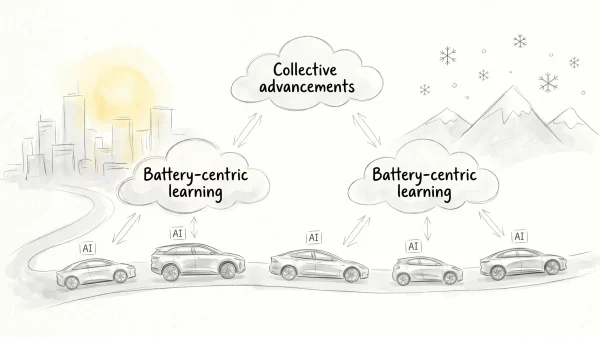
By aggregating distributed resources such as:
- EV batteries
- home energy storage systems
- commercial battery installations
- renewable generation assets
the company aims to help utilities stabilise local grids while reducing peak demand and improving overall system efficiency.
Investors See a Strategic Infrastructure Layer
For Nordic Alpha Partners, the investment aligns with a long-term thesis around electrification infrastructure.
“Hybrid Greentech is already a local leader working with some of the largest renewable companies in Denmark,” said Marius Ipsen.
“Their technology will play a central role in the transition toward a fully electrified economy.”
The fund has previously invested in companies across e-mobility platforms, battery technology, and energy systems, making the Hybrid Greentech investment a natural extension of its portfolio.
Investment director Shari Rana highlighted the scalability potential of the platform.
“With additional commercial capacity, the team will be able to scale at an impressive rate,” she said.
The Regulatory Complexity Opportunity
Beyond technology, one of the biggest barriers to deploying energy storage in Europe remains regulatory.
Grid connections, certification, market participation rules, and permitting processes can delay projects by months or even years.
Hybrid Greentech positions itself as a vertically integrated intermediary capable of navigating these regulatory layers while providing asset owners with direct market access.
The company’s platform connects energy assets to multiple power markets while automatically optimising trading strategies and battery usage.
That capability becomes increasingly valuable as distributed energy resources grow across Europe.
Europe’s Next Energy Platform Race
The emergence of companies like Hybrid Greentech reflects a broader shift in the energy transition.
As renewable generation scales rapidly, the real competitive battleground may move away from generation itself — and toward software platforms that coordinate and optimise the grid.
If that thesis holds, the next generation of European climate tech winners may look less like traditional energy companies and more like energy operating systems.
And investors appear to be positioning accordingly.