
















































High-protein nutrition is no longer a niche category for athletes and bodybuilders. It has become a mainstream expectation across food, beverage, and health products — from yogurts and ready-to-drink shakes to clinical nutrition and functional snacks.
As demand for high-quality protein accelerates globally, a new generation of European food-tech startups is trying to rethink how those ingredients are produced.
One of them just secured a major funding round.
Verley, a Lyon-based ingredient startup developing high-performance whey proteins using precision fermentation, has raised €32 million in Series A funding to expand production capacity and accelerate international growth.
The round was led by Alven, with participation from Blast and the French Tech Seed Fund, managed by Bpifrance as part of the France 2030 initiative.
Existing investors including Sofinnova Partners, Sparkfood, Captech, and Founders Future also joined the round.
The financing comes just four years after the company’s founding and represents one of the largest Series A rounds in Europe’s precision fermentation ingredient sector.
The Protein Supply Problem
Global demand for protein ingredients is rising rapidly as consumer diets shift toward high-protein and functional nutrition.
The global protein ingredients market reached approximately €26.9 billion in 2025, according to company data, with continued growth driven by:
- rising consumer focus on health and fitness
- ageing populations requiring clinical nutrition
- the expansion of functional foods
- the rapid adoption of GLP-1 weight-loss medications, which are changing dietary patterns
In 2025, roughly one in eight adults in the United States were taking GLP-1 medications — a trend that has increased demand for high-quality, digestible protein products designed to preserve muscle mass during weight loss.
Traditional dairy supply chains, however, face increasing pressure from both resource constraints and sustainability concerns.
That gap is where precision fermentation companies are positioning themselves.
Rebuilding Whey Protein With Fermentation
Founded in 2022, Verley focuses on producing high-purity whey proteins without relying on traditional dairy production.
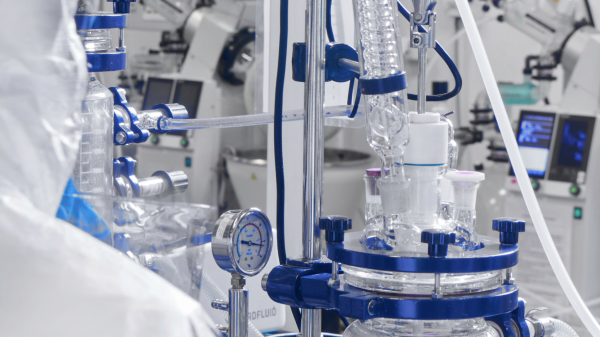
Instead of extracting proteins from milk, the company uses precision fermentation to produce beta-lactoglobulin (BLG)— the primary functional protein in whey.
The approach allows Verley to engineer ingredients designed specifically for industrial food applications, including:
- high-protein yogurts
- protein beverages
- functional dairy alternatives
- performance nutrition products
According to Stéphane Mac Millan, the company’s long-term goal is to relieve pressure on existing dairy supply chains while meeting growing global demand for protein.
“Verley’s mission is to address the growing demand for high-quality nutrition while preserving the planet’s natural resources,” he said.
“We are building a European champion leveraging decades of dairy industry expertise.”
The company’s protein portfolio is marketed under the FermWhey brand and focuses on functional properties that matter to manufacturers, including:
- high purity
- strong solubility
- emulsification performance
- gelling capability
- improved nutritional profiles
These characteristics are critical for food producers that need ingredients to behave reliably in large-scale manufacturing environments.
A Large Series A in a Still-Early Sector
Despite growing interest in fermentation-based food technologies, large Series-level financings remain relatively uncommon in Europe.
Most startups in the sector are still raising early-stage capital to prove technical feasibility and scale production.
Recent European funding rounds include:
- SUMM Ingredients — roughly €1.7M seed round
- PFx Biotech — about €2.5M to develop human milk proteins
- EvodiaBio — around €6M to scale fermentation-derived flavour compounds
Combined, these rounds total roughly €10 million in disclosed funding, highlighting how Verley’s €32 million Series A significantly exceeds the typical capital levels seen in the sector.
This reflects growing investor confidence that fermentation-derived proteins could become a core ingredient layer in future food supply chains.
From R&D to Industrial Scale
The new funding will primarily support production scale-up and international expansion.
A significant portion of the capital will go toward Verley’s entry into the U.S. market, including commercial deployment and early customer partnerships with food manufacturers.
The company also plans to continue investing in R&D to improve the performance, efficiency, and sustainability of its fermentation platform.
According to Hélène Briand, scaling fermentation technology requires solving real industrial constraints.
“This financing allows us to scale not only production but the performance promise behind our ingredients,” she said.
“Our functionalisation technologies are designed to meet real industrial constraints and application needs.”
Europe’s Fermentation Moment
The rise of companies like Verley reflects a broader shift inside Europe’s food innovation ecosystem.
As demand for protein accelerates — and traditional supply chains face environmental and resource limits — fermentation technologies are emerging as one of the most promising alternatives.
For investors, the sector sits at the intersection of several major trends:
- global protein demand growth
- sustainable food production
- biotechnology manufacturing platforms
- functional nutrition markets
If fermentation-derived ingredients reach cost parity with conventional production, they could fundamentally reshape how protein is produced, formulated, and distributed globally.
And with its €32 million Series A, Verley is positioning itself to be one of the European startups attempting to scale that transition.