














































Irish quantum semiconductor startup Equal1 has secured €51 million in new funding as it moves from years of deep technical development into commercial deployment of its silicon-based quantum computers.
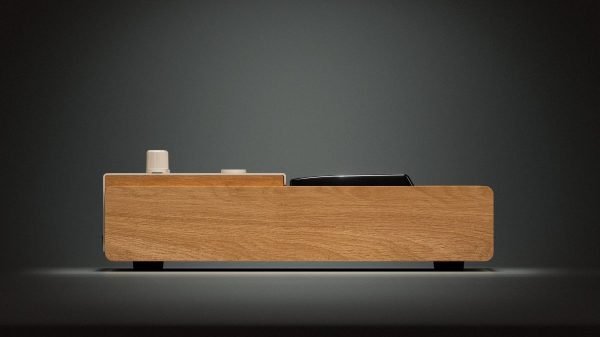
The Dublin-based company says the round will accelerate the rollout of Bell·1, its rack-mounted quantum server designed to run inside standard data centres, and support the next phase of scaling toward large-scale, fault-tolerant quantum systems.
The funding was led by the Ireland Strategic Investment Fund (ISIF), with participation from Atlantic Bridge, the European Innovation Council (EIC) Fund, Matterwave Ventures, Enterprise Ireland, Elkstone and TNO Ventures. At roughly $60 million, the raise places Equal1 among the larger late-stage quantum funding rounds in Europe this year.
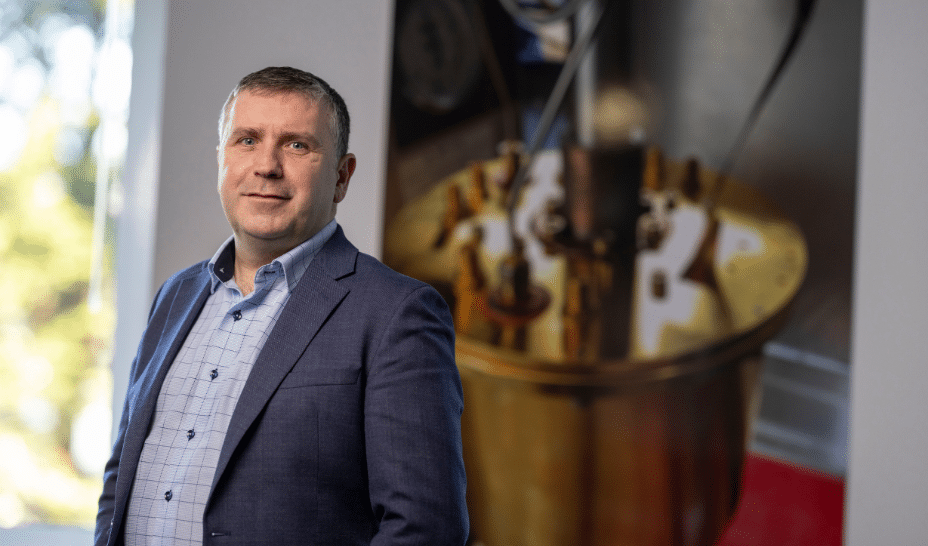
“This funding marks our transition from development to deployment,” said Jason Lynch, CEO of Equal1. “AI is pushing classical computing toward hard limits on power and cost. Quantum offers a way forward, but only if it can be manufactured, deployed and integrated like the rest of the computing stack. By building quantum processors on standard silicon, we’re turning quantum from bespoke hardware into deployable infrastructure.”
Standing out in a busy European quantum market
Equal1’s round lands amid a strong year for European quantum investment. Finnish company IQM Quantum Computers raised €275 million to scale its superconducting systems, while UK-based Phasecraft secured €29 million for quantum algorithms and Dutch startup QuiX Quantum raised €15 million for photonic hardware. Earlier-stage companies across the continent have also attracted fresh capital, bringing disclosed European quantum funding in 2025 to roughly €330 million.
Against that backdrop, Equal1’s raise stands out as one of the largest outside Finland and adds momentum to Ireland’s growing, though still relatively small, quantum technology ecosystem.
ISIF said the investment aligns with its mandate to generate commercial returns while supporting economic growth and high-value employment in Ireland.
“Equal1 is already making its mark in silicon-based quantum technology,” said Brian O’Connor, Senior Investment Director at ISIF. “We look forward to supporting the company as it scales internationally and advances quantum computing capability from Ireland.”
Shrinking quantum down to a single chip
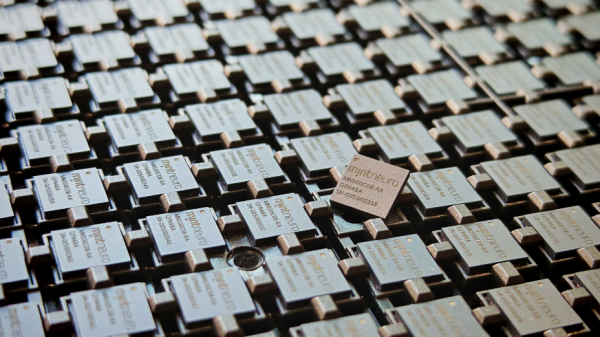
Founded in 2017, Equal1 is taking a markedly different approach from many quantum hardware companies. Instead of relying on custom fabrication and highly specialised infrastructure, it builds its quantum processors using the same CMOS-compatible manufacturing techniques that underpin today’s semiconductor industry.
Its UnityQ processor family integrates quantum and classical components into a single silicon chip, enabling what the company describes as the world’s first hybrid quantum-classical system-on-chip. That architecture underpins Bell·1, a compact quantum server designed to slot into existing high-performance computing (HPC) environments.
By consolidating the entire quantum system onto one chip, Equal1 aims to reduce the size, cost and complexity that have so far limited real-world deployment of quantum computers.
“Today’s quantum challenge isn’t physics — it’s production,” the company argues. “Custom fabrication, exotic cooling and specialist teams make most systems difficult to scale. Our model treats cost, power efficiency and deployability as first-order requirements.”
From promise to production
The timing matters. As AI drives exponential growth in compute demand, energy use and operating costs are becoming critical constraints for data centres worldwide. Quantum computing, if made practical, could act as a powerful accelerator for specific workloads — from materials science and battery development to grid optimisation and finance — while helping keep long-term compute growth on a more sustainable trajectory.
McKinsey estimates quantum computing could unlock up to €85 billion in economic value by 2035, but only if hardware can move beyond lab-scale systems. Equal1 believes its silicon-first approach is key to crossing that threshold, unlocking semiconductor-style economics where costs fall and yields improve as production scales.
“Atlantic Bridge recognised early that Equal1 could fundamentally change how quantum computers are built and deployed,” said Gerry Maguire, Board Director at Equal1 and General Partner at Atlantic Bridge. “This funding allows the company to move from breakthrough innovation to commercialisation.”
What comes next
Equal1 says the new capital — which may expand further with follow-on investors — will be used to deploy Bell·1 systems into leading HPC centres, integrate quantum processing into real workloads, and advance its roadmap toward millions of on-chip qubits. The company also plans to scale manufacturing through existing foundry partnerships and grow its team to support production-level deployment.
European backers see the company as strategically aligned with broader regional ambitions in semiconductors and deep tech.
“Equal1’s CMOS-compatible approach fits directly with Europe’s semiconductor and quantum goals,” said Svetoslava Georgieva, Chair of the EIC Fund Board. “It’s a strong example of turning breakthrough science into industrial reality.”
For Equal1, the round represents more than capital. It signals a shift in quantum computing’s trajectory — away from bespoke machines confined to research labs, and toward systems that look, feel and deploy like the rest of modern computing infrastructure.