






















































Industrial robots have long been powerful but inflexible — fast, precise, and largely confined to repetitive tasks in tightly controlled environments. Trener Robotics, a Norway- and US-based startup, believes that era is ending.
The company has secured a €26 million ($32 million) Series A round to scale its AI-powered robot skills platform for manufacturing. The round was co-led by Engine Ventures and IAG Capital Partners, with backing from Cadence and Geodesic Capital via Nikon’s NFocus Fund, alongside several other venture firms. With this raise, Trener’s total funding now exceeds €31 million.
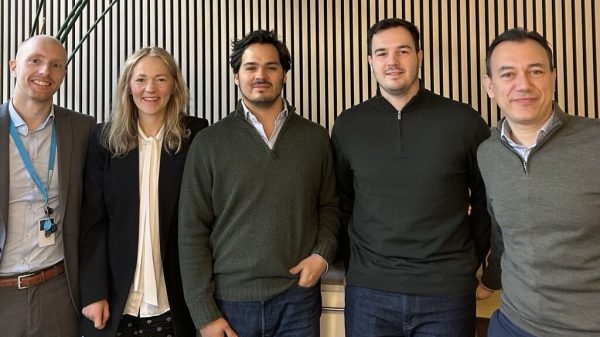
Founded in 2024 by CEO Dr. Asad Tirmizi and CTO Dr. Lars Tingelstad, Trener Robotics is building what it calls an “intelligence layer” for industrial automation. Instead of programming robots line by line for single-purpose tasks, manufacturers can use Trener’s platform to deploy pre-trained, production-ready skills — and even describe tasks in natural language.
“For decades, industrial robotics has been limited by dynamic complexity,” says Tirmizi. “We’re transforming robots into intelligent, adaptable teammates by replacing procedural programming with a control system that supports a growing library of production-ready skills.”
From rigid scripts to adaptable skills
At the center of the company’s strategy is Acteris, a robot-agnostic AI skills platform. Rather than requiring engineers to hard-code workflows, Acteris allows operators to describe tasks conversationally. The system translates that input into executable automation, combining vision, language, haptics, and motion control.
The result, according to the company, is robots that can:
- Identify and handle parts using computer vision, even in challenging conditions
- Adjust movements in real time as environments change
- Avoid collisions with built-in safety features
- Be programmed through intuitive interfaces and high-fidelity simulations
- Provide real-time production dashboards
Acteris is designed to work across major robot brands, including ABB, Universal Robots, and FANUC. In 2025, Trener Robotics partnered with more than 15 integration and solution providers across Europe and the US, signaling early commercial traction.
The broader goal is to push industrial robots beyond static, repetitive roles — such as basic CNC machine tending — into more complex, variable production environments.
Riding Europe’s automation wave
Trener’s funding comes amid a broader surge in European robotics and industrial AI investment. Over the past year, startups in adjacent categories have collectively raised around €158 million. Germany’s RobCo secured €100 million to expand modular AI-driven manufacturing systems. Switzerland’s Flexion raised €43 million for reinforcement learning in humanoid robotics. Other rounds across Poland, the UK, and Germany reflect growing capital flowing into intelligent control systems and flexible automation platforms.
While Trener is not headquartered solely in Europe — it operates from San Francisco and Trondheim — its Series A fits squarely into this trend: building adaptive, AI-enabled layers on top of existing industrial hardware.
The market fundamentals are favorable. According to company-cited data, flexible automation is advancing at a 14.3% compound annual growth rate, fueled by labor shortages, high-mix production demands, and rising operational costs. Manufacturers increasingly want automation systems that can deliver rapid ROI without massive engineering overhead.
A team with deep robotics DNA
Tirmizi previously worked at Vicarious, a robotics startup acquired by Google, and contributed to robotics and haptics initiatives at ByteDance. Tingelstad served as an Associate Professor of Robotic Production at NTNU. The broader team includes veterans from Universal Robots, ABB, KUKA, Autodesk, Google, and TikTok.
Investors are betting that this experience — combined with a platform approach — can unlock a new phase of industrial automation.
“When we co-led Trener Robotics’ Seed round, we saw a team with a clear vision to solve one of automation’s biggest bottlenecks,” says Reed Sturtevant, General Partner at Engine Ventures. “Their execution and ability to rapidly scale has been remarkable.”
Dennis Sacha, Partner at IAG Capital Partners, frames the opportunity in competitive terms: “Industrial automation is at an inflection point. Platforms accessible to manufacturers of all sizes create a repeatable path for expanding capabilities — precisely what small and mid-sized enterprises need as AI redefines manufacturing.”
The bigger shift
For decades, industrial automation has required specialized engineers, rigid programming, and tightly controlled production lines. Trener Robotics is betting that the next generation of factories will demand something different: systems that learn, adapt, and can be reconfigured as quickly as production changes.
If Acteris delivers on its promise, robots may no longer be fixed tools performing narrow tasks. Instead, they could become configurable, AI-powered coworkers — trained with skills, not scripts.