






















































Bristol-based battery tech startup Anaphite has raised €1.6 million (£1.4 million) in follow-on Series A funding to scale its dry-coating platform for next-generation lithium iron phosphate (LFP) and graphite electrodes. The round was completed through the Innovate UK Investor Partnership Programme, with half of the capital coming from Innovate UK’s Clean Energy and Climate Technologies competition and the remainder matched by climate-focused investors Elbow Beach and World Fund.
The funding marks a strategic step for Anaphite as LFP accelerates its rise in mainstream electric vehicles. LFP cathodes have gained ground thanks to their lower cost and strong safety profile, but they remain far more energy-intensive to manufacture than nickel-rich NMC materials—drawing more than double the energy per kilowatt-hour produced. With mixing and coating stages representing as much as 40 percent of a cell’s total manufacturing energy and cost, the industry is under pressure to modernize production methods.
Dry coating has long been viewed as a breakthrough that could sharply reduce both cost and carbon intensity, but LFP has proved particularly difficult to process. Its ultra-fine particles—down to 0.7 microns in the latest “Gen IV” chemistries—dramatically increase surface area, making uniform mixing and film formation far more challenging than with NMC. Despite growing global demand for LFP, no commercial-scale dry-coating solution has been validated to date.
Anaphite believes it is closing in on one. The startup’s Dry Coating Precursor (DCP®) technology uses proprietary chemical compositing techniques to evenly disperse hard-to-mix binders and conductive carbons, attaching them directly to active material particles. The company has already shown strong results on NMC cathodes and now plans to extend the platform to LFP and graphite.
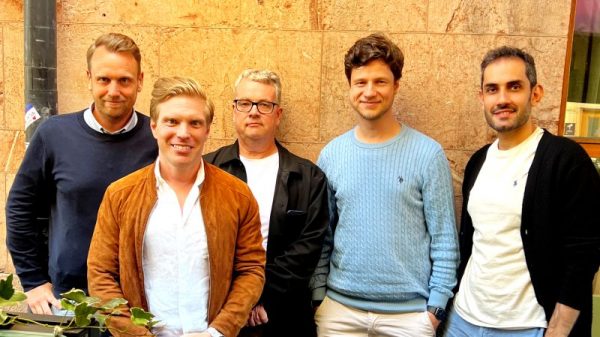
“We’re thrilled to have secured this grant support from Innovate UK and the matching investment from Elbow Beach, World Fund and other Anaphite investors,” said CEO Joe Stevenson. “This enables us to attack one of the toughest technical challenges in dry coating – successfully manufacturing LFP electrodes. Once achieved at scale, it will be enormously valuable to the industry.”
Investors argue the impact extends beyond a single chemistry. “Anaphite’s technology is broadly applicable across next-generation and established battery technologies alike,” said Craig Douglas, Partner at World Fund. “This investment will enable the company to significantly expand its commercial capabilities, accelerating the scale-up of its manufacturing processes and driving down manufacturing costs for the global battery industry.”
With LFP expected to claim more than 55 percent of global cathode demand by 2030—and with the UK and EU’s 2030 and 2035 combustion-engine phase-outs approaching—the race is on to deliver scalable, low-carbon electrode production. Anaphite’s project aims to demonstrate roll-to-roll dry-coated LFP cathodes and graphite anodes, followed by full cell builds to validate performance. High first-cycle efficiency and long cycle life would position the technology for mass-market adoption.
Beyond automotive, the work aligns with the UK Government’s Advanced Manufacturing Plan, which identifies batteries as a strategic growth sector. It also supports the expansion of the fast-growing battery energy storage system (BESS) market, where LFP is rapidly becoming the dominant chemistry.
If successful, Anaphite’s dry-coating platform could help OEMs slash manufacturing emissions and costs—while giving the UK a stronger foothold in the global battery supply chain.