





























































Paris-based venture capital firm daphni has closed its latest fund, daphni Blue, at €260 million — surpassing its initial target and reinforcing growing investor appetite for science-driven innovation in Europe.
The final close was completed in less than nine months after the first, a rapid pace that signals strong confidence in daphni’s thesis: that the next generation of globally relevant startups will be built not on easily replicable software, but on deep scientific breakthroughs rooted in Europe’s research ecosystem.
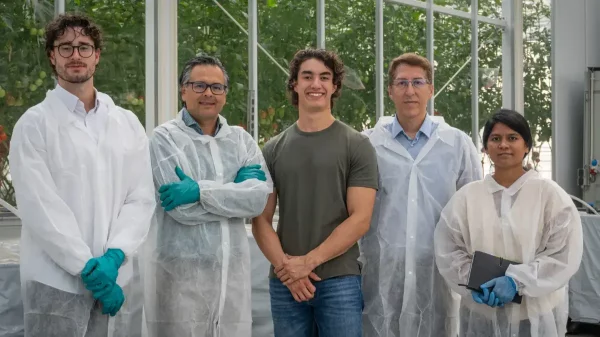
The fund is already active. daphni Blue has invested in nine early-stage startups, including OWLO, EverDye and Karavela, with two additional TechBio deals currently in the pipeline in France and the UK.
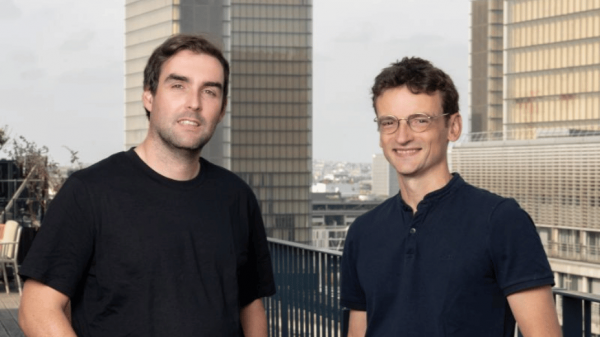
“In a world where technology is increasingly commoditized and AI is redefining how innovation is built, we’re convinced the strongest long-term value comes from deep scientific breakthroughs,” said Pierre-Eric Leibovici, co-founder and managing partner of daphni. “This final closing confirms strong investor support for a strategy focused on unlocking European science to address major societal and environmental challenges.”
A wider DeepTech momentum across Europe
daphni’s fundraise lands amid a broader wave of capital flowing into European DeepTech and science-based strategies. In early 2026, Copenhagen’s Footprint Fund I announced a €76 million fund targeting climate and DeepTech startups across Northern Europe, while Berlin-based b2venture reached a €150 million hard cap for its fifth fund.
At the end of 2025, U2V — a spin-off from Earlybird-X — launched a €60 million vehicle dedicated to pre-Seed and Seed DeepTech companies emerging from European technical universities. In Southern Europe, Armilar Venture Partners raised €120 million for its fourth fund to back DeepTech and digital transformation startups across Spain and Portugal.
Together with daphni Blue, these funds represent roughly €666 million in disclosed capital committed to adjacent science-driven strategies over 2025–2026, highlighting sustained institutional interest in long-horizon, research-intensive innovation — with France playing a central role.
Betting on what can’t be commoditised
Founded in 2015, daphni is best known for early investments in now-unicorns such as Back Market and Swile. But daphni Blue marks a clear evolution in strategy. As AI tools and software capabilities become increasingly accessible, the firm is doubling down on what it believes cannot be easily copied: defensible intellectual property born from fundamental science.
The new fund targets early-stage “scientist-entrepreneurs” building companies on core research in biology, chemistry, physics, mathematics and life sciences. Initial cheques range from €500,000 to €10 million, with follow-on investments of up to €20 million. Over its lifetime, daphni Blue is expected to back 40–50 companies.
“To create sustainable value, you need an additional element — intellectual property that comes from science,” Leibovici said. “There’s going to be a brutal return to reality for many companies that raised capital without creating real value or market traction.”
From lab to market
daphni works closely with leading French research institutions including INRIA, INSERM, Institut Langevin and Institut Curie, while also tapping into broader European research networks. Its model combines digital infrastructure with an active investor and founder community designed to accelerate the transition from laboratory research to commercial impact.
Among the first portfolio companies backed by daphni Blue:
- OWLO, spun out of Institut Langevin, developing real-time, non-invasive 3D microscopy for fertility and pharmaceutical research
- EverDye, which uses patented green chemistry to deliver eco-friendly textile dyeing without new machinery
- Karavela, a spinoff from INRIA building a brain foundation model based on functional MRI data to unlock new digital biomarkers
- Neotis, focused on immunotherapies targeting senescent cells to treat age-related chronic diseases
While science-based investing remains a niche within venture capital, daphni sees Europe’s 2.2 million researchers and extensive public research infrastructure as a decisive competitive advantage. The fund also links part of its carried interest to ESG performance, aligning impact with financial returns.
With daphni Blue, the firm is positioning itself as more than a VC — acting as a bridge between Europe’s scientific bench and the global startup ecosystem, and betting that the continent’s next unicorns will be born not in code alone, but in the lab.