























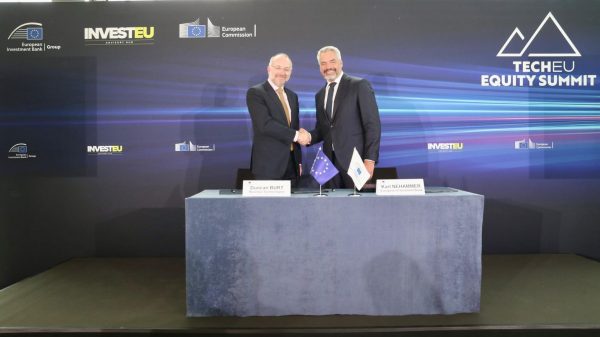











































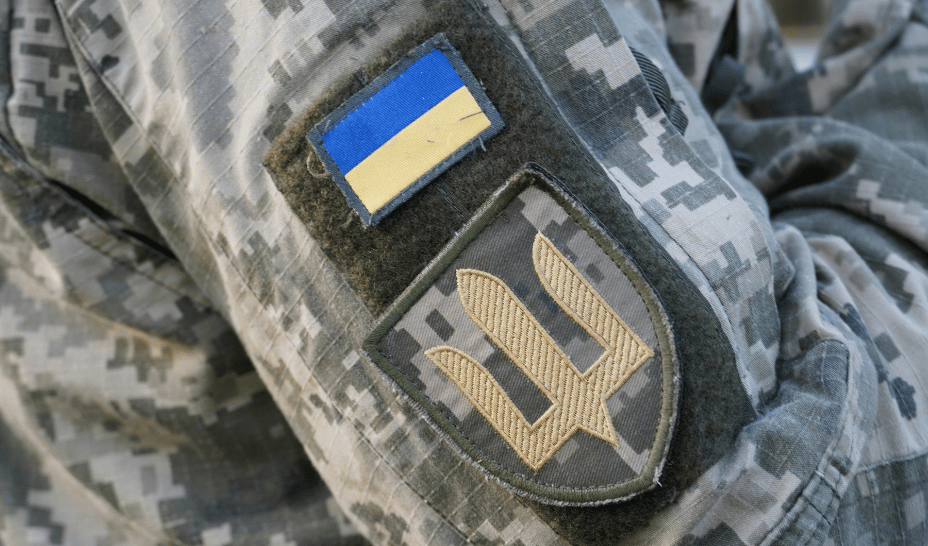
The European Union has launched a €160 million defence innovation programme aimed at accelerating dual-use and DefenceTech development in partnership with Ukraine-linked ecosystems.
Structured around €140 million in EU guarantees and €21 million in direct investment grants, the initiative is designed to unlock up to €400 million in additional financing for capital expenditure and operational scaling.
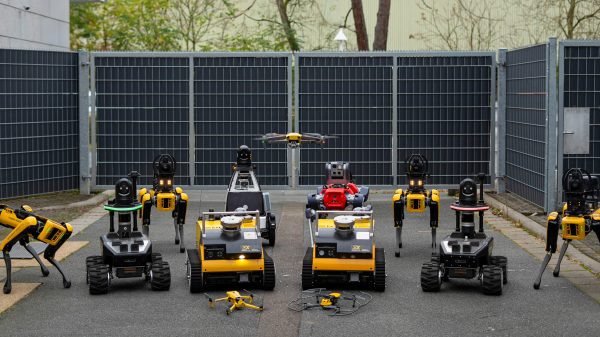
The programme was announced during the EU–Ukraine business summit in Brussels and targets strategic sectors including drones (air, ground, maritime), electronic warfare systems, communications, navigation, space technologies, and critical defence components.
From Innovation to Industrial Capacity
While the programme signals growing political alignment between the EU and Ukraine, industry stakeholders say the real challenge lies in execution — specifically, moving from prototypes to scalable industrial production.
The initiative is expected to support companies operating at the intersection of defence innovation and manufacturing, where traditional venture capital structures often fall short.
Guarantees Over Grants
According to founders in the ecosystem, the most impactful component may not be grants, but guarantees that unlock debt financing.
Borys Nadykto of Ukraine-linked DefenceTech startup Offset Labs highlighted that EU-backed guarantees are better aligned with how defence companies actually scale — through procurement, production, and delivery rather than typical startup funding cycles.
Offset Labs, founded in 2024 and operating between London and Kyiv, develops AI systems for defence applications including signal and voice processing.
Ukraine as a Battlefield Testbed
For startups already operating in Ukraine, the country has become a real-world validation environment for defence innovation.
Gui Wainwright, co-founder of London-based Occam Industries, which builds autonomous drone systems, described Ukraine as a “pressure cooker” that exposes what truly works in combat conditions.
His company recently raised €3 million after passing integration testing with Ukraine’s Brave1.
The Missing Piece: Scaling Capital
Beyond early-stage innovation, Ukrainian and European operators point to a structural gap: financing for scale.
Daria Yaniieva, who also works with Ukraine’s defence innovation infrastructure, argues that many companies are already battlefield-tested but lack access to working capital and procurement-linked financing.
She emphasizes the need for mechanisms such as receivables financing, export credit, and order-backed lending — more aligned with industrial supply chains than venture capital.
Building an Industrial Defence Layer
Polish DefenceTech founder Bogdan Ochiana of Orbotix sees the programme as a potential bridge between Ukraine’s rapid innovation cycle and Europe’s industrial base.
He argues that combining Ukrainian battlefield speed with European capital and manufacturing capacity could enable scalable “affordable autonomy” for NATO-aligned defence systems.
AI, Capital, and Market Access
The initiative also intersects with broader Ukrainian tech momentum beyond defence.
Reface, a Kyiv-based AI company with over 300 million app downloads, represents the country’s broader strength in AI-native product development.
According to co-CEO Anton Volovyk, the main bottleneck is not talent, but access to capital and distribution channels across European markets.
Similarly, venture firm Flyer One Ventures notes that Ukrainian founders must think globally from day one, as local traction does not translate directly into Western markets.
The Real Test
While the €160 million programme marks a significant step in EU–Ukraine industrial cooperation, its success will depend on execution rather than allocation.
For founders and investors in the ecosystem, the key question is not how much capital is available — but whether it can reach companies fast enough to translate innovation into deployable capability at scale.