
























































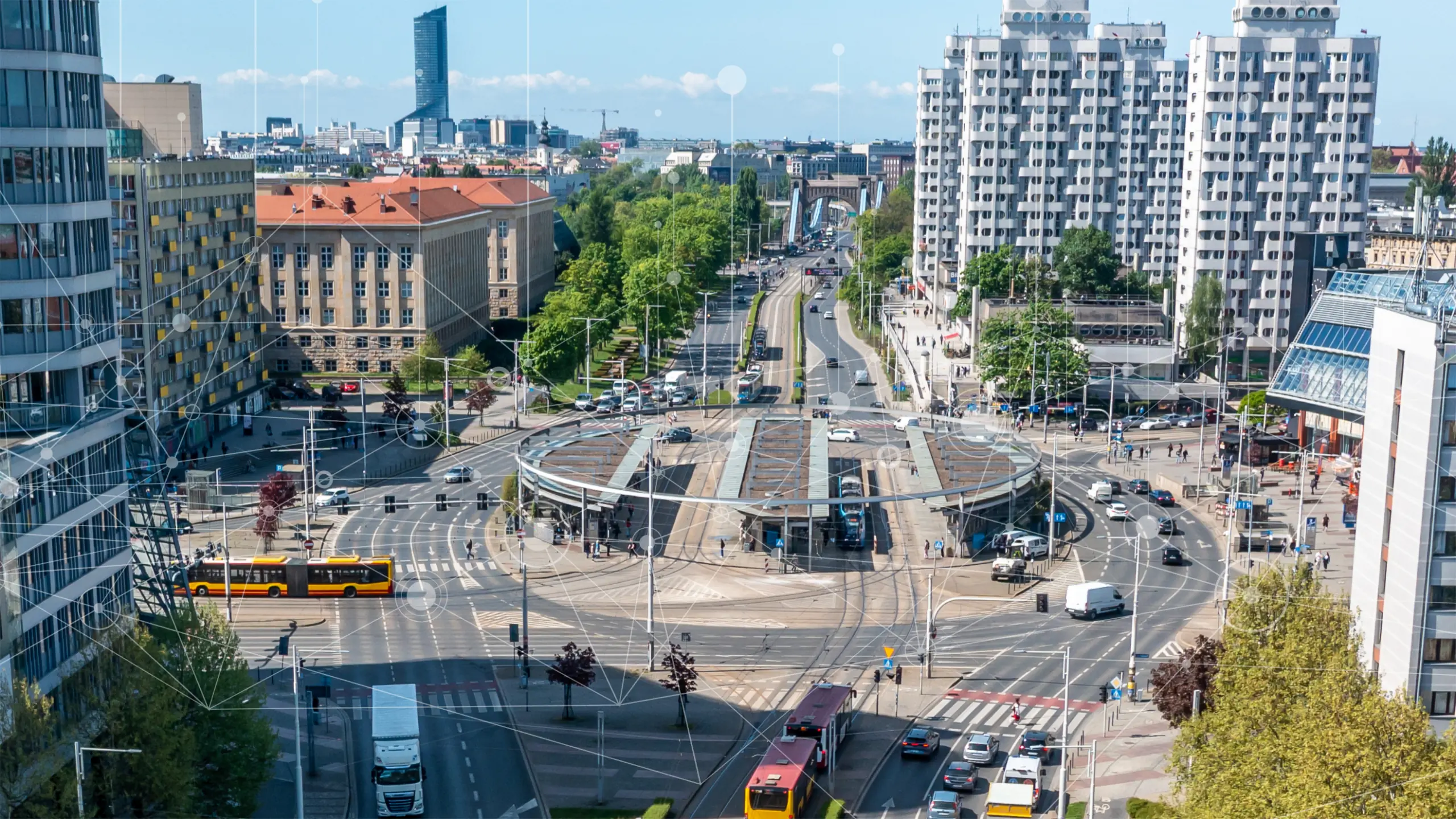
French people-flow analytics company Acorel has rolled out a redesigned website, giving the 37-year-old company a more product-led front door for the transport operators, airports, and venue owners it serves across Europe and beyond.
A Sharper Showcase for a Niche Built Over Decades
Acorel has been counting people since 1989, long before “people-flow analytics” was a category. The Saint-Péray-based company, which also has offices in the UK and Australia, builds sensor and software systems that track how passengers and visitors move through buses, trams, metros, trains, airports, shopping centers, and museums — turning foot traffic into operational data.
The new site organizes that history around four customer-facing entry points: solutions, business domains, case studies, and a software suite called VISION. Where the previous version of the site leaned on a more generic corporate template, the redesign groups Acorel’s offering by use case — passenger flow on public transport, people flow in retail and public venues, and passenger flow inside airports — making it easier for a transit authority or an airport operations team to find the relevant product without digging through technical documentation first.
More Visibility for the VISION Suite
The clearest addition is a dedicated showcase for VISION, Acorel’s software platform, broken into four vertical-specific products: VISION Pop for public and commercial spaces, VISION Mobility for buses and trams, VISION Rail for metro and train networks, and VISION Air for airports. Each is paired with concrete use cases — queue detection, boarding and alighting counts, occupancy heat maps, and real-time fleet load balancing — rather than abstract feature lists.
The site also surfaces a cluster of customer case studies that were previously harder to find, including a European metro network reporting 99.2% passenger-counting accuracy across 44 stations, a French metropolitan transport operator running automatic passenger counting on more than 500 buses, and an airport tracking flow across multiple terminal zones using LIDAR and 3D computer vision. A new FAQ section addresses one of the recurring questions from transit and venue operators directly: privacy. Acorel states its detection methods are anonymous and GDPR-compliant, with no personal data collected.
Why It Matters for the Sector
People-counting and flow-analytics tools have moved from a nice-to-have for large venues to a planning requirement for transport operators managing revenue integrity, staffing, and passenger experience, and for venues balancing safety with throughput. Acorel says its sensors are deployed across more than 20,000 vehicles and used by over 150 clients globally, claiming accuracy above 98% — figures the company now leads with on its homepage rather than burying in a brochure.
For a company whose business depends on transit authorities, airport operators, and retail or museum clients evaluating long procurement cycles, a clearer, use-case-driven website is less about marketing polish and more about shortening the distance between “we have a flow problem” and “here is the product for that.” The redesign suggests Acorel is positioning itself less as a sensor vendor and more as a data and analytics partner for the mobility and smart-buildings sectors it has served for over three decades.