











































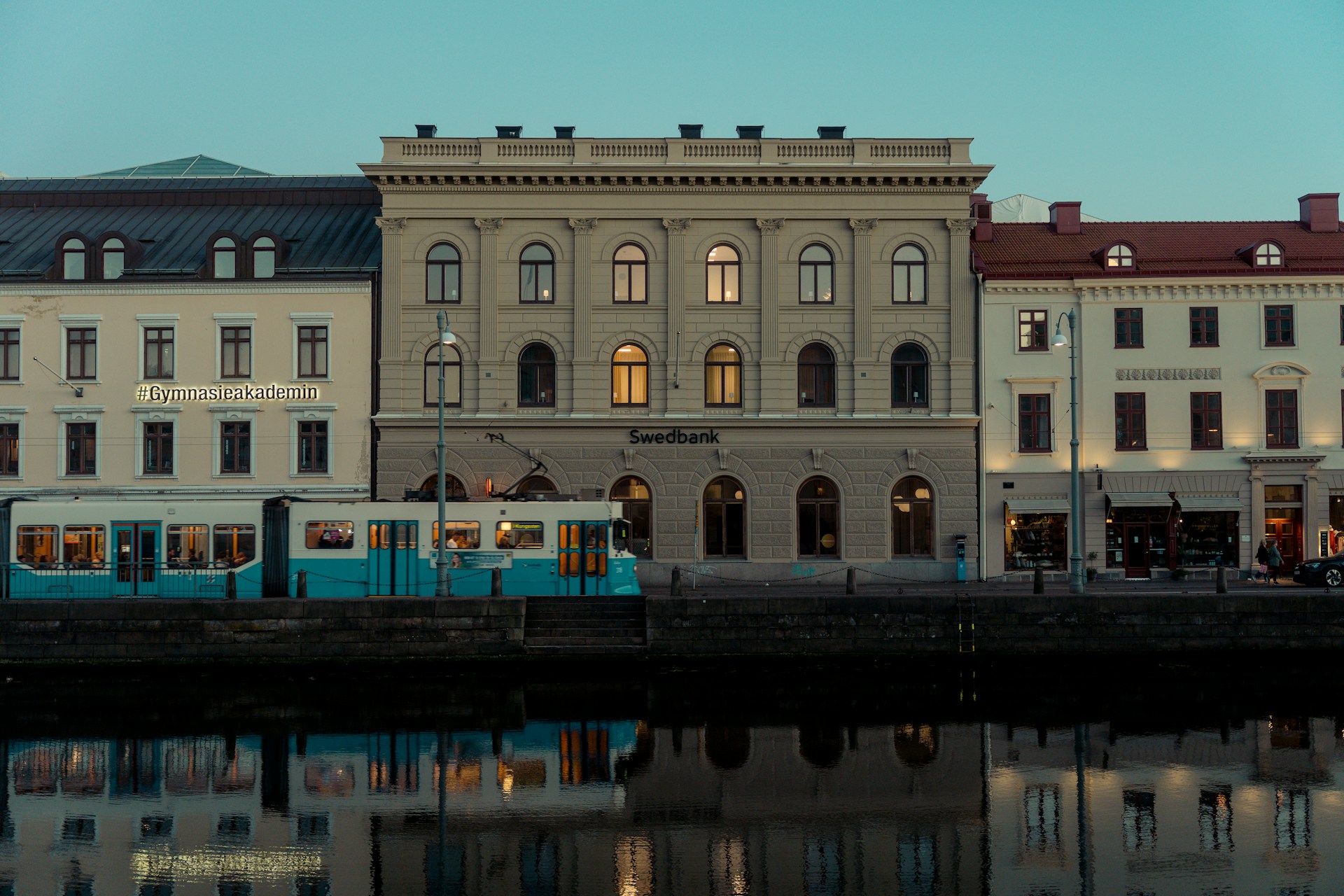
A startupmafia deep dive into Sweden’s second city — and its very different theory of how to build startups
If Stockholm is Sweden’s answer to a mini Silicon Valley, Gothenburg is something more specific and, in its own way, more interesting: an industrial city that reinvented itself around mobility, sustainability, and applied research, and built a startup ecosystem that reflects that history rather than copying the capital’s playbook. It’s a smaller, slower-growing, more collaborative ecosystem — and understanding that difference is the key to understanding whether it’s the right place to build.
Where Gothenburg sits — realistically
Let’s be direct about scale: Gothenburg is not competing with Stockholm for unicorn density, and it isn’t trying to. StartupBlink’s 2026 data ranks Gothenburg #136 globally, with 246–277 tracked startups and total startup funding a little over $317 million — a fraction of Stockholm’s numbers. In the StartupBlink 2026 European country-and-city breakdown, Gothenburg’s total ecosystem score sits at roughly one-seventh of Stockholm’s, making the capital city 6.7 times larger by that measure.
But two things make Gothenburg worth its own article rather than a footnote. First, its growth rate: Gothenburg’s startup ecosystem grew 18.2% in 2025, comfortably outpacing many larger European hubs on a percentage basis, even from a smaller base. Second, its specialisation: Gothenburg isn’t trying to be a generalist tech hub — it has built one of Europe’s more coherent regional innovation clusters around mobility, sustainability, healthtech, and life sciences, anchored by genuinely world-class industrial and academic partners.
What Gothenburg is actually good at
Gothenburg’s startup identity is inseparable from its industrial history. This is Volvo’s city (both Volvo Cars and the Volvo Group), and it’s home to major operations from Ericsson, Saab, and Scania — meaning startups here operate in constant proximity to some of Europe’s largest automotive, telecoms, and defence-adjacent engineering employers. That proximity shapes the startup base directly:
- Mobility and transportation. Gothenburg startup Heart Aerospace is developing the ES-19, a 19-passenger electric regional airliner, aiming for commercial certification around 2026 — one of the clearer examples of “hard tech” ambition coming out of the city. Velove builds cargo bikes engineered to replace motor vehicles for last-mile urban delivery, directly targeting city logistics emissions. Gothenburg ranks among the world’s top 76 ecosystems specifically for the transportation industry.
- Healthtech and life sciences. Mölnlycke (wound care and surgical solutions) has raised over $792 million and anchors a broader medtech cluster, while Cellink (now part of a larger bioprinting group) built a global biotechnology business out of the city. The Sahlgrenska Science Park ecosystem, and its CO-AX accelerator for early and growth-stage healthtech companies, gives founders access to clinical test environments and healthcare-sector investors that few other European mid-sized cities can offer.
- Fintech and e-commerce. Juni, a banking platform built for e-commerce and digital marketing entrepreneurs, and NA-KD.com, a fashion e-commerce brand that has raised roughly €88.5 million, show Gothenburg isn’t purely a hardware town — there’s a credible software and consumer layer too.
- Sustainability and climate. Given the city’s shipbuilding-crisis-to-innovation-cluster origin story (more on that below), sustainability isn’t a marketing label in Gothenburg — it’s structural. The region’s public transport already runs entirely on renewable fuels, and the city has installed more than 5,800 public EV charging points, giving climate and mobility startups a genuinely representative local testbed.
The Lindholmen story: how a shipyard crisis became an innovation district
No article on Gothenburg’s ecosystem is complete without the Lindholmen backstory, because it explains the city’s entire approach to innovation. In the 1980s, Gothenburg went through one of its deepest economic crises: the collapse of the local shipbuilding industry cost almost 20,000 jobs, and the shipyards on Lindholmen stood empty. Roughly 25 years ago (making it one of Sweden’s longest-running innovation initiatives), Chalmers University of Technology and the City of Gothenburg turned that abandoned industrial waterfront into Lindholmen Science Park, a neutral, non-profit collaboration arena where large companies, academia, and startups run joint R&D projects.
It worked. The Lindholmen Innovation District today hosts around 400 companies and sees roughly 30,000 people pass through daily — students, researchers, entrepreneurs, and employees of the park’s corporate owners, who include Ericsson, Volvo Group, Volvo Cars, Saab, Telenor Sverige, Scania, and Business Region Göteborg. That ownership structure is itself notable: it means Gothenburg’s startups are, by design, sitting inside the same physical and institutional network as the region’s largest industrial employers — a testbed relationship that’s much harder to manufacture artificially.
Mobility remains the park’s centre of gravity (transport for people and goods is described as the pinnacle of its ecosystem focus), alongside strong programming in ICT, AI, and media/visualisation. Newer additions like The Yard (a dedicated space for climate-transition and sustainability-focused tenants) and MobilityXlab and The Game Incubator sit alongside it, continuing to diversify the district beyond its automotive roots.
The other pillars: Chalmers, Sahlgrenska, and the wider network
Lindholmen isn’t the whole story. Gothenburg’s innovation infrastructure is genuinely distributed across a small number of complementary institutions:
- Chalmers Ventures and GU Ventures — the venture-building and commercialisation arms of Chalmers University of Technology and the University of Gothenburg respectively, turning research and student projects into spinout companies.
- Sahlgrenska Science Park — the region’s life-sciences-focused park, home to the CO-AX healthtech accelerator and a hub for medtech and biotech founders needing lab access and clinical partnerships.
- AI Sweden, headquartered with a strong Gothenburg presence, alongside RISE (Sweden’s state research institute) and WASP (the Wallenberg AI, Autonomous Systems and Software Program) — giving deep-tech and AI founders access to serious applied-research infrastructure without needing Stockholm’s density.
- Yesbox (Gamlestaden) and the Långgatorna district add earlier-stage, more informal creative and tech co-working spaces to the mix, rounding out the ecosystem beyond its flagship science parks.
- GoWest is one of Sweden’s leading venture capital forums, connecting startups, scaleups, and investors specifically out of the Gothenburg region, alongside community fixtures like Gothenburg Tech Week and the community-curated Gothenburg Tech Calendar.
For founders specifically looking for structured early support, Gothenburg’s incubator and accelerator map includes Arenastart, Brewhouse, Founders Loft (Framtidens företag), Innovatum, Mobility Xlab, Yuncture, and Younicon Studio — a genuinely dense set of options for a city this size, even if none carry quite the national brand recognition of Stockholm’s STING or SUP46.
Why founders choose Gothenburg over Stockholm
Gothenburg isn’t a smaller, cheaper Stockholm — it’s a different bet, and it tends to suit a specific kind of founder well:
- Deep-tech and hardware founders who need proximity to automotive, aerospace, or maritime engineering talent and testbeds that Stockholm simply doesn’t have in the same concentration.
- Sustainability-first founders who want a city where climate infrastructure (renewable public transport, EV charging density) is already built out, rather than aspirational.
- Healthtech and life-sciences founders who need lab access and clinical partnerships more than they need proximity to consumer VC.
- Founders who want a collaborative, less winner-take-all culture. Gothenburg’s ecosystem is explicitly described by regional development bodies as built around long-term impact and shared infrastructure rather than high-risk unicorn chasing — a genuinely different cultural proposition from Stockholm’s more competitive, capital-dense environment.
The honest trade-off: Gothenburg has a much smaller pool of dedicated early-stage VC than Stockholm, and most of its flagship success stories (Volvo, Mölnlycke) are established industrial giants rather than recent venture-backed exits, meaning younger founders will lean more heavily on corporate partnerships, science-park infrastructure, and public funding (Vinnova, EU programs) than on a deep bench of local angel investors.
The bottom line for founders
Gothenburg is Sweden’s clearest example of an ecosystem built around applied, industrial-strength innovation rather than fast consumer-software growth. If your startup lives at the intersection of mobility, sustainability, healthtech, or advanced manufacturing — and especially if you’d benefit from testbeds and corporate partners like Volvo, Ericsson, or Saab rather than a dense angel network — it’s a genuinely underrated European base, not just a fallback for founders priced out of Stockholm.
Sources: StartupBlink Global Startup Ecosystem Index 2026, Invest in Gothenburg, Lindholmen Science Park, Startup Guide Europe, Failory, Seedtable, and public regional development data as of July 2026.