


























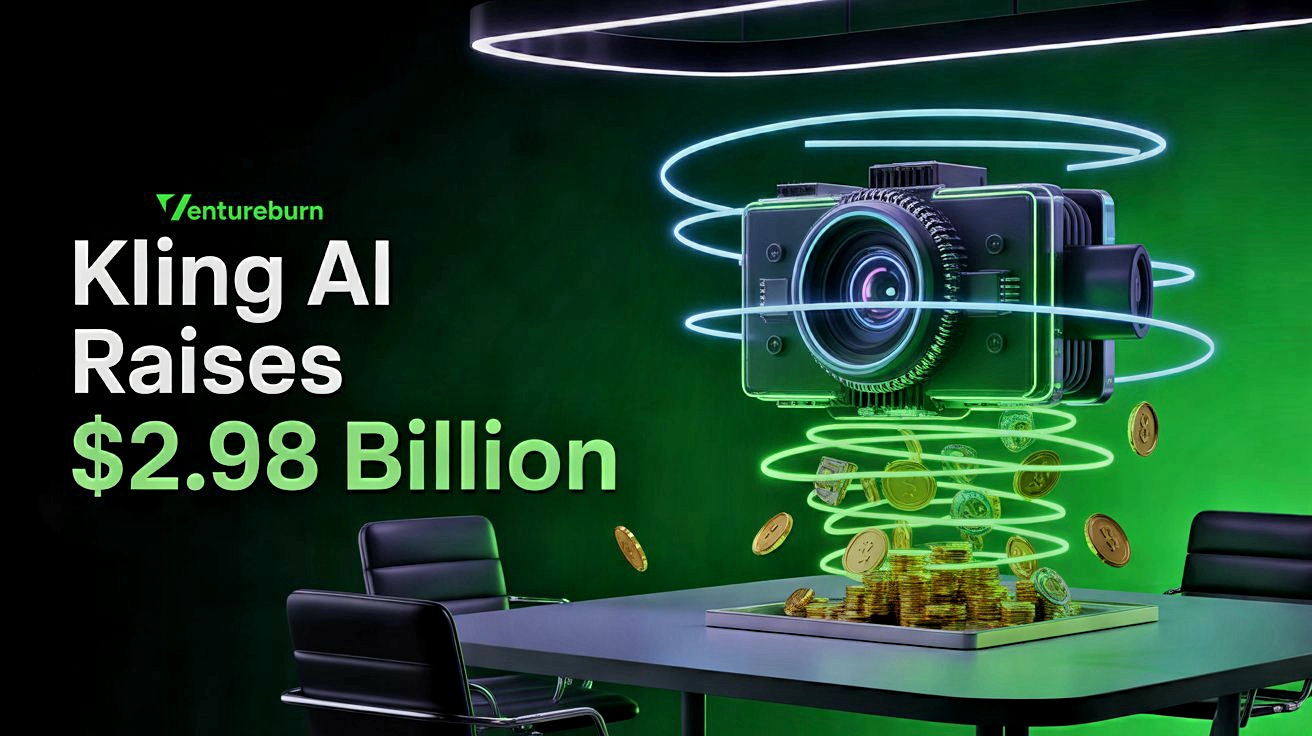
Kling AI, the generative video unit of Chinese short-video company Kuaishou, has completed a funding round of about 19.8 billion yuan ($2.98 billion), announced on 30 October 2026. The deal comes roughly three months after a $2.8 billion round in July.
The Round
The round was completed by Beijing Kling, the Kuaishou unit behind the product. The investors named so far are small compared with the headline total:
- A unit of Kingdee International: 300 million yuan
- Gongqingcheng Junke: 200 million yuan
- A unit of Shanghai-listed MetaX: 100 million yuan
According to The Standard (Hong Kong), these investors partly took over commitments from other investors and received redemption rights. Kuaishou has not said how Kling will use the proceeds.
In July, Kling raised $2.8 billion from investors including Alibaba and Tencent, at a reported pre-money valuation of $15 billion. Several outlets report Kling’s valuation at about $18 billion. VentureBurn ties that figure to the new round, while The Standard gives no valuation for it, so that number needs a firm source before it goes in a headline.
Control and Next Steps
Through its Lucky Labs holding vehicle, Kuaishou will hold two-thirds of Kling’s equity and 52.45% of the voting rights. Bloomberg reported earlier this month, citing people familiar with the matter, that Kling is planning an IPO next year.
Why Compute Costs Matter
High-fidelity video generation takes enormous computing power. Training models that handle realistic physics, human expressions and frame-to-frame consistency is expensive, which is why video AI companies tend to raise large rounds quickly. VentureBurn argues that Kling is positioned to challenge OpenAI’s Sora, Runway and Pika by combining Kuaishou’s short-video expertise with a large R&D budget, and to move from a viral tool toward enterprise uses such as advertising and film. That is the outlet’s view, not a company statement.