











































Week of 27 October – 3 November 2026 · HealthTech
This week brought 15 rounds worth about $285M, one €40M venture loan, and two women’s health deals worth a combined $4B or more. Ferring is buying Austin fertility biotech Gameto for $1.4B, and Cinven agreed to buy women’s health drugmaker Theramex for €2.6B. On the funding side, the biggest round went to a brain-implant company: China’s NeuroXess raised ¥700M. A clear pattern ran through the week: healthcare incumbents such as Ottobock, Optum, CommonSpirit and Morgan Stanley invested in startups they already work with or buy from.
THE DIGEST
🇨🇳 NeuroXess raises a ¥700M (about $100M) Series B for brain implants
SDIC Juli, Shenzhen Capital Group and Qinzhi Capital co-led the round, with IDG Capital and SMIC’s investment arm among those joining. The Shanghai company’s implant sits on the surface of the brain and helps patients move, speak and control devices. It is in the clinical trials required for approval. The money will fund those trials and a factory designed to make 10,000 units a year, and NeuroXess wants its system on the medical market within two years.
🇺🇸🇮🇱 StimCardio raises a $30M Series A for a wristband that treats atrial fibrillation
Metis MedTech and John Slump’s family office led the round, with Catalyst Health Ventures. Atrial fibrillation (AF) is an irregular heartbeat that affects about 59 million people worldwide. StimCardio’s wristband, Rhyvive, stimulates nerves without surgery to stop AF coming back after ablation, the standard procedure that destroys the heart tissue causing it. AF returns for 30–40% of ablation patients. The money funds a larger trial to prove it works. The company was previously called CardiaCare.
🇺🇸 Avante raises a $30M Series A for AI that runs employee benefits
Frist Cressey Ventures, co-founded by former US Senator Bill Frist, led the round, with Sorenson, Hearst Ventures and Morgan Stanley’s Next Level Fund. The Seattle company’s AI agents analyse benefits contracts, answer employees’ questions and compare vendors. Avante has raised $40M in total.
🇺🇸🇫🇷 Vera Health raises a $28.5M Series A for a free AI search engine for clinicians
Threshold Ventures led the round, with UnitedHealth’s Optum Ventures, Mantis VC and SV Angel, while Y Combinator and Gradient increased their stakes. A year ago a few thousand clinicians used Vera; now more than 800,000 do, across 190 countries, including about one in four doctors in Spain and Italy. It stays free for clinicians and plans to charge hospitals and health systems. It was founded by two French entrepreneurs and has only 12 employees.
🇺🇸 Ozlo raises a $22M Series B to expand beyond its sleep earbuds
Modi Ventures led the round. The Boston company was founded by former Bose engineers and makes Sleepbuds, earbuds designed to be worn all night. It is partnering with Dreem Health, a virtual sleep clinic, to connect users with sleep specialists, and plans to submit a tinnitus product to the FDA for approval.
🇺🇸 Midstream Health raises a $20M Series A to find money hospitals are owed
Valtruis led the round, with a16z, Foundry and CommonSpirit Ventures, the investment arm of one of its customers. Midstream’s AI agents check hospital contracts, claims and spending to catch insurer underpayments, unclaimed rebates and billing errors, and help recover the money. Its customers include Mount Sinai, Houston Methodist and Keck Medicine of USC, and it expects to have saved clients $100M by the end of 2026.
🇮🇳 Cent raises a $15M Series A and buys AI radiology startup Medsee
Blume Ventures and South Park Commons co-led the round. Cent was founded this year by Practo co-founder Shashank ND and screens people for serious illness before symptoms appear. Medsee helps radiologists read scans and write reports faster.
🇺🇸 Blue Arbor Technologies raises a $10.5M Series A for prosthetics controlled by the patient’s own nerves
Prosthetics maker Ottobock led the round; it had already invested $5M in February. The University of Michigan spin-out’s RESTORE system uses small muscle grafts to amplify nerve signals so a prosthetic hand can be controlled finger by finger. It has the FDA’s Breakthrough Device designation, which speeds up review.
Also raising:
- 🇮🇳 Clinics On Cloud: confirmed it raised ₹120 crore at a ₹600 crore valuation after eight years without outside funding. The company makes Health ATMs, kiosks that run health checks. (Reported as unconfirmed last week.)
- 🇮🇹 Agora Labs: €4.3M led by P101 SGR for systems that let hospitals share clinical data for research while protecting patient privacy
- 🇬🇧 Bioliberty: an additional $3.3M in its Series A for stroke-rehabilitation wearables
- 🇮🇳 Jagruti Rehabilitation Centre: ₹28 crore Series A led by Alkemi Growth Capital
- 🇺🇸 Wrapped Health: $2.1M pre-seed to connect clinical care with consumer health
- 🇺🇸 Urologic Design: $1.2M pre-seed for a device that treats urinary incontinence
- 🇮🇳 Docterz: ₹5 crore, nearly 60% of it from doctors who use its clinic software
- 🇮🇳 Lumov: in talks to raise ₹32 crore for orthopaedic care
DEBT
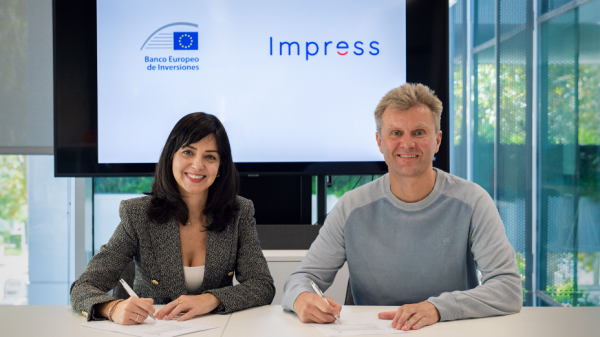
- 🇪🇸 Impress signs a €40M venture loan with the European Investment Bank to invest in its AI platform and expand its network of more than 110 orthodontic clinics across Europe.
EXITS & M&A
- 🇺🇸 Ferring Pharmaceuticals is buying Gameto for $1.4B. The Austin- and New York-based biotech uses cell engineering to make IVF easier, including a technique for maturing eggs in the lab, and also works on ovarian health and menopause.
- 🇬🇧 Cinven agreed to buy Theramex from Carlyle and PAI Partners in a deal the FT values at about €2.6B. Theramex sells menopause, osteoporosis, contraception and fertility drugs in more than 80 countries.
- 🇮🇳 Cent bought Medsee (see above).
PARTNERSHIPS
- 🌍 Salient’s i3 network says it brokered $19M in deals for African healthtech startups, arguing the sector needs more than grant funding.
THE ANALYSIS
1. Women’s health is producing big exits
Gameto’s $1.4B sale and Cinven’s €2.6B Theramex deal came in the same week. Fortune counted $21.4B in women’s health exits in 2024 alone, and buyers are now paying billions for fertility and menopause companies. Founders in the sector can point to a clear path to a large exit.
2. Treatments that work through the nervous system are drawing money
NeuroXess’s brain implant, Blue Arbor’s nerve-controlled prosthetics and StimCardio’s nerve-stimulating wristband all treat conditions through the nervous system. China is moving especially fast: it approved its first commercial brain implant in March, and NeuroXess is building a factory before its own approval.
3. Incumbents are investing in the startups they work with
Ottobock led Blue Arbor’s round, Optum backed Vera, CommonSpirit backed Midstream, and Morgan Stanley’s fund backed Avante. Large healthcare companies are investing early in the startups they buy from, which often positions them as the natural acquirer later.
4. AI is cutting healthcare’s administrative costs
Midstream recovers money hospitals are owed, and Avante handles benefits administration. Last week’s theme continues: much of healthcare AI money is going into reducing costs in the back office, not clinical care.
5. Some health AI is spreading through doctors, not hospital contracts
Vera reached 800,000 clinicians with a free product and a 12-person team, and only plans to charge institutions later. Docterz raised most of its round from doctors who use it. Both started with individual doctors rather than hospital procurement.
Bottom line: Women’s health produced more than $4B in exits in a single week, and brain and nerve devices drew the most venture money. Healthcare incumbents are backing the startups they already buy from, and AI continues to target healthcare’s administrative costs.