














































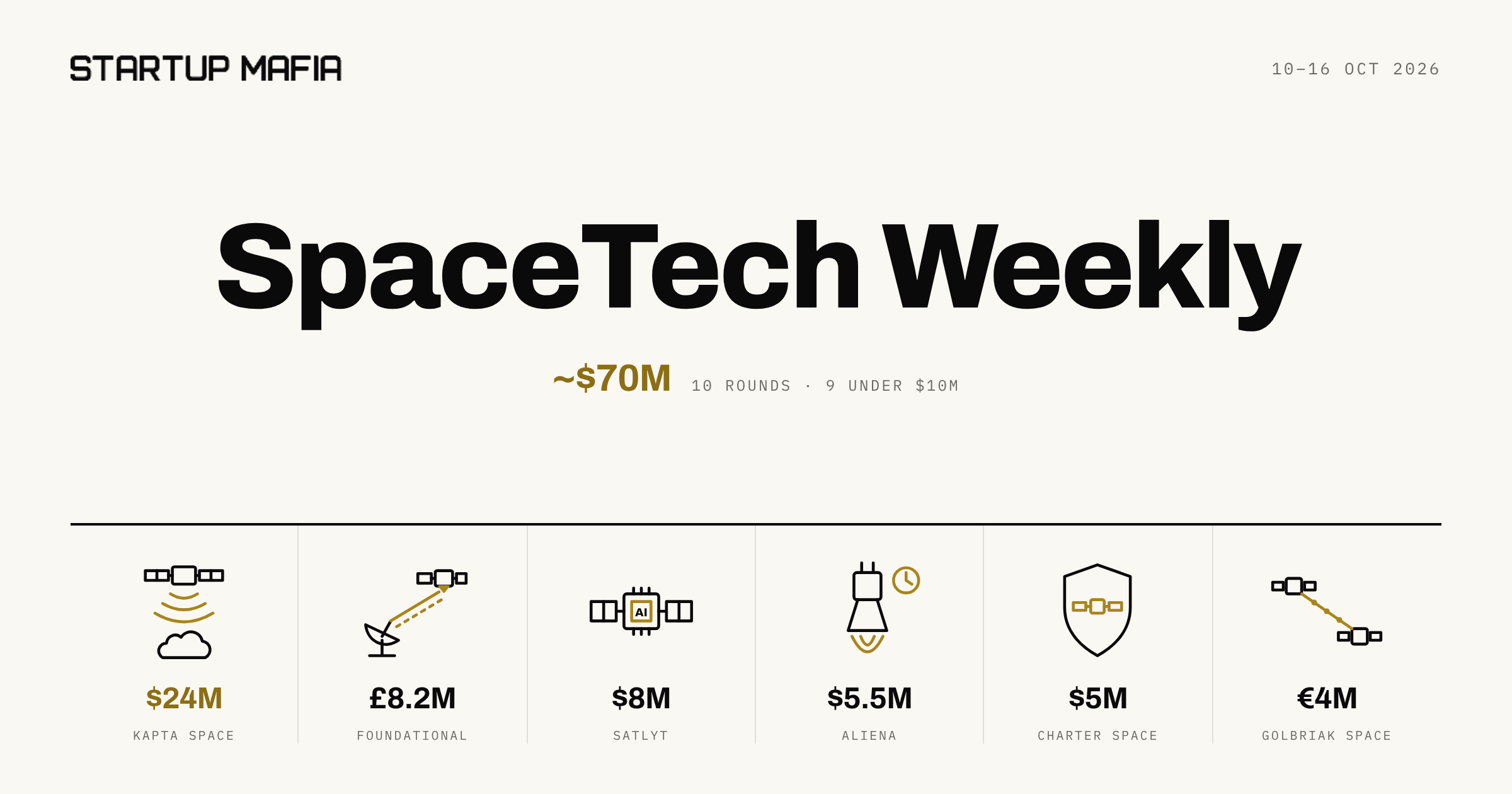
Week of 10–16 October 2026 · SpaceTech
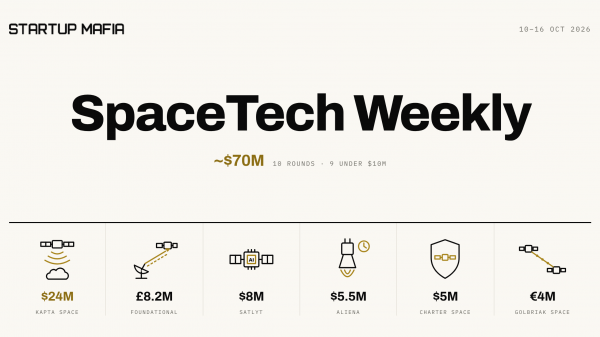
Ten SpaceTech rounds landed on our radar this week. At approximate exchange rates they add up to close to $70M. One deal stood out at the top: Seattle’s Kapta Space raised $24M. Below it sat nine rounds at pre-seed and seed level, which together give a clear picture of where early-stage space capital is going in late 2026. It is going into software and data, into light rather than radio, and into the infrastructure that a crowded orbit now needs.
THE DIGEST
🇺🇸 Kapta Space raises $24M for radar technology
The Seattle startup closed the week’s largest round, with backing from a Gates-backed firm. Radar imaging works at night and through cloud, so it is becoming the sensor that defence and commercial Earth-observation buyers can’t do without, and that explains the size of the cheque.
🇬🇧 Foundational raises £8.2M pre-seed for satellite laser ranging
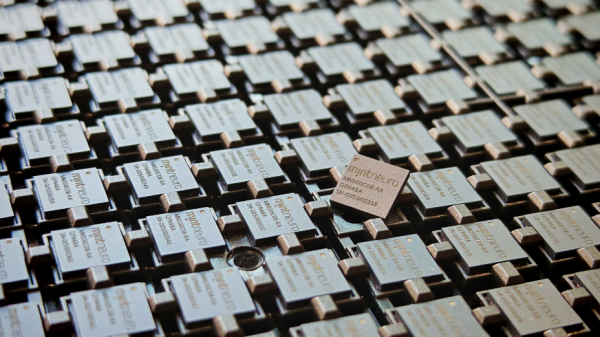
The London-based company emerged from stealth and said the round is the largest pre-seed ever raised by a European space technology company. It is building a vertically integrated laser ranging network made up of retroreflectors mounted on satellites, automated ground stations and its Origin software platform. The goal is millimetre-level tracking of satellites and debris. Backers include BACKED, Final Frontier, Adjacent, Type One Ventures and Inflection. Foundational Raises £8.2 Million Pre-Seed To Scale Satellite Laser Ranging +2
🇺🇸 Satlyt raises $8M seed to run AI on satellites
Satlyt was founded by a former Google and SpaceX product manager. It is building open software for orbital computing and is pitching it as a flexible alternative to SpaceX’s closed systems.
🌏 Aliena raises $5.5M seed
The satellite engine maker is aiming to deliver engines within six months of an order and is preparing to expand into Europe. Propulsion lead times have long been a bottleneck for constellation builders, so delivery speed is the main selling point.
🇺🇸 Charter Space raises $5M seed for space insurance
Charter Space will use the money to expand its space insurance platform. Underwriting tends to follow an industry once it starts generating predictable, repeatable risk, so this round says something about how far the sector has matured.
🇵🇱 KP Labs secures €4.42M from Momentum Capital Partners
The Polish company is scaling in-orbit AI data processing. It is the second “compute in orbit” deal of the week, alongside Satlyt. The round also arrives just after Poland’s state development bank BGK committed €114M to the new Vinci Space Tech Fund, presented in Kraków on 6 October, so Polish space startups may soon find capital easier to come by. therecursive
🇪🇪 Golbriak Space raises €4M seed for laser communications
The round was co-led by Join Capital and PhotonVentures, with Takeoff participating. Golbriak’s products are ERMESAI+ for space and ARES for airborne platforms. The company is negotiating programmes involving several thousand terminals and expects deployments across multiple commercial space programmes from 2027. Join Vestbee +2
🇮🇳 Indian space startup raises $1.8M led by Aum Ventures
This is a typical cheque for the investor. Aum Ventures writes average cheques of $750K–$2M at pre-seed and seed, and it recently held a Rs 225 crore first close of a planned Rs 750 crore fund aimed at Indian deeptech, including space. vcsheetyourstory
🇮🇳 OXG Space raises ₹17 crore
The money will go into testing satellite technology designed to deliver Earth observation data faster.
🌍 Cosmochute raises $1.5M led by Prosus Ventures
This was the smallest round of the week, but it is notable because Prosus Ventures mostly backs consumer internet and fintech companies, and here it is leading a space deal.
THE ANALYSIS
1. Data processing is moving into orbit
Two of the ten deals, Satlyt and KP Labs, are about processing data on the satellite instead of sending raw data down to Earth. The reason is the downlink: satellites now collect far more data than they can transmit. Running AI on board means operators send down answers instead of terabytes of raw imagery. Satlyt’s positioning as an open alternative to SpaceX also points to a growing demand for computing stacks that aren’t tied to a single vendor.
2. Light is replacing radio
Foundational uses lasers to track objects. Golbriak uses lasers to communicate. The two companies serve different markets, but both are betting that optical technology is ready to run at constellation scale. The radio spectrum is crowded and heavily regulated, while optical links can carry more data and are harder to intercept. The thing to watch is execution. Golbriak still has to turn negotiations over “thousands of terminals” into signed contracts, and Foundational has to get its retroreflectors onto enough satellites for its network to be useful.
3. A crowded orbit needs more supporting infrastructure
Debris tracking (Foundational), insurance (Charter Space) and fast-turnaround propulsion (Aliena) aren’t headline-grabbing launch businesses. They are the supporting services an industry needs once orbit gets crowded. ESA’s 2026 Space Environment Report counted around 45,000 tracked objects at the end of 2025, plus an estimated 1.5 million debris fragments between 1 and 10 cm. When collisions become a routine operating risk, tracking and insurance become standard costs for every operator. startupresearcher
4. Most of the money is at the earliest stage
Nine of the ten rounds were under $10M, and most were labelled seed or pre-seed. Only Kapta’s $24M was a larger round. Funds focused on deeptech and sovereign capability, such as Poland’s new BGK-backed vehicle and India’s Aum Ventures, are funding a broad layer of early companies. The difficult part will come at Series A and Series B, when these hardware-heavy businesses need follow-on funding at much larger sizes.
5. Europe is building in the Baltics and CEE, not only the usual hubs
Three of the European deals came from Poland, Estonia and the UK, and Aliena is heading towards Europe. Combined with Poland’s state-backed fund, the CEE region is starting to look like a real space cluster rather than a supplier to Western primes. Defence demand and the push for European sovereignty are the main forces behind it.
Bottom line: Investors are no longer mainly funding rockets. They are funding the data, communications and safety systems that sit on top of a crowded low Earth orbit, and for now they are doing it in small, early cheques.
Sources: