





































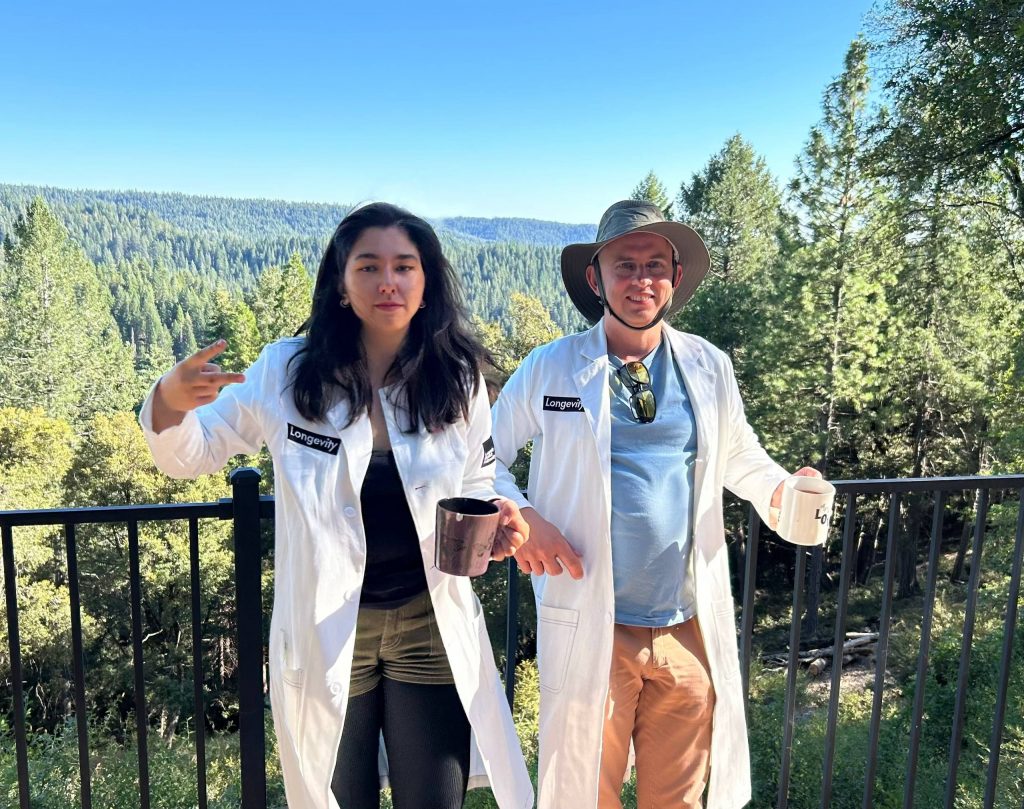
Some companies begin with a market thesis. Others begin with a technology. R3 Bio begins with something more personal: the refusal to accept that the people we love should remain trapped by the limits of current medicine.
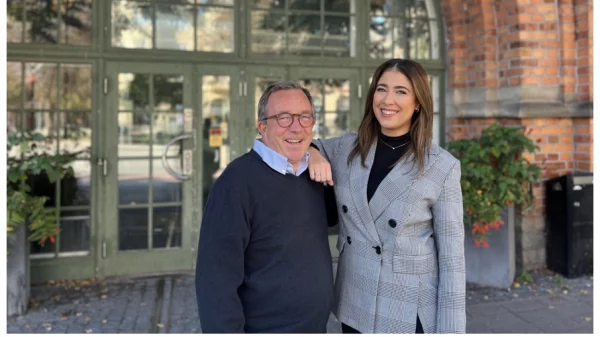
For Alice Gilman, that urgency arrived with a phone call. Learning of her father’s sudden heart surgery forced into focus a question that would go on to shape the course of her life: why does scientific possibility still feel so far from the families who need it most? What began as a deeply personal search soon expanded into a broader mission, one rooted not only in longevity and regenerative medicine, but in the belief that medical progress should be more ethical, more accessible, and more meaningfully connected to ordinary human lives.
That conviction had already been taking shape for years. A lifelong concern for animals formed an early part of Gilman’s moral imagination. At 12, in Almaty, she organized a large scale effort to help build dog houses for stray dogs. Long before biotech, she had already shown a pattern that would come to define her later work: she was drawn to suffering that others had learned to accept, and to systems that needed to be built, not merely criticized.
Gilman’s career has been marked by an unusual combination of intellectual credibility, operational scale, and public leadership. As an international operator for the World Scholars Cup, she became known to tens of thousands of students across more than 40 countries for producing major academic competitions in debate, writing, and scholarship. As a teenager, she spoke on stage at Yale after rising rapidly through the international debate circuit. Years later, she returned to that same stage in a different role, hosting and inspiring students of her own. Across venues including Yale University, The Hague University, the Barcelona Convention Center, and the Kuala Lumpur Convention Centre, she built a reputation for turning talent into platform and ambition into permission.
Her path was equally unconventional in professional terms. Gilman worked across finance and healthcare consulting, particularly in Vancouver, and later helped close multimillion dollar government grants for research before leading an intelligence team focused on open source investigations in the Sahel. There, she directed a group of 15 master’s and PhD level researchers working to document evidence of atrocities and suspected crime sites in remote towns that were receiving little sustained international attention. Across these roles, the pattern remained consistent. Gilman was repeatedly drawn to difficult systems, underrecognized people, and problems that demanded both operational discipline and moral seriousness.
She also represents something larger than biography. There are still too few women from Central Asia given a truly global platform as builders, operators, and public intellectuals. Gilman’s presence is a reminder that world changing ambition does not come from one geography or one archetype.
If Gilman brought the ability to position frontier science, shape IP and licensing strategy, and translate difficult ideas into something durable and investable, John Schloendorn brought the complementary force: deep scientific experience, hard earned founder scar tissue, and decades spent at the edge of regenerative medicine.
Schloendorn trained in biochemistry at Eberhard Karls University Tuebingen in Germany and later earned a PhD in Molecular Cell Biology at Arizona State University. He raised philanthropic support and a government grant in academia before leaving that world to build more freely in Silicon Valley. There, he founded ImmunePath, a venture backed company in cancer immunology, and later built Gene And Cell Technologies into a profitable longevity focused CRO without outside capital. The combined experience taught him a lesson that would become central to R3 Bio: there is a difference between solving a problem well enough to publish a paper or win a grant, and solving it well enough that a paying customer voluntarily comes back for more.
When Gilman began speaking with people across the field, she was guided by one central question: who here can build something meaningful within this decade, in time to help my father live longer? After more than 60 interviews, Schloendorn stood out as the most promising person she encountered.
The pairing was quickly legible to investors. Schloendorn brought scientific depth, frontier technical intuition, and the discipline that comes from having built before. Gilman brought strategic clarity, institutional fluency, and a talent for shaping complex ideas into forms that could be financed, protected, and advanced. Just one month after they began working together, they pitched together for the first time, and in that same meeting an investor wrote them a one million dollar check.
Together, they built R3 Bio around a scientific proposition that is as ambitious as it is humane: growing organ structures in the lab with modifiable genes. In the near term, the company sees an opportunity to improve biological modeling, generate richer predictive data, and reduce reliance on animal testing. Over the longer term, if such structures can become increasingly sophisticated and immunologically compatible, the implications for organ replacement could be profound.
The timing matters. As AI accelerates the generation of biological hypotheses, the ability to validate them in more predictive and ethical systems may become one of the defining bottlenecks in modern medicine. As Gilman puts it, “In the age of AI, there may soon be thousands of von Neumanns generating genius hypotheses. Physical validation is the bottleneck.”
For R3 Bio, one of the most immediate humanitarian promises of this work lies in scientific modeling and testing. If full lab organ structures can be grown and studied in a scalable way, scientists may be able to gather much richer biological data without paying the ethical cost that animal testing often entails. In a world where around 90 percent of drugs fail during development, that is not a niche improvement. It is the kind of infrastructure level advance that could change how the entire system learns.
The longer term vision is even more ambitious. If lab grown structures can eventually be made immunologically compatible and engineered with desirable traits, the implications for transplantation could be profound. The need is especially acute in pediatrics, where organ availability remains painfully limited and childhood itself can become a race against time. Any future in which organ supply becomes more abundant, compatible, and accessible would not only improve outcomes for adults. It could alter the trajectory of countless young lives.
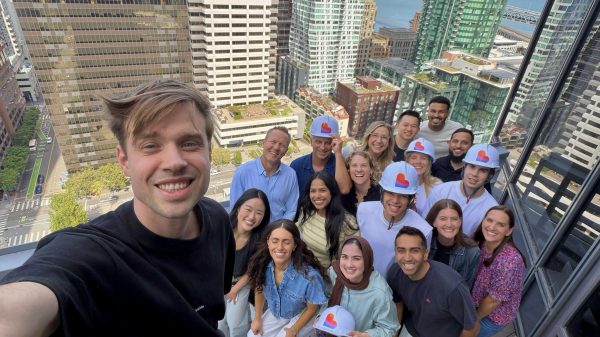
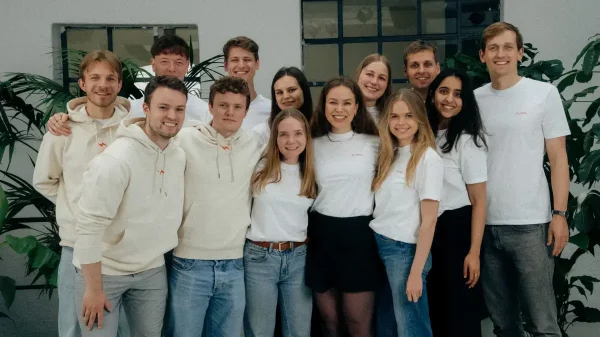
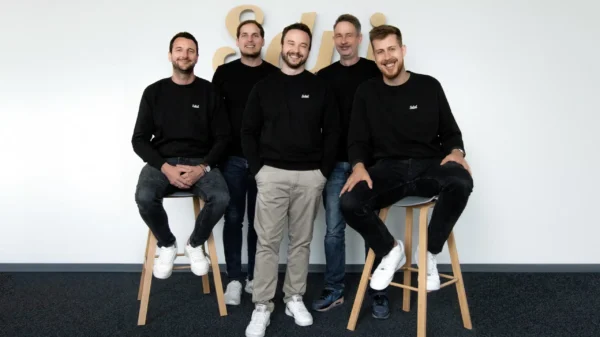
For all its ambition, R3 Bio remains a relatively small team, with fewer than 15 people. But it has already attracted notable early backers including Tim Draper, LongGame VC, and Immortal Dragons. The team brings experience that includes papers in Nature, alongside multiple patents pending.
The company’s ethical case has also drawn support from outside the lab. Jessica Flanigan, the Richard L. Morrill Chair in Ethics and Democratic Values at the University of Richmond, has said that if R3 Bio’s approach succeeds, it could hold considerable promise for reducing the suffering of laboratory animals and replacing many of their current use cases. She added that there is an ethical imperative to pursue such work under appropriate safeguards, and that the potential benefits for both animals and humans outweigh the risks of dismissing the work simply because it is novel.
What makes the founders especially compelling, however, is that their ambition has never been limited to their own company. Over the years, Gilman and Schloendorn have donated equipment and directed support toward communal lab access spaces including Frontier Tower, toward emulation startups working at the edge of biological modeling, and toward a robotics startup in Kazakhstan. Colleagues describe a consistent pattern of helping serious builders get off the ground and making it easier for talented people to keep going when resources are scarce.
That instinct to widen access is not separate from how they think about R3 Bio. For Gilman and Schloendorn, the goal is not simply to build a successful company around a breakthrough technology. It is to strengthen the conditions that make breakthrough science possible in the first place.
In that sense, the founders of R3 Bio reflect a distinctly American ideal: the belief that transformative ideas can still come from determined people working at the frontier, even when they do not look like the people the world has historically expected to build them. At R3 Bio, that belief has taken the form of an ambitious mission to make the future of medicine more humane, more ethical, and more accessible than the present.