


































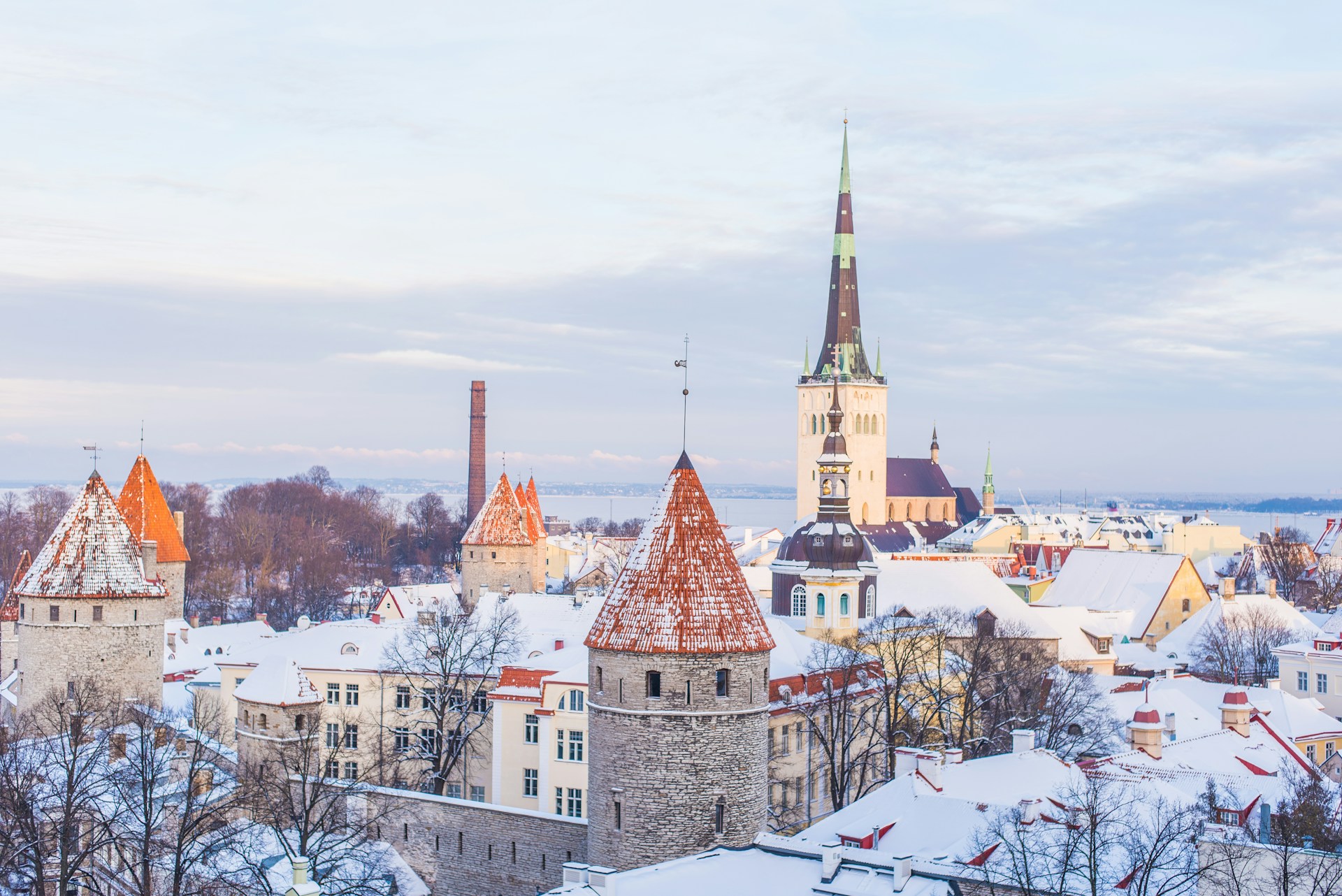
Estonia is one of the strangest success stories in modern tech. A country of roughly 1.36 million people — smaller than many single cities — has produced Skype, Wise, Bolt, Playtech, Pipedrive, Veriff, Glia, Zego, ID.me, and Gelato, and today ranks among the most unicorn-dense nations on earth relative to its population. It is regularly cited as the world’s leading ecosystem for early-stage VC investment per capita, and its capital, Tallinn, sits among the top 60 startup cities globally despite having a metro population under 500,000.
This article breaks down where exactly that success is happening — the specific cities, districts, campuses, and support networks that make up Estonia’s startup landscape — so founders, investors, and policymakers understand not just that Estonia works, but where and why.
Why Estonia, in one paragraph
Estonia rebuilt its state from scratch after regaining independence in 1991, and it built it digital-first: e-government, e-residency, digital ID, and near-zero bureaucratic friction for company formation. Add near-universal English fluency, a strong engineering education pipeline out of Tallinn University of Technology (TalTech) and the University of Tartu, a tight-knit founder community anchored by early Skype alumni (“the Skype Mafia”), and a tax system that defers corporate income tax until profit is distributed, and you get a country structurally optimized for company-building. What follows is where that structure clusters geographically.
1. Tallinn — the undisputed center of gravity
Tallinn is home to the overwhelming majority of Estonia’s venture-backed activity and all four of the country’s officially recognized billion-dollar-plus tech companies at various points in their history, including Bolt, Wise, Playtech’s operational base, and Veriff. Dealroom’s 2026 Global Tech Ecosystem Index placed Tallinn among the densest tech hubs in the world, ranking it in the top 3 globally for early-stage VC per capita and inside the top 10 for both climate tech and cybersecurity.
What makes Tallinn work:
- Ülemiste City and Tehnopol. Tehnopol is Estonia’s largest science and business campus and functions as the connective tissue of the ecosystem — startup incubation, a deep tech accelerator track, corporate R&D units, and TalTech’s applied research all sit inside the same few square kilometers next to Tallinn Airport. It is the closest thing Estonia has to a single physical “startup campus.”
- Density of later-stage companies. Bolt (ride-hailing, food and grocery delivery, micromobility, now one of Europe’s most valuable private tech companies), Veriff (identity verification), Salv (AML/compliance infrastructure), Katana (manufacturing ERP), Glia, and Pipedrive’s Estonian engineering base are all headquartered or centered in Tallinn, which means the city has a deep bench of people who have already been through a hypergrowth scale-up once — the single best predictor of a healthy angel and operator community.
- Capital access. Tallinn is the base for most of Estonia’s active VC funds and angel syndicates, including the Estonian Business Angels Network (EstBAN), Superangel, United Angels VC, and Karma Ventures, along with the local outposts of pan-Baltic and Nordic funds. It is also where most cross-border investors land first when scouting the region.
- Sector center of gravity: fintech and mobility. Wise, Bolt, Salv, Bondora, Cachet, and a long tail of payments and lending startups make fintech Tallinn’s strongest vertical by a wide margin, followed by mobility/logistics and, increasingly, cybersecurity — a natural extension of Estonia’s national investment in digital government security (Guardtime, Cybernetica).
- Talent pipeline. TalTech feeds Tallinn directly with computer science, robotics, and engineering graduates, and the city’s English-first work culture makes it comparatively easy to import international talent through the Estonian Startup Visa.
Tallinn’s limitation is the flip side of its strength: it is small. Founders who build only for the Estonian or even Baltic market plateau fast, which is precisely why the city’s most successful companies (Bolt, Wise, Veriff) were internationally focused from day one — a discipline the wider ecosystem now treats as doctrine rather than exception.
2. Tartu — deep tech, biotech, and the university engine
Tartu, Estonia’s second city and academic capital, is a fundamentally different kind of ecosystem: smaller, calmer, and built around the research output of the University of Tartu (Estonia’s oldest and most research-intensive university) rather than around commercial scale-ups. It is also, notably, the birthplace of Playtech, the online gambling software giant founded there in 1999 before it relocated its commercial center of gravity abroad.
What makes Tartu work:
- Sparkup Tartu Science Park. The city’s answer to Tehnopol, Sparkup runs a 12-month deep tech incubation program offering equity-free funding plus mentoring, and co-runs the national DeepTech Accelerator jointly with Tehnopol, TalTech, the University of Tartu, and the Estonian University of Life Sciences. Cohort teams — drawn from pharma, materials science, AI, food tech, and space technology — receive up to roughly €170,000 in equity-free support over 18 months as part of a state program that has committed more than €12 million to building out Estonia’s deep tech pipeline.
- Life sciences and biotech. The University of Tartu’s biomedicine and biotechnology faculties spin out a steady stream of companies working on diagnostics, antimicrobial therapeutics, and precision medicine — a niche Tallinn simply doesn’t have the academic infrastructure to compete in.
- Space and defense-adjacent deep tech. Companies such as CrystalSpace, which grew out of a student satellite project into a camera-systems supplier for the space and defense industries, exemplify Tartu’s trajectory: university lab to ESA BIC incubation to international B2B contracts.
- Investor access via EstBAN. Tartu doesn’t have Tallinn’s density of resident VC funds, so events like the annual EstBAN x Sparkup pitch night — pairing Tallinn- and Tartu-based angels directly with local deep tech founders — exist specifically to close that gap.
Tartu’s tradeoff is the mirror image of Tallinn’s: extraordinary technical depth and a lower cost of building, but a thinner local investor base and a smaller peer network of founders who’ve already scaled past Series A. Founders who thrive there tend to be technical (often academic) teams building IP-heavy, longer-runway companies — agritech, biotech, space, and materials science — rather than fast-iterating consumer or SaaS plays.
3. Pärnu, Narva, and the rest of the country
Outside Tallinn and Tartu, Estonia’s startup activity is thin but not absent, and it is growing by design rather than by accident.
- Pärnu, Estonia’s summer capital on the west coast, has increasingly positioned itself as a home for remote-first founders and lifestyle-compatible building, aided by improving digital infrastructure and its proximity (90 minutes) to Tallinn. It functions more as an overflow and quality-of-life alternative than an independent ecosystem.
- Narva, on the Russian border, has been the target of state and EU regional-development funding aimed at economic diversification away from the region’s declining industrial base, including incubation support tied to TalTech’s Narva College. It remains early-stage as a startup hub.
- Nationwide, e-Residency effectively creates a fourth, borderless “ecosystem”: a digital identity program that lets non-residents anywhere in the world establish and run an Estonian company entirely online. Over 30,000 companies have now been founded by e-Residents, and government data suggests e-residents are involved in roughly half of recently founded Estonian startups — meaning a meaningful share of “Estonia’s startup ecosystem” today is, technically, distributed across the founders’ actual home countries, tied together only by Estonian company law and banking rails.
How the two hubs compare
| Tallinn | Tartu | |
|---|---|---|
| Best for | Fintech, mobility, SaaS, cybersecurity, fast-scaling B2B/B2C | Biotech, agritech, space, materials science, deep tech |
| Core institution | Tehnopol / TalTech | Sparkup Tartu Science Park / University of Tartu |
| Investor density | High — home to most resident VC funds and angel networks | Low — relies on Tallinn-based investors and EstBAN outreach |
| Talent source | TalTech engineering graduates, international hires via Startup Visa | University of Tartu research faculties |
| Notable companies | Bolt, Wise, Veriff, Salv, Katana, Pipedrive | Playtech (founded here), CrystalSpace, MS Forest |
| Character | Commercial, internationally minded from day one | Academic, IP-heavy, longer development runway |
The national support layer that ties it together
Regardless of city, nearly every serious Estonian startup eventually touches the same handful of national institutions:
- Startup Estonia, the government program coordinating ecosystem strategy, data, and visibility across roughly 150 support organizations nationwide — incubators, accelerators, and investment funds.
- e-Residency and the Estonian Startup Visa, which handle company formation and immigration friction respectively, and together explain why Estonia consistently draws founders from dozens of countries who never intended to relocate permanently.
- The DeepTech Startup Network, the joint Tallinn–Tartu program described above, which is the clearest example of the two ecosystems functioning as one system rather than two competitors.
- Events as connective tissue, most visibly Latitude59, Estonia’s flagship international startup and investor conference in Tallinn, and sTARTUp Day in Tartu, which has grown into one of the largest founder-focused festivals in the Baltics.
Where it’s heading
The current wave of Estonian growth sectors — energy storage (Skeleton Technologies), defense tech, cybersecurity, and applied AI — sits at the intersection of both cities’ strengths: Tallinn’s commercial and capital-markets muscle, and Tartu’s research depth. Estonian officials and ecosystem commentators increasingly describe the strategy explicitly as “Unicorn Factory” thinking: fewer bets on purely domestic demand, more emphasis on state-backed deep tech that can only be built where a serious research base already exists, commercialized by founders who assume international customers from the outset.
The honest caveat, repeated by nearly every experienced founder writing about the ecosystem, is that Estonia’s advantages are structural, not magical: fast company formation, low bureaucratic drag, strong technical graduates, and genuine per-capita investment density do not substitute for product-market fit or a large enough addressable market. Estonia is an excellent place to start a company. Whether it becomes a great place to scale one still depends, as everywhere, on the company.
Quick reference: Estonia’s startup ecosystem by the numbers (2026)
- Population: ~1.36 million
- Active startups: roughly 1,200–1,500 depending on methodology
- Unicorns to date: up to 10 counted by Invest in Estonia (Skype, Playtech, Wise, Bolt, Pipedrive, Veriff, Glia, Zego, ID.me, Gelato)
- Global ranking: among the world’s top dozen startup ecosystems; #1 in Eastern Europe
- Tallinn: ranked among the top 60 global startup cities; top 3 globally for early-stage VC per capita
- Ecosystem support organizations: roughly 150 nationwide
- Companies founded by e-Residents: 30,000+