





















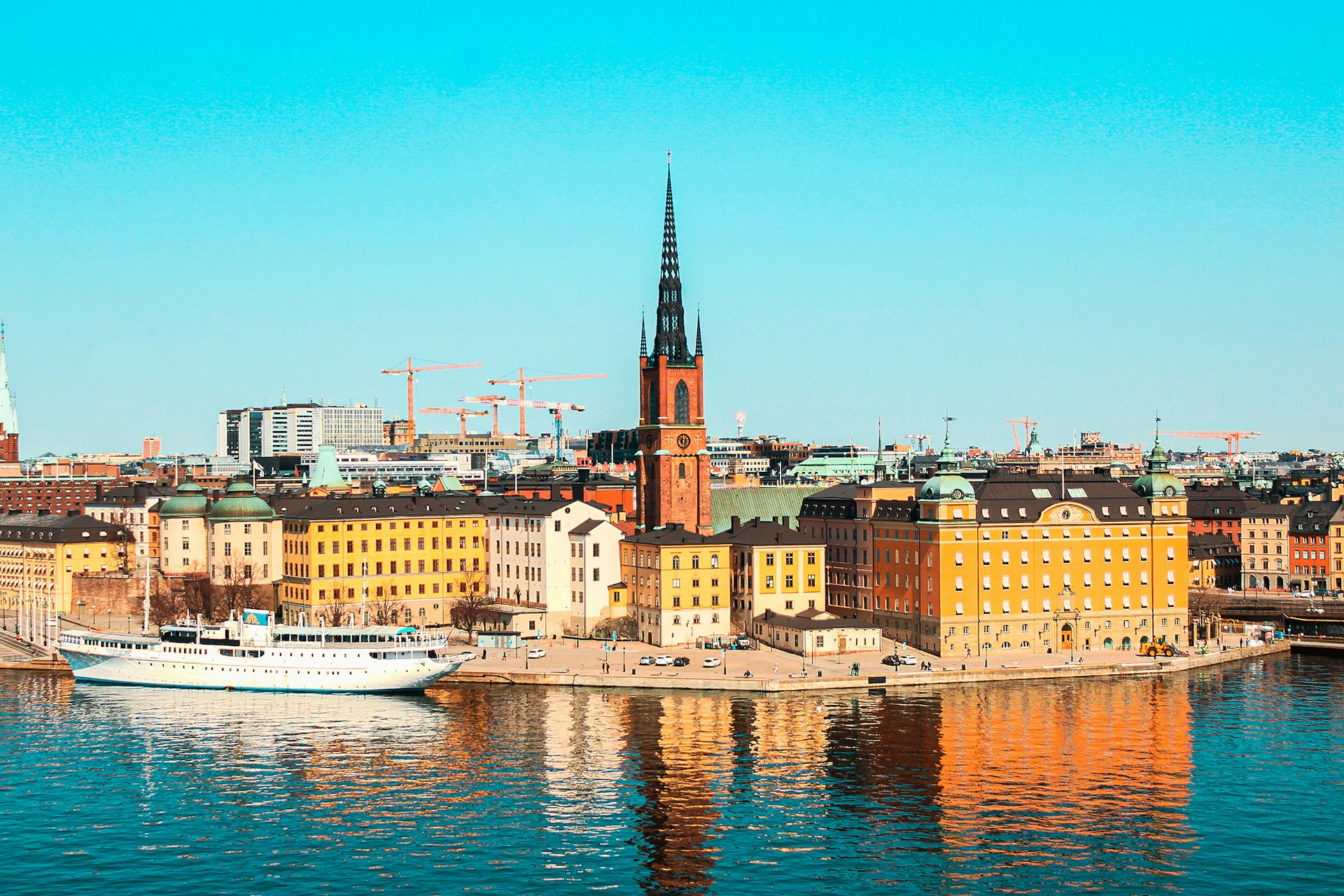
A startupmafia deep dive into the Nordic capital that keeps punching above its weight
For a city of barely a million people, Stockholm produces an absurd number of category-defining companies. Spotify, Klarna, King, Skype (co-founded by a Swede), iZettle, Truecaller, Mojang — the list reads like a “greatest hits” of European tech, and it keeps growing with names like Neko Health, Einride, and Instabox. Per capita, Stockholm has long been cited as the second-highest producer of billion-dollar tech companies in the world after Silicon Valley, and it remains the undisputed centre of gravity for Nordic startups.
This article breaks down why Stockholm works, who’s building there right now, and where the money and infrastructure come from.
Where Stockholm sits globally and in Europe
Stockholm has been on a genuine upswing. In the 2026 Global Startup Ecosystem Report, Stockholm was the standout performer among European ecosystems, jumping eight places to rank #23 globally, tying with Amsterdam-Delta. Startup Genome’s separate 2026 ranking of Europe’s Top 20 Startup Hubs placed Stockholm 5th on the continent, just behind Amsterdam Delta and ahead of Zurich. StartupBlink’s 2026 index has Stockholm 4th in Europe with a total ecosystem score of 43.165 — clearly behind Berlin, but only about 4% ahead of Amsterdam, making the contest for 4th and 5th place in Europe one of the tighter races in the rankings. Within Sweden itself, Stockholm sits at #1 by a wide margin, with a total score roughly 6.7 times higher than second-placed Gothenburg.
Zoom out to the country level and the picture is even more striking: Sweden ranks 6th worldwide and 2nd in Western Europe (behind the UK, ahead of Germany) in the Global Startup Ecosystem Index — a remarkable result for a country of just over 10 million people, and one where Stockholm does the vast majority of the heavy lifting.
A few data points explain why Stockholm carries this weight nationally:
- Sweden’s startup ecosystem has roughly doubled in value over five years, with Swedish startups collectively valued in the hundreds of billions of euros.
- Sweden ranks 4th in Europe for total VC investment since 2020 and 1st per capita — meaning Swedish founders raise more capital per head than founders almost anywhere else on the continent.
- Sweden is also 4th globally for unicorns per capita and sits among the world’s top 10 countries by unicorn count, with the majority of those unicorns headquartered in Stockholm.
- Stockholm alone is home to over 1,400 tracked startups and eight unicorns, whose top three companies have collectively raised more than $25 billion.
What Stockholm is actually good at
Stockholm’s reputation was built on consumer tech and fintech — Spotify’s streaming model and Klarna’s “buy now, pay later” rails both scaled out of the city and reshaped their respective global industries. That DNA is still visible, but the current generation of Stockholm startups skews notably toward AI, climate and sustainable tech, deep tech, and healthtech, alongside continued strength in fintech, gaming, and mobility.
Recent standouts illustrate the range:
- Einride — electric and autonomous freight technology, having raised more than $752 million to date.
- Neko Health — preventative healthcare body-scanning technology, co-founded by Spotify’s Daniel Ek, a good example of successful exit founders recycling capital and credibility back into new deep-tech bets.
- Instabox and Trustly — logistics and fintech infrastructure players with major regional scale.
- Mentimeter — interactive presentation software used globally in classrooms and boardrooms alike.
- Epidemic Sound — a royalty-free music licensing platform for content creators, now a global category leader.
Sweden’s national tech ecosystem report similarly flags deep tech, climate tech, medtech, and biotech as the strongest emerging categories nationally — with Stockholm hosting the bulk of that activity — while noting that late-stage funding still leans heavily on foreign investors, a dynamic familiar to founders across the Nordics.
The hubs, incubators, and accelerators that hold it together
Stockholm’s ecosystem isn’t accidental — it runs on a small number of institutions that have quietly compounded influence for two decades.
STING (Stockholm Innovation & Growth) is the backbone. Founded in 2002 and run in close partnership with KTH Royal Institute of Technology, STING is Sweden’s largest tech startup ecosystem builder — combining an incubator, an accelerator, Sweden’s largest angel fund (Propel Capital), and several of the city’s best-known co-working spaces. STING supports 25–30 new startups a year through two flagship tracks: a 6–18 month Incubator program (three cohorts of 10–12 companies annually) and a 4-month Accelerator program (eight companies per batch, 16 per year), with backing from the City of Stockholm, KTH, Ericsson, and regional real estate owners. Since its founding, STING has supported more than 330 startups.
SUP46 (Start-Up People of Sweden) is the city’s best-known physical hub — a membership-based community and co-working space spanning 2,000+ square metres in central Stockholm. Roughly 10% of applicants are accepted as members, giving founders access to a curated network of investors, partners, and advisors, alongside an open events calendar that makes it the default meeting point for the wider startup community.
Norrsken House, founded by Klarna co-founder Niklas Adalberth, has grown into Europe’s largest impact-tech hub — a co-working space and investment vehicle specifically oriented toward startups tackling social and environmental problems, now with a growing international footprint beyond Stockholm.
KTH Innovation is the entrepreneurship centre of KTH Royal Institute of Technology, offering a free, equity-free pre-incubator program to help students, researchers, and alumni commercialise research and business ideas — a critical pipeline for Stockholm’s deep-tech and hardware startups.
Other fixtures worth knowing: THINGS, a 2,000 sqm co-working space at KTH campus built specifically for hardware startups working in IoT, robotics, and 3D printing; SSE Business Lab, the Stockholm School of Economics’ startup accelerator; Antler, the global early-stage VC and company builder with an active Stockholm program; and government-backed bodies like Vinnova (Sweden’s innovation agency, a major source of non-dilutive grant funding) and Almi (loans and advisory support for early-stage companies).
Capital: who’s writing the checks
Stockholm’s investor base blends globally recognised VC firms with a dense layer of experienced angel investors — many of them founders or early employees from Spotify, Klarna, King, and iZettle recycling both capital and operating know-how back into the ecosystem.
On the institutional side, Northzone and Creandum are the two names most consistently cited as anchors of the Stockholm VC scene, both investing across the Nordics and beyond from Stockholm bases. EQT Ventures brings the scale and international reach of the broader EQT platform to early and growth-stage tech investing. On the angel side, Propel Capital (STING’s angel fund) is Sweden’s largest angel syndicate, while Stockholms Affärsänglar (STOAF)pools roughly 50 business angels’ capital, networks, and time behind promising teams. Individual angels carry outsized influence here too — serial investor Jane Walerud, an early backer of Klarna and Tobii who now runs Walerud Ventures, is a good example of the kind of hands-on, reputation-driven capital that shapes which companies get a serious first look.
For founders benchmarking fundraising expectations: Sweden’s per-capita VC investment is the highest in Europe, but as national reporting notes, later-stage rounds still frequently pull in foreign (often US) capital once Swedish and Nordic investors have led the earlier stages — a pattern very similar to what’s playing out in defencetech and deep tech across the rest of the continent.
Why it works: the underlying conditions
A few structural factors explain why Stockholm keeps outperforming its size:
- Deep technical talent, concentrated. KTH Royal Institute of Technology and Stockholm School of Economics feed a steady stream of engineers and commercially literate founders directly into the ecosystem, with KTH Innovation acting as a formal bridge from research to company formation.
- English-first business culture. Sweden’s near-universal English fluency removes one of the biggest friction points continental European ecosystems still deal with when hiring internationally or pitching foreign investors.
- A culture of reinvestment. Successful founders from Spotify, Klarna, King, iZettle, and Skype have overwhelmingly stayed in or returned to the ecosystem as angels, GPs, or serial founders, rather than exiting the country — compounding both capital and mentorship density year over year.
- Strong public-private innovation infrastructure. Between Vinnova grants, STING’s two-decade track record, and KTH’s pre-incubation pipeline, Stockholm has built durable, non-hype-cycle-dependent institutions that keep producing founders even when global VC sentiment cools.
The bottom line for founders
If you’re building in AI, fintech, climate tech, or deep tech and want a European base with genuine global unicorn density, deep technical talent, and investors who’ve been through multiple cycles already, Stockholm remains one of the strongest options on the continent — arguably still punching above even its impressive 2026 ranking gains. The trade-offs are real (a high cost of living, a small domestic market that pushes almost every serious startup to internationalise early, and continued reliance on foreign capital for growth rounds) — but the density of talent, capital, and institutional support per square kilometre is hard to match anywhere in Europe outside London and Berlin.
Sources: Startup Genome Global Startup Ecosystem Report 2026, StartupBlink Global Startup Ecosystem Index 2026, EU-Startups, Dealroom “State of the Swedish Tech Ecosystem” report, Visible.vc, Failory, and public ecosystem data as of July 2026.