




















































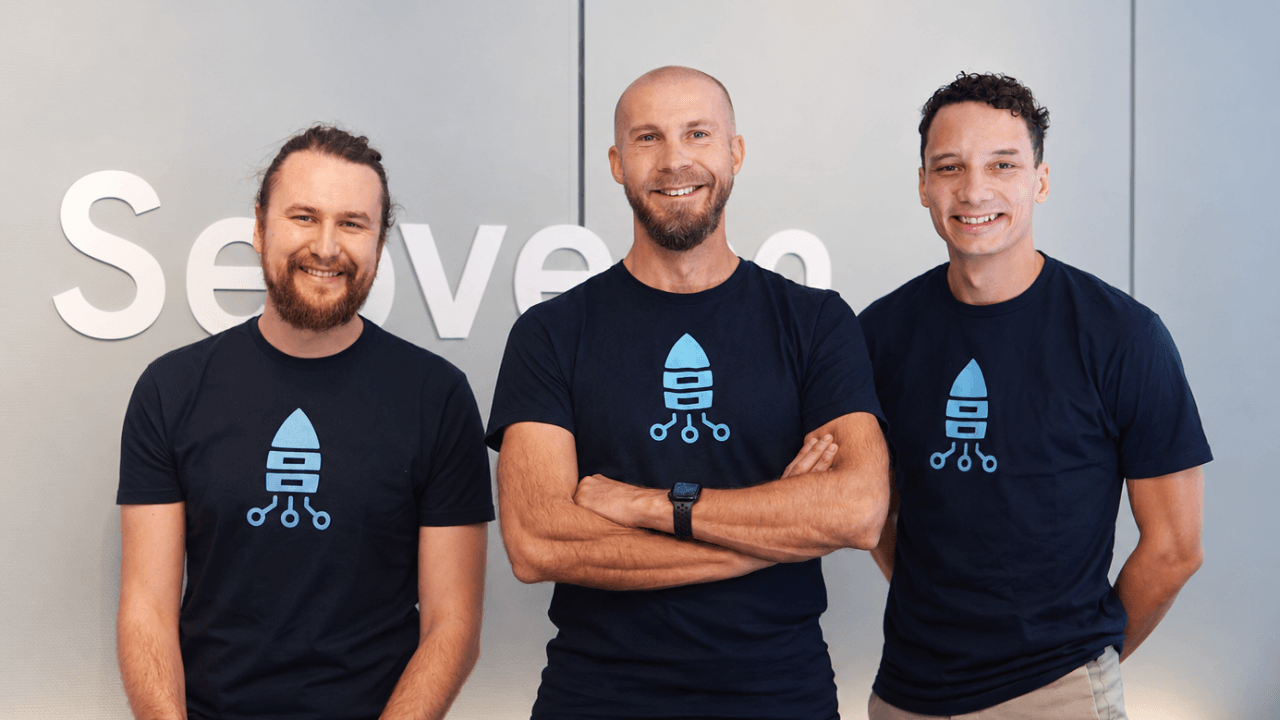
Stockholm-based Serverpod has launched App Studio, a downloadable development environment for building full-stack applications with AI coding agents — and deliberately, it has no AI of its own.
The Problem
AI coding has made it dramatically easier to turn an idea into a working prototype. But when those prototypes need to become real products, their creators often hit a gap: mobile platforms, databases, deployment, security, and production infrastructure still require conventional development tools. General-purpose coding agents such as Antigravity, Claude Code, Codex, and Cursor can generate code for almost any stack, but they don’t remove the complexity around that code. AI has shifted the bottleneck — writing code is getting faster, but turning that code into a secure, scalable, production-ready application remains a specialist task.
Viktor Lidholt, founder of Serverpod, explained the company’s reasoning: “We built the environment around AI instead. Developers can change agents without changing their stack, and the app they started vibe-coding can become the app they ship.”
Serverpod is an open-source backend framework written in Dart for the Flutter community, founded in 2023 by former Google software engineer Viktor Lidholt and headquartered in Stockholm.
Building the Infrastructure Around AI
App Studio includes everything needed to create and run Flutter and Serverpod projects without complicated setup, letting developers own their code and build for mobile, desktop, and the web. Under the hood, App Studio creates standard projects using Flutter, Google’s open-source framework for building apps from a single codebase, with Serverpod providing the backend and database. Flutter accounts for roughly 30% of new App Store releases, while Serverpod itself is already used in production by startups, app studios, banks, medical companies, and government organisations.
The latest version of Serverpod introduces stateful hot reload across the full stack, letting an AI agent or developer update the application, server, generated APIs, and database schema while the project keeps running, with feedback in milliseconds.
Alongside App Studio, Serverpod is opening Serverpod Cloud, giving developers a direct path from a locally running project to a deployed application. A backend and web app can be deployed with a single command, with the service managing infrastructure including databases, load balancing, domains, secrets, caching, and file storage.
“Generating code is only one part of building software,” Lidholt said. “The harder questions begin when people want others to depend on what they have created. It needs to run reliably, work across platforms, connect to a real backend, and remain maintainable. Those are the problems we want to solve.”
From Vibe Coders to Software Developers
App Studio’s primary user base isn’t defined by how long they’ve been coding, but by their motivation to build something real with AI. Experienced developers can use it to skip hours of setup when trying out Flutter and Serverpod, while a larger group consists of people entering software development through AI for the first time.
“We want them to start with professional tools and code from day one, even if they do not yet consider themselves developers,” Lidholt said.
Craig Labenz, Developer Relations Engineer at Google’s Flutter team, added: “The next generation of developer tools needs to help those projects grow beyond the initial experiment. Having readable, understandable, and predictable code gives AI a much stronger foundation to work from, making it easier to follow existing patterns and generate good software reliably. AI is bringing an entirely new group of people into software development.”
Bring Your Own AI Agent
App Studio deliberately has no built-in AI. Switching between AI coding agents is relatively straightforward since they can work on the same project files — the main difference lies in how each tool configures agent skills and MCP servers. Lidholt personally uses a combination of Claude Code and Cursor, switching between the two depending on the task.
“The agents work on the same files, so you can close one tool and open the project with another,” he said. On the lack of industry standardisation around agent configuration, Lidholt added: “It’s unfortunate that the industry couldn’t unite around a standard, but at least it’s possible to have multiple configurations that won’t interfere with each other. App Studio actually sets it up for you, so that’s another small obstacle you won’t need to overcome.” Serverpod hasn’t ruled out partnering with AI agent companies in the future.
What Happens When a Vibe-Coded App Succeeds?
According to Lidholt, vibe-coded apps often run into trouble moving from a single-user demo to real-world traffic, since many AI tools favour visual output over robust, scalable architecture. Common problems include security flaws, missing access controls, unoptimised databases, and silent error handling that masks bugs — issues that can lead to expensive infrastructure bills and apps that get hacked or break down in production.
App Studio automates setup and iteration, but not responsibility or judgement: Lidholt says applications involving sensitive data, complex permissions, or regulatory requirements should still involve an experienced software engineer. Publishing an app to Apple’s App Store or Google Play also remains an unautomated, involved process — something Serverpod aims to address in a future version of the product.
Avoiding the Next Generation of Vendor Lock-in
App Studio offers two kinds of portability. Serverpod is an open-source framework that can be hosted anywhere — on GCP, AWS, or a server in your basement — so there’s no lock-in there. Users can also stop using App Studio at any time and continue working in a standard development environment.
“It’s a standard Flutter and Serverpod project. You can, of course, also replace Serverpod entirely, but that is a normal backend migration rather than a one-click switch. The important part is that the code and data are yours. Nothing is hidden within a platform that prevents you from leaving,” Lidholt said.
App Studio is free and open source, just like Flutter and the Serverpod framework itself. The company’s main business model is Serverpod Cloud, where developers pay to have their web app, backend, and database hosted. Thanks to economies of scale, pricing is designed to be competitive with self-hosting, starting at $5/month for a full stack, without requiring users to be DevOps experts.
Why Haven’t the AI Giants Built This Already?
While nothing stops companies such as OpenAI, Anthropic, or Cursor from building similar infrastructure themselves, Lidholt argues that recreating the full stack would be a substantial undertaking. Serverpod spans the client, server, APIs, database, development workflow, and deployment — and AI models have relatively little training data in areas such as hot reload, offline-first sync, and advanced code analysis.
“So, even for a large company, building something like Serverpod takes time,” Lidholt said.
For Lidholt, the more important question in the broader vibe-coding conversation isn’t whether someone without a software background can build an app, but what happens if that app succeeds: “Can another developer understand it? Can you change AI agents? Will it scale? Is your data locked in? At Serverpod, we think software should be able to outlive the prompt and even App Studio itself. That’s the larger idea behind what we are building.”