






















































Stockholm-based Amelle, an AI platform designed to help accounting firms document their general and individual risk assessments, including KYC (know your customer), has raised SEK3 million (€270K, $300K) in its first external funding round. Investors include accounting firm JWK Redovisning (with Mikael Wiklund) and lawyer Carl Svernlöv, an expert in corporate law who has represented accounting firms in court.
The Problem
Sweden’s anti-money laundering law requires accounting firms to carry out a general risk assessment of their entire business, as well as individual customer risk assessments, including KYC checks on board members and political exposure. Last year, fines issued to accounting firms totaled SEK4.6 million, and the industry is flagged as one of the four sectors at greatest risk of being exploited for money laundering. Over the past five years, more than 100 firms have received sanction fees from Sweden’s County Administrative Boards for inadequate anti-money laundering work.
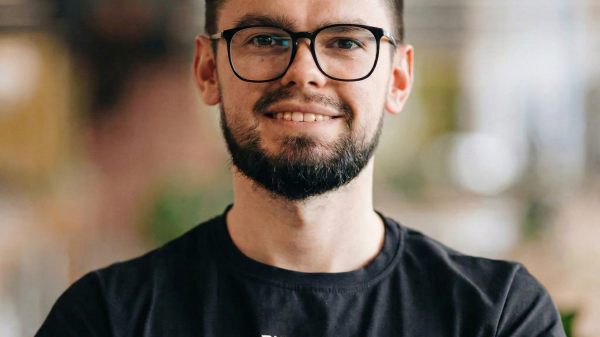
“No serious firm wants to be associated with money laundering, but it’s a strict and constantly changing regulatory framework that requires subjective, traceable assessments,” says Lars Runius, CEO and co-founder of Amelle.
How Amelle Was Founded
Amelle was founded in December 2025 by accounting consultant Karin Nilsson and company builder Hidden Dreams. Nilsson was frustrated by how inefficient existing systems were for this work. Through shared contacts in the Hidden Dreams network, Runius was brought in and joined as co-founding CEO. Runius has a background in efficiency improvement, including at Ica, and has previously run his own startups. Before Amelle, he worked with the accounting industry on customer reviews at the company Reco.
The Product
Amelle reads in a firm’s customer register and produces draft versions of both the general risk assessment and individual customer risk assessments. The system checks board members against registries and flags risk factors, such as unusual industry classification codes (SNI codes) — work that would otherwise be done manually. The firm then reviews and adjusts the suggestions itself.
“Amelle doesn’t take over any responsibility — that stays with the customer. But we help direct attention in the right direction,” Runius says.
Standing Out from Competitors
Several competing KYC tools exist on the market, including from Fortnox, Björn Lundén, and Spiris. Runius argues these give firms a false sense of security: “They give a false sense of security. You can’t just do a few lookups and then feel satisfied.” He positions Amelle as a more complete service — closer to a consultant for risk assessments than a standard KYC module.
On pricing, Runius declined to give an exact figure but said Amelle charges a fixed annual fee based on the firm’s revenue, plus a variable amount per customer. “Firms that previously paid up to SEK80,000 for an external legal review of their documentation end up significantly lower with Amelle,” he says.
Traction
Amelle says it currently has 25 customers, including JWK Redovisning, Business Group Dalarna, and MERA konsultbyrå — ranging from mid-sized firms with multiple offices and up to 1,000 customers, down to solo accounting consultants with around twenty customers.
What’s Next
The SEK3 million funding round closed this summer. The capital will primarily go toward faster product development — including integrations with accounting systems — and toward strengthening sales capacity.
The company remains small: Runius is the only full-time employee, while Hidden Dreams co-founder Johan Lindblad serves as technical lead. The next hires are expected to be a salesperson and a developer.
Runius doesn’t consider the requirements in the anti-money laundering law unreasonable in themselves, but calls for clearer communication from the County Administrative Board on how they should be interpreted. “In three years, I hope we’ll have crossed the threshold where anti-money laundering work is seen as frustrating documentation, and instead it becomes part of working closely with your customers and really knowing them. That’s what actually counteracts money laundering,” he says.