











































































Sergii Kravtsov, CEO and co-founder of ConnectiveOne & Evergreen, has made Folio public — an open-source, self-hosted alternative to Confluence and Notion featuring whiteboards, data tables, and an AI agent. What sets Folio apart isn’t just the product, but how it was built: the entire software development lifecycle ran through AI agents, under Kravtsov’s direction.
How It Was Built
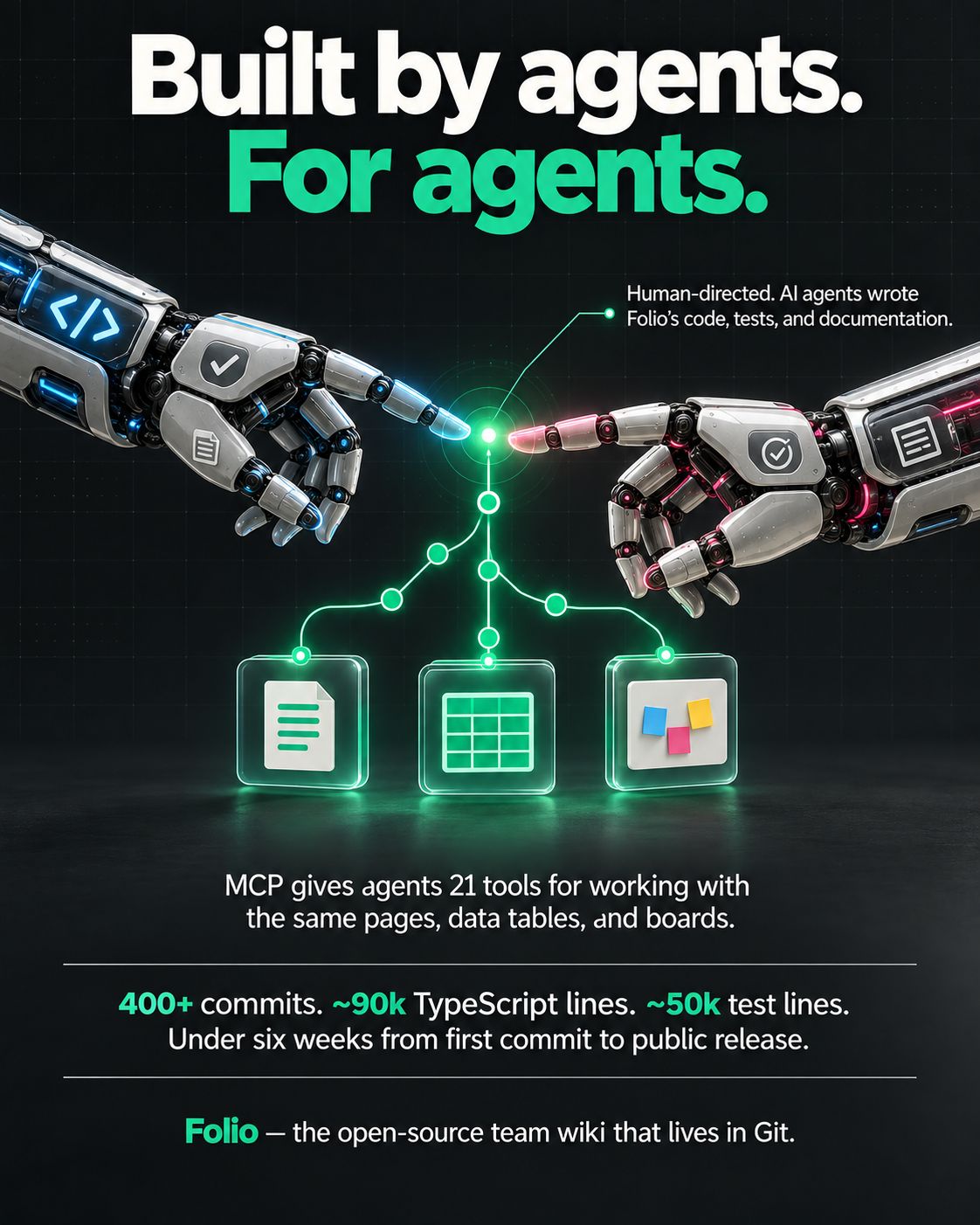
Kravtsov described his role as director rather than developer: he decided what to build, checked every flow in the browser, and decided what shipped. AI agents planned the work, wrote the code, tests, and documentation, ran QA, and fixed what failed.
From the first commit to the public release took under six weeks. The working history includes more than 400 commits, about 90,000 lines of TypeScript, and another 50,000 lines of tests.
The Product
Folio is an open-source, self-hosted alternative to Confluence and Notion. Every page is a Markdown file in Git, letting people edit together in the browser while developers work with the same content directly in the repository. Agents interact with pages, data tables, and boards through 21 MCP tools — built, as Kravtsov put it, “made by agents, built for agents.”
The repository includes the rules, plans, handoffs, and limitations behind the build process, alongside the code itself, giving other teams visibility into how the agent-driven development process actually worked.
Try It Out
Kravtsov is inviting teams that currently keep their knowledge in Confluence, Notion, or Google Docs to try Folio on a real team wiki, break it, and report back what’s missing. The repository is available at github.com/evergreen-it-dev/folio.