

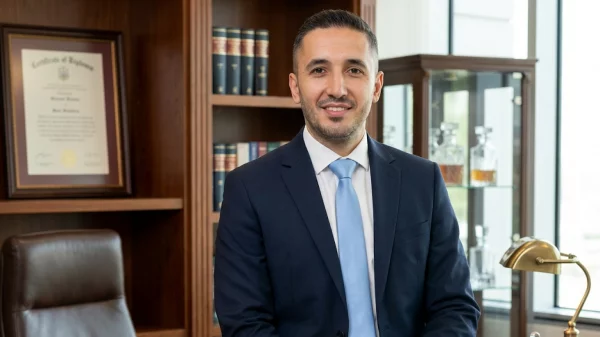








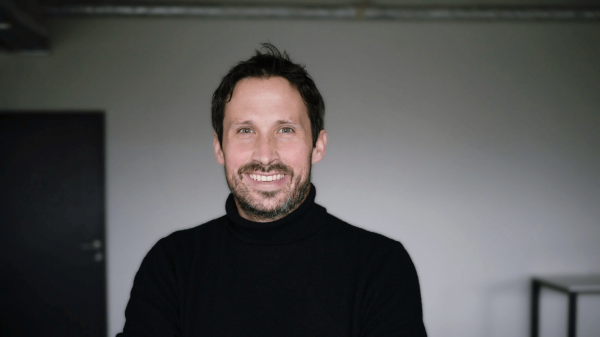







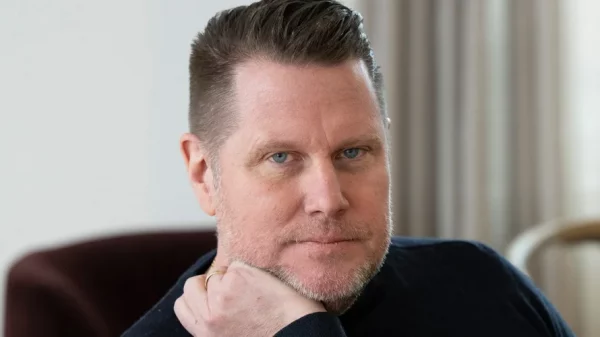














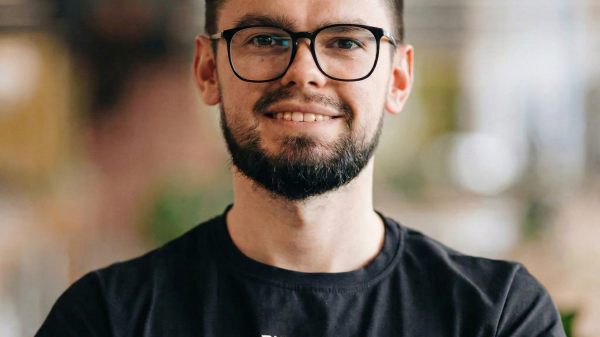











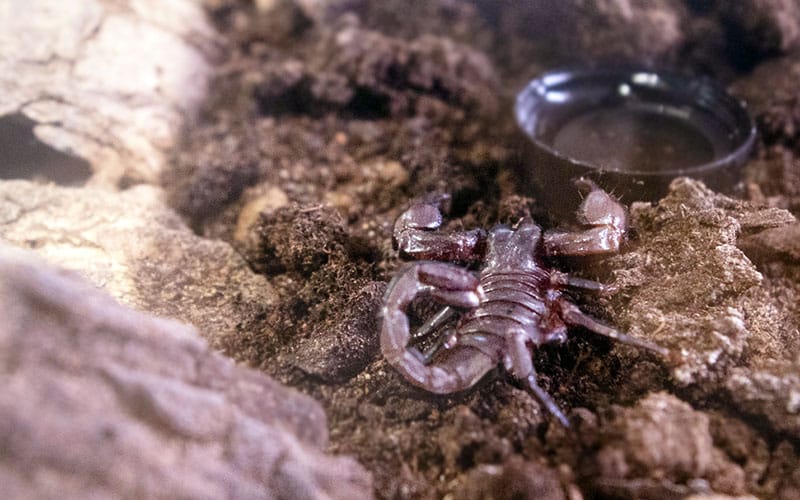
One summer night as a nine-year-old, Mustafa Alatrash was stung by a scorpion in Syria — an event that nearly cost him his life. Just over 20 years later, he runs Swevenom, a Swedish biotech company working to make biological venoms accessible for research into cancer, antibiotic resistance, and pain relief. Swevenom is developing its business idea with support from the Kalmar Science Park Incubator, but the story behind the company began long before it was founded.
The Sting That Started It All
Mustafa grew up in northern Syria, in an area where scorpions are part of daily life. During a stay at his family’s summer house, he was stung by a scorpion while going to sleep. The following hours turned dramatic: the correct antivenom wasn’t available, and at the hospital he was given an antivenom not suited to the species that had caused the poisoning. His condition deteriorated rapidly, and during transport to another hospital, he suffered cardiac arrest. After several days in hospital, he recovered against the odds.
“The doctors said afterward that I’d had a guardian angel,” Mustafa recalls.
A Curiosity That Wouldn’t Fade
The event left more than strong memories — it left many questions. Mustafa tried to learn everything he could about scorpions, venomous animals, and how biological venoms affect the human body. The interest followed him through childhood and grew stronger with the years. When he came to Sweden at age 16, his focus shifted to language, studies, and establishing himself in his new home country. But in his early twenties, the fascination returned. A search online for scorpion farms in Sweden became an unexpected turning point.
“There was basically nothing. That’s when I started wondering why,” Mustafa says.
Spotting a Gap in the Market
As Mustafa dug deeper into the field, he discovered that biological venoms are used in research worldwide. Toxins and peptides from scorpions, snakes, and spiders, among others, are studied for their potential in cancer treatments, antibiotic development, and pain relief. At the same time, he found that toxinology — the study of biological venoms — is a relatively small research field in Sweden. That became the starting point for Swevenom.
Today, the company works to give research institutions, universities, and biotech companies access to biological venoms, while also building connections between researchers, laboratories, investors, and other players in the field.
“The goal isn’t just to provide material for research, but also to help more research projects take the next step,” Mustafa says.
From a Scorpion Farm to International Collaborations
The original plan was to start a scorpion farm, but the business idea evolved over time. According to Mustafa, Kalmar Science Park’s business coaches, Athinna Papadopoulou and Jörgen Gustafsson, were instrumental in turning the ideas from concept to reality: “We got help identifying the real needs in the industry and finding our niche. Through discussions with the business coaches, it became clear where the real needs were and how we could create the most value.”
Today, the business is instead built on international collaborations that provide access to biological venoms from hundreds of species, along with a network of researchers and laboratories across several countries.
Growing Interest
Swevenom has collaborations both in Sweden and internationally, including work to map the contents of various biological venoms. Together with researchers at Uppsala University, the company is investigating peptides and toxins with potential applications in cancer research.
Interest in the business has grown quickly. Over the past year, Swevenom has received inquiries from investors, researchers, and biotech companies in several countries. At the same time, Mustafa is clear that the path from research to finished medicines is a long one. His vision is for Swevenom to eventually contribute to the development of new treatments based on biological venoms.
“In ten years, I hope we will have helped contribute to a new Swedish cancer drug with origins in biological venoms,” he says.
For Mustafa, the journey still comes down to the same question raised by the scorpion sting many years ago: how something that can be life-threatening can also help save lives.