











































Stavanger is the Norwegian ecosystem that is hardest to judge by startup metrics, because startup metrics are the wrong instrument.
On a database ranking, Stavanger looks marginal: StartupBlink places it #326 globally and #2 in Norway, with around 48 tracked startups. Measured on customers, capital under management, industrial testbeds and the sheer number of decision-makers who can sign a pilot contract, it is arguably the most commercially useful place in the country to build a company — provided you build the right kind.
Stavanger is the Energy Capital of Norway. Over the past 60 years the region led the development of Norway as an energy nation, and the city government is explicit about the stake: if Stavanger succeeds with the green transition, Norway succeeds.
That framing is not marketing. It is the organising logic of the entire ecosystem.
1. The setup
Rogaland has a population of roughly 500,000 and is sometimes described as “Norway in miniature” — energy, maritime, technology, agriculture, aquaculture, fishing and tourism all in one county. The Stavanger region is Norway’s third-largest urban centre and hosts the headquarters of Equinor, the Norwegian Offshore Directorate and the Norwegian Ocean Industry Authority, alongside a dense supplier industry.
In 2024 the region was formally recognised as one of Europe’s Regional Innovation Valleys, an initiative launched jointly by the European Commission and the Committee of the Regions to strengthen regional R&I ecosystems — a joint bid by Rogaland County Council, the University of Stavanger and the University Fund of Rogaland.
What that means in practice. Stavanger is not trying to become a generalist startup city. It is trying to convert 60 years of offshore engineering, project management and subsea expertise into a new industrial base. The knowledge from oil and gas is treated as the vital input for the transition, in everything from engineering to project management.
For a founder, the implication is straightforward: Stavanger rewards companies that sell into heavy industry and punishes companies that don’t.
2. What Stavanger is actually good at
Energy transition and offshore wind. The obvious core. Floating offshore wind, where Norway’s petro-maritime supply chain is unusually well positioned, with Equinor and Aker Solutions already at the forefront.
Hydrogen and CCUS. Norway holds world-leading expertise across offshore technology, subsea operations, hydrogen, CCUS and digitalisation — and Stavanger is where most of the offshore end of that sits.
Industrial software and digitalisation. SaaS for the energy sector, asset management, compliance, GRC. Corporater, the Stavanger-based governance, performance, risk and compliance platform, is the established local example.
EV charging and electrification. Zaptec, the Stavanger EV charging manufacturer, became the Norwegian market leader for housing cooperatives and businesses before expanding internationally. The region has built a notable cluster in battery tech, EV chargers, drones and renewables.
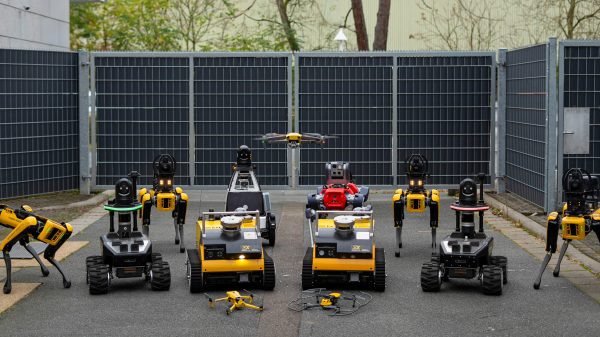
AI-driven robotics. A newer and fast-consolidating strength — deepwater inspection through to battery-swapping for ferries, with practical systems being built and tested now. The University of Stavanger has scaled its AI and robotics offering from bachelor courses to master’s programmes and applied research at Stavanger AI Lab, with HVL contributing engineering expertise and NORCE bringing scientific capacity into industry pilots.
Aquaculture. Less obvious, and underrated. The Stiim Aqua Cluster exists specifically to transfer technology from oil and gas, automation, electronics, robotics, maritime mechanical industries and IT into the established aquaculture sector. If you have subsea or industrial automation technology, Stiim is the bridge into fish farming.
Smart cities. Nordic Edge has made Stavanger a genuine node in urban innovation, and Innoasis is Norway’s hub for urban innovation.
3. The clusters: Stavanger’s real infrastructure
More than any other Norwegian city, Stavanger organises itself through industry clusters. Rogaland hosts seven national business clusters, gathering industrial and academic members from across Norway, all organised under Norwegian Innovation Clusters — a cooperation between Innovation Norway, SIVA and the Research Council of Norway.
The three that matter most:
| Cluster | Focus | Scale |
|---|---|---|
| Energy Transition Norway | Leading the shift to renewable and low-emission energy solutions | 120+ members and partners |
| Norwegian Offshore Wind Cluster | Becoming the strongest global supply chain for floating offshore wind | Equinor, Aker Solutions and the supplier base |
| Stiim Aqua Cluster | Transferring offshore, automation and robotics tech into aquaculture | Cross-sector by design |
The 2026 consolidation. This year the picture changed. Energy Transition Norway, Energy Valley and GCE Ocean Technology joined forces as Energy Cluster Norway, a new national platform representing more than 350 companies and organisations across the entire energy value chain. ECN launched officially at ONS 2026 in Stavanger on 24 August, with a seminar programme at the venue.
For a startup, the practical value is access: the three clusters bring complementary capabilities — scale-up programmes, operator-driven innovation, AI and digital transformation, research partnerships, and both Norwegian and European funding routes — that no single cluster could offer alone.
Cluster membership in Stavanger is not networking. It is the access mechanism to pilot budgets.
4. The physical map
Ullandhaug — Innovation Park Stavanger. Located on the University of Stavanger campus, housing around 900 employees and functioning as the hot spot for cross-sectoral research and innovation collaboration. Earlier accounts describe nine buildings hosting over 150 companies and roughly 1,300 employees. Validé, the regional incubator, is based here.
Innovation Dock — Stavanger and Sandnes. A sustainability-centred coworking operation with high-quality facilities across two sites, and increasingly the ecosystem’s programming engine rather than just a workspace.
Innoasis. The urban innovation hub, tied to the Nordic Edge smart-city world.
Stavanger Forum. Home of ONS, and for one week every two years the centre of the global energy industry.
5. Programmes and incubators
Validé
The anchor institution, and one of Norway’s largest government-funded incubators, supporting energy, health and smart city technology. Around 50 new companies enter the Validé incubator annually.
What you get: equity-free incubation, one-on-one advisory, community, grant guidance, help raising money, access to Validé’s early-stage fund, and introductions across its network. Applications are rolling. There is also a scale-up programme for companies with high growth potential over a couple of years.
Validé also runs Gründeracademy Rogaland, covering pitch training, team building, board structuring, company rights, funding and liquidity management, budgeting, branding, marketing and sales — and ITSAccelerator, with a 3-month “Start” programme and an intensive 4-month “Growth” programme, offering up to NOK 500,000.
X2 Labs
The most unusual programme in Norway. X2 Labs calls itself a “Startup Factory” and runs four-week sprints that build new companies from scratch, with the team acting as co-founders rather than mentors. Participants — “Startup Heroes” — work on genuine market challenges presented by established corporations from day one, with themed batches across sectors including digital tourism, food, fintech, digital health, blue revolution and ocean space. The output is a company with customer traction in four weeks, plus mentor network and seed investor introductions.
Whether that timeline is realistic depends on your view of venture building. It is undeniably the fastest route in the country from an industrial problem statement to an incorporated entity with a pilot customer.
Innovation Dock’s programme layer
- Nordic Energy Matchbox, developed with Energy Transition Norway and Validé: focused pitch sessions where startups and scaleups meet industry decision-makers around real industrial challenges, rather than generic pitch days.
- Startup Exchange, run with Equinor, Greentown Labs and StartupLab: in 2024 it brought four US startups to ONS; in 2026 it brought nine international startups from the US, UK, Brazil and Norway. The exchange runs in both directions.
- Impact Summit & Awards, the flagship spring event, including Impact Million — a competition open to startups across Norway where 13 investors invest NOK 1 million in one company, live on stage.
TheFactory
The Oslo-founded accelerator also runs Stavanger cohorts alongside Oslo, Bergen and Kristiansand: a 12-week programme, two batches a year, 120+ mentors, corporate pilots, and reported investment up to NOK 500k.
6. The capital
Here Stavanger has an asset the other regional hubs don’t.
Nysnø Climate Investments
Norway’s state climate investment company is headquartered in Stavanger. Established in 2017 and owned by the Ministry of Trade, Industry and Fisheries, Nysnø has around NOK 5.4 billion under management, investing in clean energy, digital and enabling technologies, resource efficiency, sustainable demand and the circular economy.
The mandate has clear rules. Nysnø prioritises companies moving from technology development to commercialisation, requires a direct or indirect greenhouse gas reduction effect, and requires private actors to own at least 50% of the companies and funds it backs. It focuses on the growth phase, when businesses need to scale and commercialise.
The portfolio is doing well. Four Nysnø companies — Hystar, Spoor, Alva Industries and Nofence — appeared on the Sifted 100: Nordics 2026 list of the region’s fastest-growing startups and scaleups, with Nysnø itself ranked among the top 10 investors backing companies on the list. Recent deals include Hystar (green hydrogen), Nofence (virtual fencing, September 2025), and Lace Lithography in March 2026, alongside an international consortium led by Atomico.
Nysnø also invests in funds: it put NOK 50 million into Skagerak Capital V, which targets the intersection of climate tech and AI.
Everything else
- Validé’s early-stage fund for incubator companies.
- Valinor, a Stavanger-based family-owned investment firm focused on clean tech worldwide.
- Corporate venture and supplier-industry capital from the energy majors and their supply chain.
- ITSAccelerator cheques up to NOK 500k.
- Nordic Fund Day, run during Nordic Edge Expo, has by its seventh edition brought together 70+ startups and 100+ investors, with NOK 300 million invested at previous events.
- Public money: SkatteFUNN (19% of R&D costs, refunded in cash if pre-profit, capped at NOK 25M of project expenses annually), Innovation Norway’s grant ladder, and Enova, which funds energy and climate technology across maturity levels — disproportionately relevant here.
The honest read. Stavanger has more public and climate-mandated capital than any comparable Norwegian city and almost no generalist venture capital. If your company reduces emissions, the money is unusually accessible. If it doesn’t, you will be raising in Oslo.
7. Talent and cost
Academia. The University of Stavanger had 13,647 students in 2025 and around 2,359 staff, on a budget just under NOK 2 billion (~$190M). Add HVL for engineering and regional anchoring, NORCE for research capacity in industrial pilots, and NIBIO. These are not only talent sources but places where new ideas can be tested rigorously.
Industry talent. This is the real pool — thousands of engineers, project managers and subsea specialists with decades of experience delivering complex offshore projects. Companies with drive, knowledge and technology are actively reinventing themselves out of oil and gas.
Cost. One-bedroom rents run roughly 9,000–14,000 NOK a month, cheaper than Oslo and Bergen. Salaries in the energy sector are very high, which cuts both ways: you are competing with Equinor for the same people.
Quality of life. Excellent international schools, a large integrated expat community, beaches, and Preikestolen an hour away. The regional culture emphasises family, leisure and wellbeing, with shorter working hours and generous vacation.
8. The honest problems
Single-sector exposure. The job market is heavily dependent on a fluctuating energy sector. That is the structural risk sitting under everything. A sustained oil price drop hits your customers, your investors and your hiring market simultaneously. Stavanger’s entire strategy is a bet that it can convert that dependency into a new industrial base before the old one contracts — and the bet is not yet won.
Thin startup base. Around 48 tracked startups and a #326 global rank is small. Stavanger’s 12 tracked SaaS companies have combined revenues of $67.8M and 569 employees — respectable, not transformative.
More programme than pipeline. Stavanger has Validé, X2 Labs, ITSAccelerator, TheFactory, Innovation Dock, Innoasis, Nordic Edge, seven national clusters and a state climate fund. That is a lot of infrastructure relative to the number of venture-scale companies coming out. The support layer is arguably ahead of the deal flow.
The scaling question, asked locally. The ecosystem is aware of this. At Arendalsuka, Innovation Dock, Nordic Edge and Validé convened founders and investors specifically around the question of why more Norwegian startups aren’t scaling internationally despite the country having the capital — framed around the need for more companies that turn technology into exports, jobs and new industries.
When your own ecosystem builders are running that panel, it’s a real problem rather than a rhetorical one.
Corporate procurement speed. Selling to Equinor is valuable and slow. Budget your runway for enterprise energy sales cycles, not SaaS ones.
9. The calendar
Stavanger’s events punch far above the city’s weight, and two of them are genuinely world-scale.
ONS (Offshore Northern Seas) runs every two years at Stavanger Forum. The 2024 edition drew 72,676 visitors from around 100 countries with more than 1,100 exhibiting companies and roughly 1,150 speakers across nine conference arenas. ONS 2026 ran 24–27 August under the theme “Courage”. Beyond the main venue, the downtown harbour becomes a networking hub in the evenings, with ships serving as floating meeting rooms.
If you sell anything to the energy industry, ONS is the single highest-density customer event available to you anywhere. Plan a year ahead.
Nordic Edge Expo covers smart and sustainable cities, and hosts Nordic Fund Day.
Impact Summit & Awards, Innovation Dock’s flagship, every spring — including Impact Million.
European Robotics Forum comes to Stavanger in 2026, giving Rogaland a chance to present its robotics strengths in a coordinated way.
10. The verdict
Stavanger is the right choice if:
- You sell into energy — offshore wind, hydrogen, CCUS, subsea, grid, industrial digitalisation. The buyers, the supply chain and the regulator are all in one city.
- You have climate impact you can measure. Nysnø’s NOK 5.4bn mandate and Enova’s schemes make this the best-funded emissions-reduction ecosystem in Norway.
- You’re applying offshore or automation technology somewhere new — Stiim Aqua Cluster exists precisely to route that into aquaculture.
- You want industrial pilot sites and testbeds more than you want investor meetings.
- You’re a first-time founder who wants structured help. Between Validé, X2 Labs, ITSAccelerator and Gründeracademy, the hand-holding is the most comprehensive in the country.
Stavanger is the wrong choice if:
- Your product has no industrial or climate angle. The entire support and capital stack is pointed elsewhere.
- You need a generalist Series A locally.
- You need a deep pool of consumer or SaaS growth talent.
- You can’t survive an 18-month enterprise sales cycle.
11. A practical first 90 days in Stavanger
- Join the right cluster first. Energy Transition Norway (now within Energy Cluster Norway) if you’re energy; Norwegian Offshore Wind if you’re floating wind supply chain; Stiim Aqua if you’re moving industrial tech into aquaculture. Membership is the access route, not a nice-to-have.
- Apply to Validé. Rolling applications, equity-free incubation, and roughly 50 companies a year go through it. This is the default front door.
- Get into Nordic Energy Matchbox. Focused sessions with industry decision-makers around real problems beats any pitch day.
- File SkatteFUNN, and check Enova. Enova’s climate and energy technology schemes are underused by startups and match the region’s sectors precisely.
- Build the Nysnø relationship early if you have measurable emissions impact. Note the mandate constraints — growth-phase focus, private ownership above 50% — and structure accordingly.
- Plan for ONS. It’s biennial. Missing it costs you two years. Startup Exchange with Equinor, Greentown Labs and StartupLab is one route in.
- Enter Impact Million. NOK 1 million from 13 investors, decided live on stage, is a fast way to both capital and visibility.
- Get one paid pilot with an operator. An Equinor, Aker or Lyse reference is worth more to an international investor than a Norwegian seed round.
Stavanger will not give you venture density or a big consumer market. It will give you 60 years of accumulated industrial competence, the country’s largest pool of climate-mandated capital, seven national clusters engineered to connect you to buyers, and a biennial event where the global energy industry comes to you.
It is a company town in transition, and it knows it. That urgency is the best thing about building there.