



































Stockholm-based MedTech startup Eyedentity has closed its first oversubscribed investment round at €1.3 million (SEK 15 million) to support regulatory approval, further product development, and the expansion of its AI-powered diagnostics platform into opticians, eye clinics, and hospitals.
The Round
The round was led by Norrsken Launcher, with participation from Karolinska Institutet Innovation and a group of angel investors.
Gustav Stålhammar, co-founder and CSO of Eyedentity, pointed to why opticians are the natural entry point for the technology: “A huge number of images are already taken at opticians, and there is a trend that opticians in particular are getting an increasingly large group of patients, for example people seeking help for vision problems, dry eyes or other problems.”
Anna Fredrixon, Partner at Norrsken Launcher, framed the investment case: “This is a clear example of technology that can save lives but, unlike other AI companies, does not send more patients to an already overburdened healthcare system. This is a win-win. And what’s more, no new infrastructure is needed. It’s brilliant, and ready to roll out now.”
Part of a Bigger European Wave
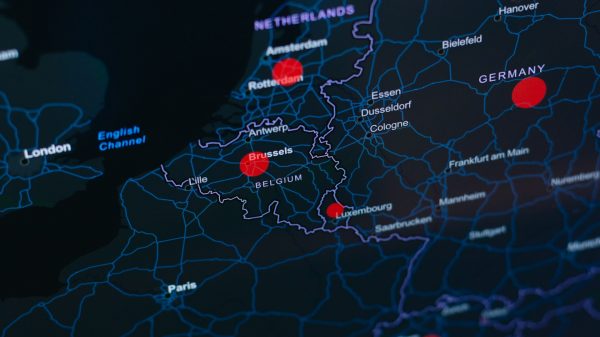
The round lands amid a broader run of European funding for AI-enabled diagnostics and adjacent MedTech in 2026. Notable comparable rounds this year include €13.6 million for Nijmegen-based ScreenPoint Medical’s AI-powered breast cancer imaging technology, €2.8 million for Swiss image-analysis startup Moonlight AI, €16.6 million for Cambridge-based respiratory diagnostics company TidalSense, €10 million for French-Belgian neurodiagnostics startup neuroClues, and €24 million for Eindhoven-based ShanX Medtech. A same-country comparator is Lund-based MedVasc, which raised €2.2 million this year to advance its anesthesia catheter toward US approval.
Together, these selected 2026 diagnostics and adjacent MedTech financings add up to almost €70 million, underscoring continued investor appetite across medical imaging, early disease detection, clinical diagnostics, and regulatory-stage MedTech.
The Team and the Technology
Founded in 2025, Eyedentity is developing AI technology designed to detect serious eye diseases from fundus images already captured during routine eye examinations. The founding team combines expertise in ophthalmology, machine learning, and company building: Gustav Stålhammar, co-founder and CSO, is an ocular oncologist at St. Erik Eye Hospital and Professor at Karolinska Institutet, while co-founder and CEO Mats Holmström is a machine learning engineer previously at RaySearch Laboratories, where he worked on machine learning applications for automating cancer care.
The company’s first application targets uveal melanoma, a rare but potentially deadly form of eye cancer that can be difficult to distinguish from benign conditions, particularly in its early stages. Uveal melanoma is the most common primary intraocular cancer in adults, yet remains rare compared with other cancers overall — and a central diagnostic challenge is that suspicious lesions can closely resemble benign eye conditions, which are far more common. That makes accurate triage especially important whenever routine eye imaging turns up a suspicious finding.
For Eyedentity, opticians provide an existing route to assess a much wider population without having to build separate screening infrastructure. The startup is also part of the Karolinska Institutet Innovation Incubator, which supports science-based companies on business development, financing, strategy, and investor readiness.
Mats Holmström described how that connection translated into the round itself: “One of the things we really value about being part of the KI Incubator is that the support goes beyond advice. It also creates opportunities to meet people who can genuinely make a difference to the company. We first connected with Norrsken when we pitched at Karolinska Institutet Innovation InvestorDay, and it is great to see how that opportunity developed into an investment.”
How It Works
Eyedentity’s approach is built to work within the infrastructure opticians already have. During a routine examination, an optician can upload existing fundus images to the company’s platform, which analyses them and provides decision support on whether the patient should be referred to a specialist — without requiring opticians to buy new imaging equipment or run a separate screening process.
The company says its system can reduce false-positive referrals by 90%, which could help specialist eye-care services prioritize the patients who genuinely need further investigation while cutting down on unnecessary referrals and the anxiety that comes with them.
What’s Next
Eyedentity is currently running a live pilot with Synologen, a network of independent opticians in Sweden, and plans to move from this initial pilot toward commercialisation in the Nordics, followed by expansion across Europe and the US.
Holmström laid out the roadmap: “It’s about finding clinical partners, building a product for opticians, eye clinics and hospitals, starting new commercial collaborations with medical record systems to make it as smooth as possible – the goal is zero clicks for the optician. Then we want to build a product for other eye diseases and beyond that, take over Europe and the US.”
The new capital will go toward working through full regulatory approval for Eyedentity’s first product, developing additional diagnostic capabilities, and growing the team as the startup prepares for wider commercial deployment. Beyond uveal melanoma, the company plans to extend its platform to other eye diseases, including diabetic retinopathy and glaucoma, with the longer-term ambition of building an AI diagnostics platform that supports opticians, eye clinics, and hospitals across multiple conditions rather than a single disease.
Source: EU-Startups