


















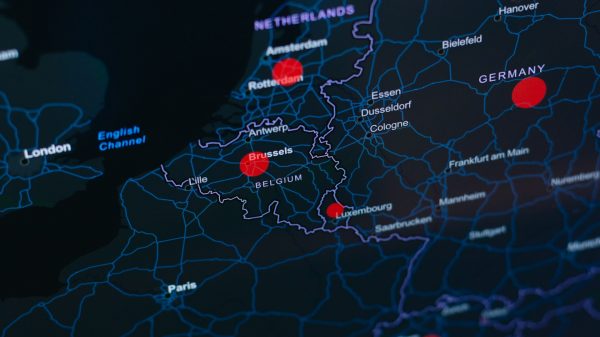
























Europe’s fintech scene has stopped being a UK story with a few continental footnotes. Some of the bloc’s most important payments, banking, and infrastructure companies are now built and headquartered inside the EU itself — from Amsterdam to Tallinn to Copenhagen. Here are the founders shaping where EU fintech goes next.
1. Pieter van der Does & Arnout Schuijff — Adyen (Netherlands)
Adyen is the closest thing the EU has to a payments backbone. <cite index=”1-1″>The company runs a global payments platform processing transactions for companies including Netflix, Spotify, Uber, and eBay</cite>, and it’s listed on Euronext Amsterdam with one of the largest market caps in European fintech. What makes Adyen a founder story worth studying isn’t hype — it’s discipline. Van der Does and Schuijff built infrastructure-grade plumbing rather than a flashy consumer app, and that unglamorous choice is exactly why banks and enterprises trust it at scale.
2. Valentin Stalf — N26 (Germany)
N26 helped invent the “bank in your pocket” category for continental Europe, and Stalf remains one of the founders most associated with dragging German banking culture into the smartphone era. Building a licensed bank from scratch inside the EU’s regulatory environment — rather than around it — has made N26’s journey a template (and cautionary tale) for every neobank that followed.
3. Sander Janca-Jensen, Rasmus Hellmund Carlsen, Peter Lüth & Rasmus Busk — Flatpay (Denmark)
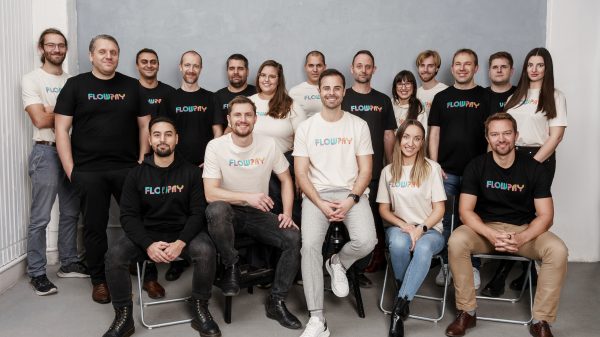
Flatpay is proof that “boring” fintech can still be the fastest-growing thing in the room. <cite index=”5-1″>The company’s revenue climbed from $35M to $140M ARR over twelve months, a roughly 400% year-over-year increase</cite>, and it recently <cite index=”5-1″>reached unicorn status after a $170 million round valuing it at $1.7 billion</cite>. The founding team’s focus — fair, transparent card payments for small brick-and-mortar businesses — is a reminder that unglamorous SME infrastructure is still wide open territory in the EU.
4. Andrey Petrov, Oleg Laguta, Konstantin Stiskin & Yakov Novikov — Finom (Netherlands)
Finom’s founders had already built a neobank once before (Modulbank), and <cite index=”5-1″>they used that experience to build an Amsterdam-based challenger bank for European SMEs, doubling revenue and closing a €115 million Series C</cite>. It’s a useful data point for the “second-time founder” thesis: the team that already knows where the regulatory and product landmines are tends to move faster the second time around.
5. Jacqueline van den Ende — Carbon Equity (Netherlands)
Fintech and climate tech increasingly overlap, and van den Ende sits right at that intersection. <cite index=”8-1″>She founded Carbon Equity in 2021, a fintech platform that has raised over €100 million to bring retail capital into climate technology investing</cite>. It’s a distinctly EU take on fintech: using financial infrastructure to funnel private capital toward the bloc’s climate targets, not just to make payments faster.
6. Jessica Holzbach — 0TO9 / Bank of Entrepreneurship (Germany)
Holzbach’s path is the founder-turned-builder-turned-investor arc in miniature: <cite index=”8-1″>she co-founded Penta, which was acquired by Qonto, then founded Pile, which was also acquired, and now leads 0TO9, a bank of entrepreneurship focused on the next generation of regulated European financial services</cite>. Her current focus — building regulated fintech infrastructure rather than another consumer app — reflects where a lot of experienced EU founders are placing their bets in 2026.
7. The Mifundo Team (Estonia)
Cross-border credit scoring is one of the EU’s quiet, structural fintech problems: a freelancer or migrant worker with a spotless credit history in one member state often looks invisible to a bank in another. <cite index=”12-1″>Mifundo, headquartered in Tallinn and founded in 2022, tackles this by helping banks serve cross-border and foreign customers</cite> — a segment that’s easy to underestimate until you remember how much of the EU’s workforce actually moves between countries.
Why this list matters
Notice what’s not here: no London-based unicorns riding UK banking licences. Every founder above is building inside the EU’s own regulatory perimeter — SEPA, PSD2, the EU banking passport — which is a genuinely harder and slower game than building fintech in a single, more permissive jurisdiction. That’s exactly why it’s worth watching. The founders who make EU-native fintech work are solving compliance and interoperability problems the rest of the world will eventually have to solve too.
Know an EU fintech founder who deserves a spot on this list? StartupMafia is always tracking the next name to watch.