










































Oslo has the money. Trondheim has the technology.
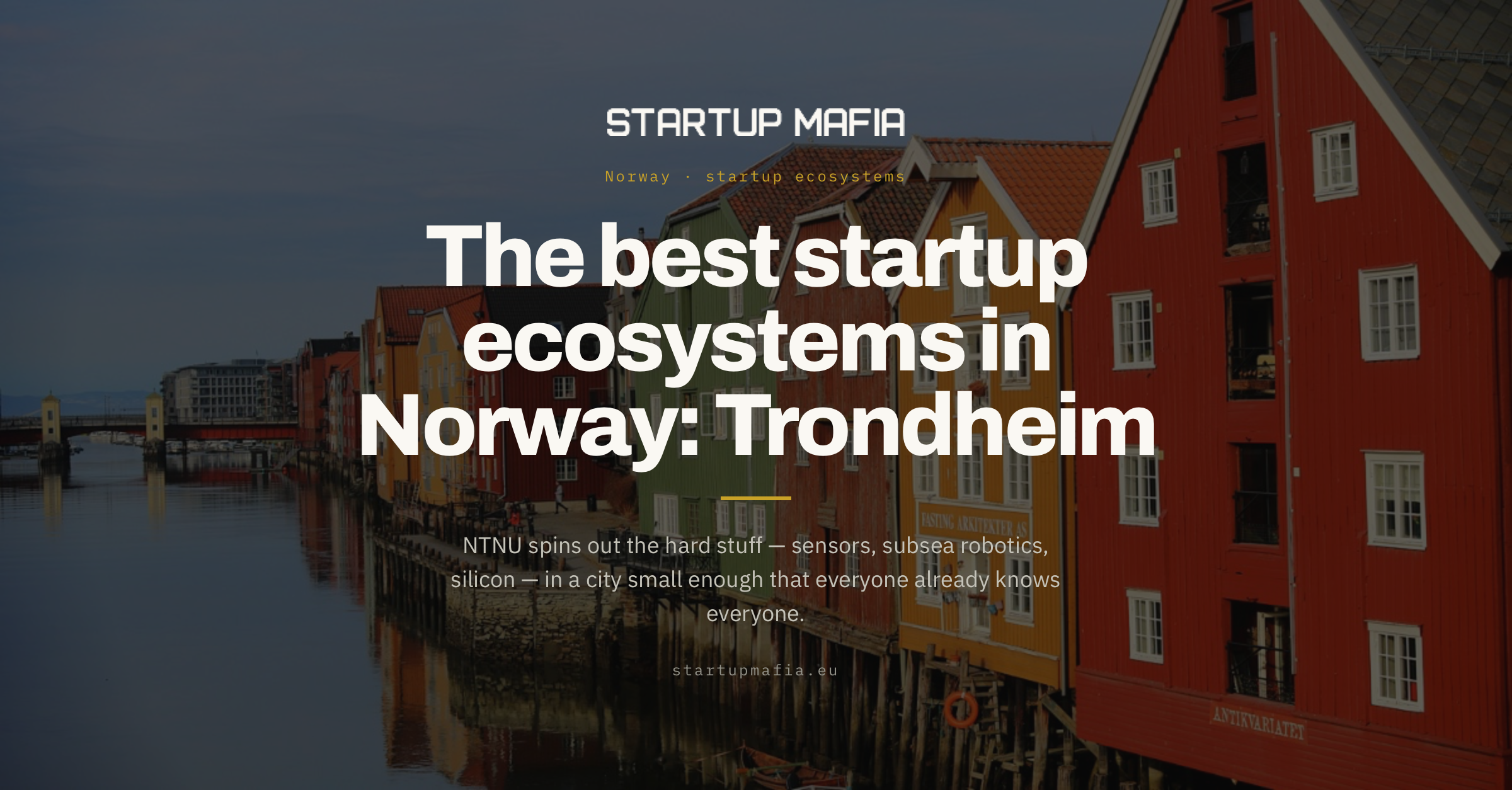
That is the cleanest way to understand Norway’s second startup ecosystem. Trondheim is a city of roughly 210,000 people in which something close to one in five residents is a student, and where two institutions — NTNU and SINTEF — function as a single industrial research machine that produces more hard technology per capita than anywhere else in the country.
It is also the Norwegian ecosystem with the most obvious structural flaw, and the one nobody in Trondheim particularly wants to talk about. We’ll get to that.
1. The scale of the research base
Numbers first, because in Trondheim the research numbers matter more than the startup numbers.
NTNU has around 43,500 students across Trondheim, Ålesund and Gjøvik, with more than 37,000 in Trondheim itself. It is Norway’s national university for engineering and technology, successor to NTH, the country’s pre-eminent engineering school founded by Parliament in 1910. Standout Capital calls it the largest tech university campus in the Nordics, with some 39,000 students in technology and natural sciences focused on IT, health, energy and ocean space. NTNU staff run around 2,000 R&D projects a year.
SINTEF, headquartered in Trondheim, is the largest independent research organisation in the Nordics with roughly 2,000 employees working across digitalisation, ocean space, health and energy.
The two together form something unusual. As Haakon Skar of NTNU puts it, it is a Norwegian tradition for companies to outsource research to academic institutions — unlike Sweden, where industrials typically run their own R&D. That habit turns NTNU and SINTEF into the R&D department for a large slice of Norwegian industry, and makes Trondheim the place where commercially relevant technology actually gets invented.
The output. Over the last decade, more than 140 tech companies have emerged from the communities around NTNU and SINTEF, with 50 to 70 new tech companies established every year and around 13,000 people working in tech across the region.
The startup count. Narrower databases are less flattering — StartupBlink tracks 76 Trondheim startups, and Failory lists 51 worth watching. As with Oslo, the gap is definitional. The research pipeline is unambiguously large; the number of companies that reach venture scale is small.
Global corporates have noticed. Microsoft, Oracle, Verizon, Siemens, Rolls Royce and SAP all have offices or subsidiaries in the region, which has caused tech clusters to form around shared office buildings.
2. What Trondheim is actually good at
Trondheim’s specialisms are narrower than Oslo’s and considerably deeper.
Ocean technology and maritime autonomy
This is the crown jewel. Trondheim generates roughly 12 to 15 maritime technology patents per 100,000 inhabitants annually, against 3 to 4 in Oslo. NTNU’s marine technology department feeds 180 master’s graduates and 25 PhDs into the domestic maritime sector every year.
The Ocean Autonomy Cluster reports NOK 3.8 billion in combined member revenues with 12% year-on-year growth. The Marine Technology Centre incubator alone hosts 35 to 40 SMEs employing roughly 600 people in subsea sensors, ROV tooling and ship design software, alongside Kongsberg Seatex’s 120-person positioning and hydroacoustics team and Equinor’s 200-person research centre.
The cluster is attracting international attention beyond commercial partners: in 2026 a delegation of US Navy representatives and American ocean technology and maritime defence companies visited Trondheim and Trøndelag as part of a trade mission organised by TMA BlueTech with the Ocean Autonomy Cluster, with demonstrations at Nyhavna and visits to NTNU and SINTEF environments. The combination of companies, NTNU, SINTEF and the cluster was described as a very strong foundation for innovation and deployment.
Semiconductors
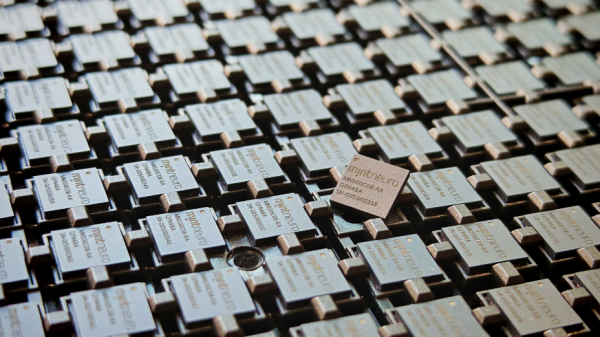
Trondheim has a chip lineage most people outside Norway have never heard of.
Nordic Semiconductor was founded in 1983 as a spinout from NTNU, as Nordic VLSI. It is now a listed fabless company headquartered in Trondheim, with revenue of around $542.9M in 2023 and over 1,500 employees, focused on ultra-low-power wireless.
Falanx Microsystems was spun out of a 1998 NTNU research project, founded in 2001, and acquired by ARM in June 2006. It became Arm Norway, now the company’s largest design centre in Europe outside Cambridge, with around 250 engineers from 36 nationalities across Trondheim and Oslo, and the hub for Arm’s Mali and Immortalis GPU architectures.
The broader Norwegian chip story follows the same shape: Chipcon went to Texas Instruments (for $200M in January 2006), Energy Micro to Silicon Labs, Neo Monitors to Nederman, Sensonor to Safran, and Atmel Norway became Microchip Technology Norway.
Note the pattern. Hold that thought.
Robotics and industrial hardware
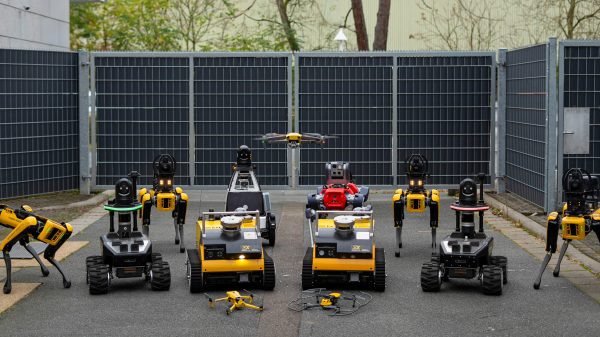
Alva Industries (high-performance electric motors for aerospace and marine), Trener Robotics, ScoutDI (the Scout 137 drone for inspecting confined industrial spaces, eliminating scaffolding and climbing), Eelume (snake-like robots for subsea inspection and repair), and Blueye Robotics, whose underwater drones film to 500 metres and were used to map the damage to the Nord Stream pipeline.
Trondheim sits inside a wider Norwegian hardtech wave — AutoStore, Wheel.me, Omnimod, Aviant and Sonair — fuelled by NTNU engineering talent, SINTEF, and backers including Sandwater, Skyfall and RunwayFBU.
Applied AI and software infrastructure
Vespa.ai, the open-source search and AI infrastructure company, raised a $31M Series A. Signicat, in digital identity, is another long-running Trondheim name. NorwAI, the national centre developing responsible Norwegian language models, sits at NTNU and has produced NorwAI-Mistral-24B-Reasoning as a foundation for domain-trained Norwegian models now being integrated into public and private sector systems.
Medtech and biotech
CardioMech leads Trondheim funding with roughly $85M raised for cardiac surgery alternatives. Vital Things builds contactless sensors that monitor sleep and vital signs. Hugin Medical, Hydrogen Mem-tech and Nomono (a SINTEF Digital spinout founded in 2019, backed by SINTEF Venture) round out a diverse spinout base.
3. The physical map
Gløshaugen. The main NTNU campus and the centre of gravity. Trondheim Tech Port is working to establish a formal Innovation District tied to the ongoing campus development in the Elgeseter gate area.
Tyholt. The Marine Technical Centre, run by NTNU and SINTEF Ocean — and the site of the biggest infrastructure bet in the ecosystem (section 6).
Nyhavna. The waterfront district where ocean autonomy demonstrations happen.
Teknobyen and the city centre. Arm Norway’s headquarters sits in a repurposed historic bank building on Olav Tryggvasons gate, with GPU simulation labs on site.
Coworking. DIGS, run by entrepreneurs. Work-Work, aimed at game and app creators — and the site of one of the better stories in Norwegian tech. Borgar Ljosland, an NTNU alumnus and Falanx co-founder, co-founded Work-Work, which is essentially a bar with offices above it. The bar’s proceeds fund a VC called Kick-Ass.
Student spaces. Gruva and FRAM are NTNU’s student innovation arenas; Smia serves Ålesund.
4. The commercialisation machine
This is where Trondheim genuinely outperforms. The route from research result to incorporated company is unusually well-paved.
| Stage | Institution | What it does |
|---|---|---|
| Student idea | Spark* NTNU | Free guidance and regular follow-up for students developing an idea |
| Student community | Start NTNU, FRAM, Gruva | Inspiration, events, physical space |
| Idea validation | NTNU Discovery | Early-stage funding for development, verification and quality assurance of commercially viable projects |
| IP and spinout | NTNU Technology Transfer AS | Commercialises NTNU research; has access to the Research Council’s FORNY programme and NTNU’s Discovery Fund |
| Research spinout | SINTEF TTO & Venture | Spins out and co-invests in SINTEF, NTNU and other research-based companies |
| Acceleration | 6AM | Accelerator for knowledge-based startups — funding, network and incubator space in central Trondheim |
| Ecosystem | Trondheim Tech Port | Member-based organisation building Norway’s innovation output and the Innovation District |
| IP strategy | CIP – Center for Intellectual Property | Jointly governed with Chalmers and University of Gothenburg |
| Health | DRIV NTNU Health Innovation Arena | Connects students, researchers and health service users |
The track record. NTNU TTO had obtained more than NOK 1 billion for research-based innovation projects by 2018, and had filed 800 patent applications by 2020. Its spinout portfolio includes Zeabuz, Blueye, Eelume, Skarv Technologies and Norwegian Subsea.
Zeabuz is the model case: founded in 2019 as a spinoff of NTNU’s research centre for autonomous marine operations and systems, building a certifiable autonomy platform for self-driving electric urban passenger ferries, workboats, car ferries and short-sea shipping. It raised a €1.8M seed from Yinson Green Technologies and Statkraft Ventures.
If you are a researcher or PhD student sitting on something commercialisable, this pipeline is the best reason to be in Trondheim rather than anywhere else in Norway.
5. The capital
Trondheim’s funding base is smaller than Oslo’s but more specialised, and — unusually — includes the state’s growth investor.
Investinor is headquartered in Trondheim, with around NOK 4.2bn (~$500M) under management across internet, software, semiconductors, energy, cleantech, marine and life sciences, investing from early growth through expansion.
ProVenture runs three seed funds with more than a billion NOK under management, focused on young digital technology startups, and is an NVCA member.
Viking Venture specialises in B2B SaaS growth investments at Series A and beyond, with cheques from $1M to $10M+.
SINTEF TTO & Venture invests in spinoffs from SINTEF, NTNU and other research institutions, deliberately co-investing with sector-specialist VC funds.
Kick-Ass, the bar-funded fund attached to Work-Work, occupies the small and eccentric end.
From Oslo: Skyfall Ventures, Sandwater and RunwayFBU are among the most active backers of Norwegian hardtech, and they will travel for the right Trondheim deal.
Public money: SkatteFUNN (19% of eligible R&D costs, paid out in cash if you are pre-profit, capped at NOK 25M of expenses per project per year) matters even more here than in Oslo, because Trondheim companies tend to have longer, more capital-intensive R&D phases. Add the Research Council’s FORNY commercialisation programme, NTNU Discovery, and Innovation Norway’s grant ladder.
6. The big bet: the Ocean Space Centre
Trondheim’s ocean cluster has a hard physical constraint. SINTEF Ocean’s test facilities already run above 85% utilisation, driven by demand for offshore wind foundation testing and subsea cable fatigue analysis, and some commercial testing has already migrated to MARIN in the Netherlands and to Chinese facilities.
The answer is the Norwegian Ocean Technology Centre — the Ocean Space Centre — being built at Tyholt to replace facilities whose oldest laboratories date from 1939 and whose large sea basin opened in 1981. It is a NOK 2.2 billion project approaching completion, scheduled for Q4 2026, adding deep-water testing tanks and pressure chambers capable of simulating 3,000-metre subsea depths. It will be run by NTNU and SINTEF, with Statsbygg as construction client, and extends beyond the Tyholt site into installations in the Trondheimsfjord and off Hitra, Frøya and Ålesund.
For a founder building anything that goes in or on water, this is the single most important fact about Trondheim in 2026 and 2027. Prototype testing capacity is about to roughly step-change in a city where it has been the binding constraint.
7. Talent and cost
Trondheim’s talent supply is the best in Norway per krone, with caveats.
Supply. NTNU produces engineers at national scale, and Trondheim has repeatedly been named Norway’s best student city. The tech workforce in the region is around 13,000.
Cost. Cheaper than Oslo, but not cheap. One-bedroom rents run roughly 8,000–12,000 NOK a month against Oslo’s 12,000–18,000. A small 30–40 m² apartment in the city typically runs €1,000–1,500 a month, and Trondheim is among the more expensive Norwegian cities largely because nearly half the population is connected to NTNU, with around 50,000 students, staff and collaborators competing for housing each academic year.
The churn problem. Trondheim is a university town, which cuts both ways. People come and go, and so do their companies. Your best junior engineers will be excellent and will often leave for Oslo or abroad within a few years.
8. The honest problem: a high R&D floor and a low commercial ceiling
Here is the thing Trondheim has not solved.
Companies that emerge from the cluster consistently relocate their commercial headquarters once they pass around 50 employees. Trondheim keeps the R&D floor; the scaling activity that converts patents into market share happens in Oslo, Singapore or Copenhagen.
Borgar Ljosland, who co-founded Falanx before ARM bought it, confirms the same impression from the inside: companies seldom reach larger scale in Trondheim before being acquired or moving out. Lars Iversen of Technoport has argued the priority should be growing Trondheim companies to real scale and building critical mass before they get bought by a foreign giant — pointing out that Norwegian entrepreneurs have less experience scaling up.
The semiconductor list is the evidence: Falanx to ARM, Chipcon to Texas Instruments, Energy Micro to Silicon Labs, Sensonor to Safran, Atmel Norway to Microchip. Excellent technology, excellent engineering, foreign owners.
Why it happens. Three overlapping reasons. Commercial and sales talent is thinner than engineering talent. Growth capital lives in Oslo or abroad. And a technically brilliant founding team that has spent seven years inside a research centre is often more interested in the next problem than in building a 500-person go-to-market organisation.
What it means for you. If you found in Trondheim, decide early which outcome you are optimising for. A well-priced strategic acquisition at 40 people is a completely respectable outcome and the one the ecosystem is best structured to deliver. If you want to build a category leader instead, you will need to hire commercial leadership from outside the city and start international investor conversations far earlier than feels comfortable.
9. The calendar
Trondheim Tech Port runs a three-day tech and innovation festival organised by NTNU, SINTEF and the City of Trondheim, showcasing the region’s research-driven cluster in robotics, ocean tech, autonomous systems and energy, with deep-tech exhibitions, investor matchmaking and startup demos. Tickets run NOK 500–2,000.
NorwAI Innovate has been integrated into the newly established Trondheim Tech Festival as a lunch-to-lunch event over the first days — the national meeting point for Norway’s AI community.
Technoport remains the deep-tech conference brand focused on turning research-driven technological innovation into real solutions.
10. The verdict
Trondheim is the right choice if:
- You are commercialising research, especially your own. The NTNU Discovery → TTO → 6AM pipeline is the best in Norway and nothing in Oslo matches it.
- Your product touches the ocean. The patent density, the test infrastructure, the Ocean Autonomy Cluster and the incoming Ocean Space Centre are not replicable elsewhere in Europe at this concentration.
- You need hard engineering — chips, motors, sensors, robotics, control systems — and you need a lot of it relative to your budget.
- You want technical co-founders. NTNU is the densest source of them in the Nordics.
Trondheim is the wrong choice if:
- You need to raise a large round fast. Investinor and ProVenture are real, but the venture depth is in Oslo.
- Your bottleneck is commercial hiring — VPs of Sales, marketers, enterprise AEs. That pool is thin.
- You’re building software with no hardware or research component. Oslo’s customer base and investor density will serve you better.
And regardless: be clear-eyed that the ecosystem’s revealed preference is a trade sale. That is not a failure. It is simply a different game from the one Oslo or Stockholm is playing, and it is worth choosing deliberately rather than discovering at Series B.
11. A practical first 90 days in Trondheim
- If your technology originates at NTNU or SINTEF, start with the TTO. Ownership of IP, inventor rights and equity splits are much easier to settle before incorporation than after.
- Apply to NTNU Discovery for verification funding. It is designed exactly for the pre-company stage.
- File SkatteFUNN. Longer R&D cycles make the cash refund more valuable here than anywhere else in Norway.
- Get into 6AM or the Marine Technology Centre incubator depending on sector. The latter puts you next to 35–40 SMEs and 600 people already doing subsea work.
- Book test capacity early. SINTEF Ocean runs above 85% utilisation, and that will not fully ease until the Ocean Space Centre opens.
- Join the Ocean Autonomy Cluster if you are maritime-adjacent. It is the route to international delegations and pilot partners.
- Hire your first commercial person sooner than your engineering instincts want. This is the single most common Trondheim mistake.
- Build the Oslo and international investor relationship in year one — Investinor is on your doorstep, but the Series B is not.
Trondheim will not give you investors on every corner or a large local customer base. It will give you the best engineering talent density in the Nordics, a research commercialisation pipeline that actually works, test infrastructure that is about to get substantially better, and a genuine shot at building technology nobody else can build.
What it will not hand you is the commercial machine to scale it. That part you have to import.