























Duvo, the enterprise AI startup founded by Czech serial entrepreneur Tomáš Čupr, has raised a $32 million Series A led by Balderton Capital, with existing investors Index Ventures, Northzone and Credo Ventures participating. The round brings total funding to $48 million.
The money will support expansion, starting with retailers and consumer packaged goods (CPG) companies, and a push into the US.
From Online Grocer to Enterprise AI
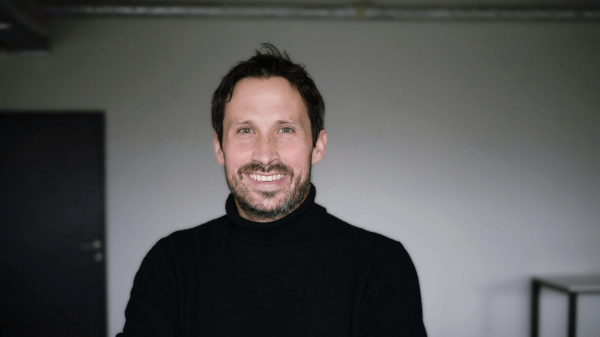
Čupr is co-founder and CEO of Duvo and the founder and Group CEO of Rohlik Group, the European online grocer valued at around $2 billion, which he founded in 2014. Duvo grew out of the frustrations he met while trying to bring AI into Rohlik.
Introducing automation into an established business proved far harder than expected. Employees struggled to explain their processes, including all the exceptions. “I’d say, ‘Let’s build these agents. What can we automate?’ But when I asked people to explain a process, including all the exceptions, it became clear that much of that knowledge lived in people’s heads,” Čupr said. Even when processes could be documented, the software often lacked APIs, and staff moved information by hand between spreadsheets, internal apps and email.
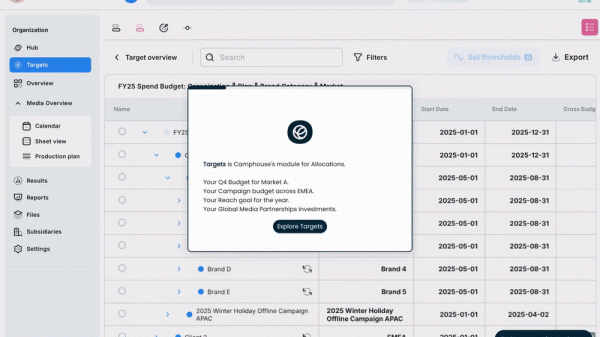
His answer was “an enterprise super app, an operating system that sits on top of existing systems and brings everything into one place.”
He decided Duvo had to be a separate company because Rohlik “could never have financed it.” Rohlik has since become a Duvo customer, and Čupr credits the technology with contributing to its operational transformation.
How Duvo Works
Duvo does not replace existing ERP or warehouse systems. It brings a company’s processes together on one platform, so multiple automations share the same software connections, approval rules and monitoring tools instead of being separate projects.
- Discovery: the Duvo Clarity tool uses AI interviews with employees, screen recordings and existing documents to learn how work is actually done, including undocumented exceptions.
- Mapping and building: AI agents map the processes, identify what can be automated and where humans are still needed, and build the automations and tailored interfaces.
- Execution: the platform carries out approved steps across ERP systems, supplier portals, spreadsheets and inboxes, using APIs where they exist and existing software interfaces where they don’t.
- Human in the loop: when a process needs input, Duvo routes the decision to the right employee, and dashboards show outstanding approvals and completed tasks.
Companies can launch a first automated process within weeks, without large engineering teams or heavy systems integration, according to Duvo.
Security and Model Choice
Duvo is model-agnostic, so customers can switch AI models without rebuilding workflows. Organisations with stricter security or data-sovereignty needs can run open-weight models on dedicated GPUs, connect models in their own cloud or on-premises, or use existing approved endpoints. The platform logs approvals and changes made to connected systems as an audit trail. Duvo holds SOC 2 Type II, ISO 27001 and ISO 42001 certifications and is available to US customers through Microsoft’s Azure Marketplace. To control costs, it picks different open-weight and proprietary models per task.
Customers and Results
Duvo works with companies including Morrisons, Holland & Barrett, Boden, Notino and Allegro. It says its technology has generated more than $100 million in value for customers across finance, supply chains, customer service, marketing and HR. These are company claims.
At online beauty retailer Notino, Duvo says reconciliation of supplier bonuses worth about $45 million a year dropped from 70 days to 15, and specialist time per cycle fell from around 120 hours to under 10.
The technology is also used in banking, insurance and energy. “A lot of agentic AI companies build agents and then ask businesses to change their operations to accommodate them. We take the opposite approach. We meet companies where they are,” Čupr said.
Čupr’s View: Productivity, Not Headcount
Čupr argues AI’s biggest payoff is productivity, not cutting jobs. “For a while I measured AI in heads, counting how many people an agent could replace. It’s the wrong unit.” At Rohlik, he said, planners used to check about eight at-risk products a day per market for shortages; now every signal is checked around the clock. “We think of it as raising the GDP of every employee: more value from the people a company has, not the same value from fewer of them.”
He is also sceptical of parts of the market. Forward-deployed engineering models, he predicts, will become hard to sustain: “We want the product itself to do the work.” He expects a correction among AI companies that have raised billions but prove too expensive to operate, drawing a parallel with the 2021 online grocery boom and the valuations of Gorillas and Getir. He agrees with Gartner’s prediction that over 40% of agentic AI projects will be cancelled by the end of 2027 because of cost, unclear value and weak risk controls. “I’m building a legacy company, not one designed to raise money quickly and sell.”
Expansion
Duvo has around 70 employees and plans to put most of the new capital into sales, marketing and partnerships. It is expanding into the US, where Čupr says customers are “more willing to try something new, but … can be less sticky” than European ones, and is exploring Asia. It is also building relationships with consulting firms such as Deloitte, BCG and Bain, which could use Duvo Clarity to find automation opportunities for their clients.
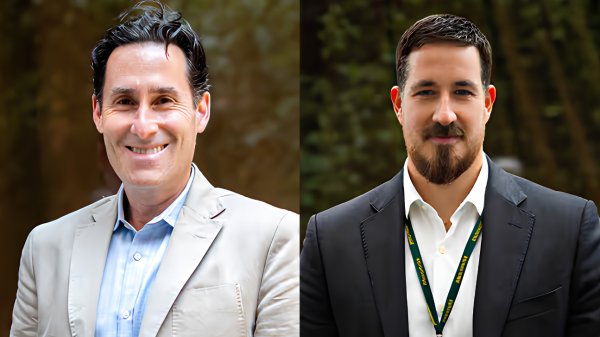
Two executives are leading the push: Michael Green, previously at Databricks and Salesforce, as Senior Vice President, Go-to-Market, and Spencer Insolia, formerly President of Kmart and Managing Director at Accenture, as Managing Director, US.
Rob Moffat, Partner at Balderton Capital, said: “Getting AI agents to work reliably across the enterprise remains incredibly difficult. Duvo’s unique ability is in how it uses AI to capture how work actually happens in the enterprise and what the causes of loss are. Duvo then automates these processes in the same integrated system. This is only possible with the deep operational experience of the founder, Tomáš.”