





































A startupmafia deep dive into Sweden’s science city, 40 minutes from the capital
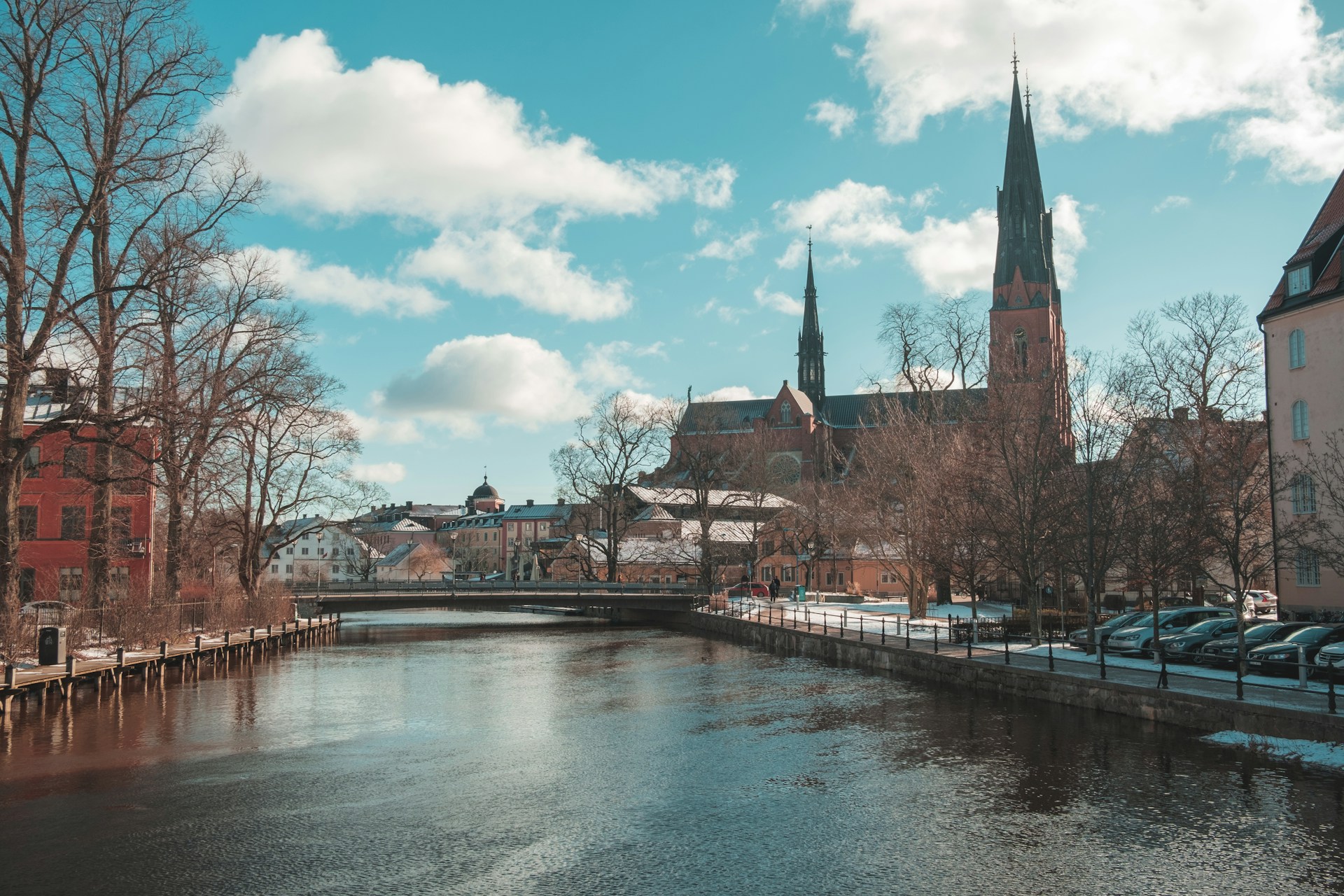
Uppsala sits just 40 minutes north of Stockholm by train, close enough that many founders and researchers commute between the two, yet it has built a startup identity that’s genuinely distinct from the capital’s. Where Stockholm is broad — fintech, consumer, gaming, AI — Uppsala is deep and narrow: it is, without much competition, Sweden’s centre of gravity for biotech, pharma, and life-science startups, built directly on top of one of Europe’s oldest and most research-intensive universities.
A small, dense, research-driven ecosystem
Uppsala doesn’t chase Stockholm’s scale, and comparing raw startup counts would miss the point. What makes it worth its own entry is density of specialisation: a disproportionate share of Uppsala’s startups sit at what founders’ base data calls the “Prototype” stage (roughly 40.5% of tracked ventures), reflecting an ecosystem still deeply anchored in translating university research into early-stage companies rather than one dominated by later-stage scale-ups. That’s not a weakness — it’s the natural shape of a science-first ecosystem, and it means Uppsala plays a different role in Sweden’s overall startup pipeline than Stockholm or Gothenburg: it’s where a meaningful share of the country’s deep science gets its first commercial legs.
Founders here also benefit from proximity without redundancy — Uppsala is close enough to Stockholm to tap into the capital’s investor networks and talent pool, but far enough to maintain its own university-centred identity and a noticeably lower cost base for lab space and early-stage operations.
What Uppsala is actually good at
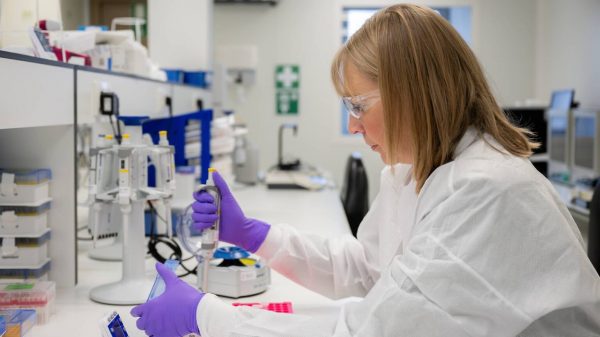
Biotech and pharma is Uppsala’s clearest specialism, and it’s not a recent trend — Uppsala University’s medical and pharmaceutical faculties have fed the region’s life-science base for decades. Startups here range across genomics, diagnostics, radiopharmaceuticals, and precision medicine. Recent and notable names illustrate the range: Olink, a proteomics and biomarker-discovery company that became one of the ecosystem’s clearest life-science success stories; Sigrid Therapeutics and Beactica, both drug-discovery and therapeutics ventures; Akiram Therapeutics, developing targeted radiopharmaceuticals for solid tumours using a precision-medicine approach; and Diamyd Medical, a diabetes-focused biotech now listed on Nasdaq Stockholm, whose early growth was directly supported by Uppsala’s incubator infrastructure.
Materials science and greentech form a growing second pillar — Altris, developing sodium-ion battery materials as a more sustainable alternative to lithium-ion production, and NitroCapt, producing fossil-free fertiliser through its SUNIFIX process, both reflect Uppsala’s engineering faculties translating directly into climate-relevant deep tech.
Enterprise and healthtech software also has a foothold — Aurora Innovation builds cloud-based contact-centre communication software, a reminder that Uppsala isn’t purely a lab-and-pipette town even if that’s its dominant note.
The institutions: UIC, Uppsala Science Park, and the university’s own machinery
Uppsala Innovation Centre (UIC), founded in 1998–1999, is the anchor institution here — an accelerator and incubator that has supported around 300 startups since inception, with 22 portfolio exits to date and a portfolio spanning life sciences, healthtech, and enterprise applications across eight countries. UIC runs a specific “Business Startup and Scale” program for science-based ventures, and works alongside specialised initiatives like BIO-X, an accelerator dedicated to life-science innovation, and local participation in EIT Health, the EU-wide life-sciences innovation partnership — giving Uppsala founders access to European funding and network channels that few Swedish regional ecosystems this size can match.
Uppsala University’s own innovation office runs a dedicated hub for students, researchers, and staff, feeding commercialisation candidates directly into UIC and the wider ecosystem — a similar model to KTH Innovation in Stockholm, but built specifically around Uppsala’s pharmacy, medicine, biotechnology, and natural-science faculties.
Innovation activity clusters physically around Uppsala Science Park, the region’s hub for life sciences and materials technology, and the newer GreenTech Park, focused specifically on sustainable-technology ventures, alongside converted industrial districts increasingly used as scaling space for growth-stage companies outgrowing incubator facilities.
STUNS is worth knowing as connective tissue rather than a startup-facing program in its own right: it’s the formal foundation for collaboration between Uppsala’s universities, the local business community, and wider society, and it underpins much of the coordination between academia and the startup ecosystem described above.
Capital and support: smaller, more specialised
Uppsala’s funding landscape is narrower than Stockholm’s but well matched to its sector focus. HealthCap and Industrifonden are the two names most consistently cited as active investors with genuine interest in Uppsala’s science-based startups, both bringing life-science and deep-tech sector expertise rather than generalist capital. Almi Invest runs a regional fund specifically connecting Uppsala’s early-stage ventures to growth capital, and angel investment is organised through Uppsala Business Angels and Connect Uppsala, both known for angels who bring direct domain expertise in pharmaceuticals, medical technology, and scientific instrumentation — arguably more valuable to a biotech founder at seed stage than pure capital would be on its own.
Innovation Night, an annual expo and matchmaking event held in Uppsala, has become a fixture bringing together the region’s startups, investors, and innovation-support organisations in one place — a smaller, more intimate equivalent to Stockholm’s larger startup events.
Why founders choose Uppsala
The pitch is straightforward if your startup is science-based:
- Direct access to one of Europe’s oldest research universities, with faculties in pharmacy, medicine, biotechnology, and natural sciences feeding technical co-founders and licensable IP directly into the ecosystem.
- Investors and angels who actually understand the science — HealthCap, Industrifonden, and the region’s angel networks bring sector-specific diligence capability that generalist Stockholm investors sometimes lack for deep biotech.
- Lower costs than Stockholm, for both lab space and living costs, while remaining close enough (roughly 40 minutes by train) to tap Stockholm’s capital markets and later-stage investor base when the time comes.
- A tightly integrated local support chain — from Uppsala University’s innovation office through UIC’s incubation programs to BIO-X and EIT Health — that’s unusually well-suited to walking a scientific discovery from lab bench to first commercial product.
The honest trade-off: Uppsala is genuinely narrow. If you’re not building in life sciences, biotech, pharma, or adjacent deep tech and materials science, there’s comparatively little sector-specific infrastructure here relative to what Stockholm or even Gothenburg can offer — and most non-science founders in the region simply default to Stockholm’s ecosystem instead.
The bottom line for founders
Uppsala is Sweden’s clearest example of a single-institution-anchored startup ecosystem — everything traces back to Uppsala University, and that concentration is exactly what makes it valuable if you’re building serious life-science or deep-tech IP. It won’t be the right base for a consumer app or a fintech play, but for a founder translating genomics, pharma, or materials-science research into a company, it may offer a tighter, more specialised support chain than Stockholm itself.
Sources: Failory, FoundersBase, Tracxn, FasterCapital, and public ecosystem data as of July 2026.