























A startupmafia deep dive into Sweden’s cross-border third city
Malmö and Lund are technically two different municipalities, but no serious account of Sweden’s tech landscape treats them separately — and neither does this one. Together with Copenhagen, just a 35-minute ride across the Öresund Bridge, they form one of the most genuinely international startup regions in the Nordics: a place where a founder can hire Danish engineers, pitch Swedish investors, and access EU life-science infrastructure, all within a single afternoon’s travel.
Sweden’s third hub, with a cross-border twist
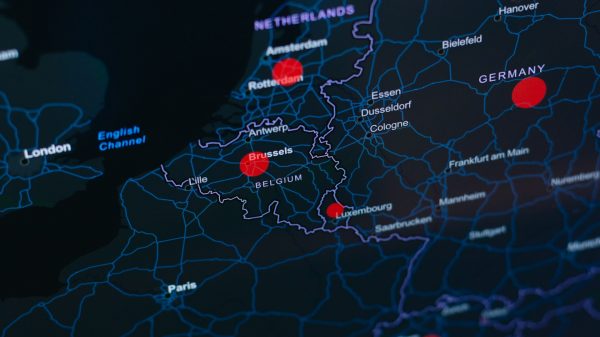
Malmö-Lund is consistently ranked Sweden’s third-largest startup region after Stockholm and Gothenburg, but its defining feature isn’t its size — it’s its geography. The Öresund Bridge physically connects Malmö to Copenhagen, and the two cities have spent two decades deliberately building a single cross-border labour market and innovation region, often branded “Greater Copenhagen” or simply “the Öresund region.” For a startup based in Malmö, that means functional access to Denmark’s capital, talent pool, and investor base without ever needing a Danish subsidiary.
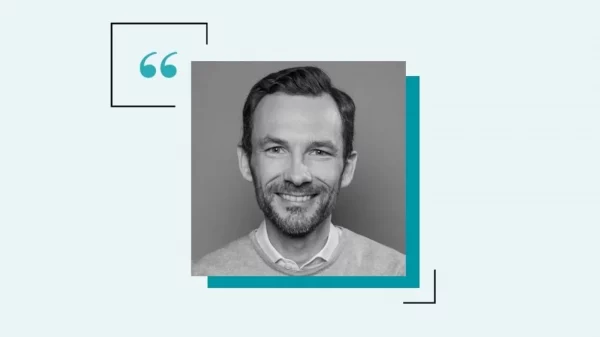
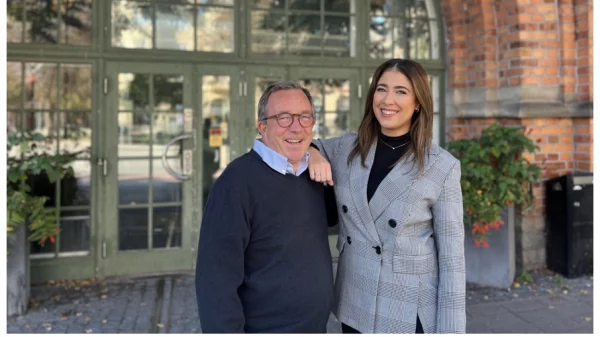
As Sanna Lindberg, Head of Communications at Malmö’s Minc incubator, put it: Malmö has positioned itself as a competitive hub thanks to its diversity, strategic location, and affordability, with its proximity to Copenhagen giving startups direct access to the wider Nordic market, investor base, and talent pool — while still offering a lower cost of living than either Stockholm or Copenhagen. That combination of international access and relative affordability is Malmö-Lund’s clearest structural advantage over Sweden’s two bigger hubs.
What the region is actually good at
Three sectors define Malmö-Lund, and each traces back to a specific institutional root.
Medtech and life sciences. This is the region’s deepest specialism, anchored by Lund University and its associated research infrastructure. The region is part of the broader Medicon Valley life-science cluster spanning both sides of the Öresund strait — one of Europe’s most concentrated life-science regions, home to major pharma R&D centres and a dense layer of biotech spinouts. Lund also hosts two genuinely world-class physics research facilities, MAX IV Laboratoryand the European Spallation Source, giving academia and industry access to advanced imaging tools that few other regions in Europe can match, and that increasingly feed materials-science and deep-tech startups as much as they feed pure academic research.
Gaming. Malmö has a real claim to being one of the birthplaces of Sweden’s gaming industry: part of the founding team behind King (the mobile games giant behind Candy Crush, later acquired by Activision Blizzard for $5.9 billion) built their early operation in Malmö before the company’s centre of gravity shifted to Stockholm and London. That legacy persists in a still-active regional gaming and creative-tech scene.
Cleantech. Between Malmö’s historic strengths in shipping and logistics and Lund’s deep engineering base, sustainability-focused startups — from clean shipping and logistics tech to materials science spinouts — have become an increasingly visible category regionally, reflecting a broader Skåne strategy of converging its traditional industrial strengths in shipping, logistics, and design with modern sustainability demands.
The institutions: Ideon, Minc, and Medicon Village
Ideon Science Park, based in Lund next to Lund University, is the single most important institution in the region — and arguably one of the most important in Sweden. Founded in 1983 as a collaboration between Lund University, the former Malmöhus county, Lund municipality, and the local business community, Ideon is the oldest and largest science park in Sweden, and in 2019 became the first UN-certified science park in the world. It occupies roughly 245,000 square metres of office and lab space across more than 17 buildings, and today hosts over 400 companies and around 10,000–11,000 people working on site. Ideon specialises in deep tech, AI, clean energy, and life sciences, and — notably — Bluetooth was invented at Ideon Science Park, developed by engineers working for Ericsson in the immediate vicinity. Sony, Ericsson, Axis Communications, Active Biotech, and Gambro have all run development centres directly beside the park. Through its Cross-border Talent Bridge initiative, Ideon has more recently doubled down on its role as a connector across the Öresund region specifically, helping attract international talent into Greater Copenhagen’s wider innovation ecosystem.
Minc, based in Malmö, is the city’s flagship startup incubator and support network, offering coaching and advice on business development, fundraising, marketing, and team building for startups with global ambitions. It works in close partnership with Ideon (the two organisations jointly ran investment initiatives together, including a dedicated angel vehicle backed by Fast Track Capital), giving Malmö-based founders a direct bridge into Lund’s deep-tech and research infrastructure even though the two cities have historically had distinct startup identities.
Medicon Village, also in Lund, is a dedicated life-science science park and co-working space that integrates research, innovation, and industry under one roof — a more specialised, medtech-and-biotech-only complement to Ideon’s broader deep-tech remit.
Other names worth knowing: Media Evolution City in Malmö, a community and co-working space focused specifically on creative, media, and tech startups; HETCH, a non-profit tech hub in nearby Helsingborg supporting around 100 startups and scale-ups; Venture Lab, Lund University’s own collaborative startup space; and Mindpark, a co-working brand with locations across Lund, Malmö, Gothenburg, and Helsingborg that has become the default flexible-office option for the region’s early-stage founders and remote developers.
Why founders choose Malmö-Lund
The clearest pitch for the region is one of access without the price tag. Founders get:
- A functional gateway to Copenhagen and Denmark — Nordic-scale talent, capital, and customer access, without relocating or setting up cross-border legal structures.
- A genuinely world-class deep-tech and life-science research base, via Lund University, MAX IV, and the European Spallation Source, at a density most European regions of this size simply don’t have.
- Lower costs than Stockholm or Copenhagen, for both living and operating a company — a real advantage for early-stage teams trying to extend runway.
- A university city’s talent pipeline, with Lund University and Malmö University (which transitioned from a college to a full university, a genuine turning point regional startup figures point to as accelerating the ecosystem’s growth) both feeding technical and commercial talent directly into local startups.
The honest trade-off: Malmö-Lund doesn’t have Stockholm’s unicorn density or its concentration of late-stage VC, and most serious growth-stage rounds still gravitate toward Stockholm-based or international investors. This is a strong place to start and to build deep technical IP — less so, currently, the default place to raise a large Series C.
The bottom line for founders
If your startup lives in medtech, life sciences, deep tech, or cleantech, and you’d benefit from proximity to world-class physics infrastructure and a built-in bridge into the Danish market, Malmö-Lund is arguably Sweden’s most underrated regional bet — a genuinely international, research-dense ecosystem that punches well above its size, at a fraction of Stockholm’s cost of living.
Sources: Startups Magazine, Invest in Skåne, Wikipedia (Ideon Science Park), Nucamp, and public ecosystem data as of July 2026.