









































































Cambridge-based semiconductor startup Clarity Sensors has secured a €2.2 million award to develop a new generation of photon-counting CT detectors designed to make advanced medical imaging more affordable for hospitals.
The Award
The money is a Product Development Award from the National Institute for Health and Care Research (NIHR)through its Invention for Innovation (i4i) programme. This is a research award, not an equity investment.
The three-year project, called PICASO, began on 1 October 2026 and runs until September 2029. Clarity Sensors leads it and receives €1.5 million (£1.3 million) of the total, with the rest going to the Science and Technology Facilities Council (STFC) Technology Department.
Dr. Hayden Salway, CEO of Clarity Sensors, said: “Photon-counting CT offers real benefits for patients, but the materials it depends on today are slow and costly to make. We grow our perovskite sensors in a matter of days at low temperature, and our initial laboratory results show they can already perform comparably with the materials in current systems. This NIHR award, and our collaboration with STFC’s detector specialists, will allow us to turn these results into a complete detector module and test it under the conditions a CT scanner demands. It is a significant step towards our goal of supplying perovskite semiconductor detector technology to CT manufacturers.”
The Problem
Photon-counting CT measures the energy of individual X-ray photons to create detailed images of tissue and materials. Compared with conventional CT, it has shown better image resolution and substantially lower radiation exposure in clinical use. That could matter especially for children and for patients who need repeated scans, such as those monitored for cancer or cardiovascular disease.
Access is still concentrated in specialist centres, partly because of the cost and complexity of making the semiconductor materials. Today’s commercial detectors use cadmium telluride and cadmium zinc telluride crystals, which can take months to grow at temperatures above 750 °C.
The Technology
Founded in 2022, Clarity Sensors builds photon-counting X-ray detectors from halide perovskite single-crystal semiconductors, which it can grow at about 40 °C in a few days. According to the company, early laboratory tests show performance comparable to existing cadmium telluride detectors on key measures, with stability under X-ray conditions relevant to CT. These are early lab results and the company’s own claims.
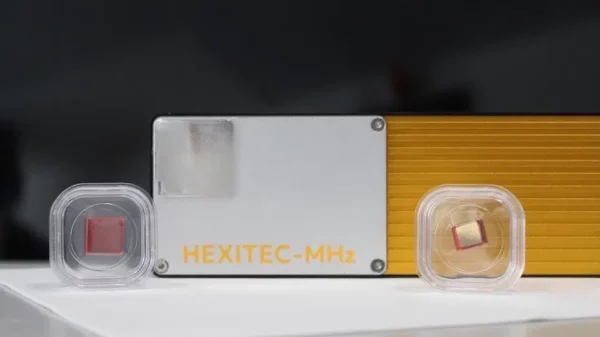
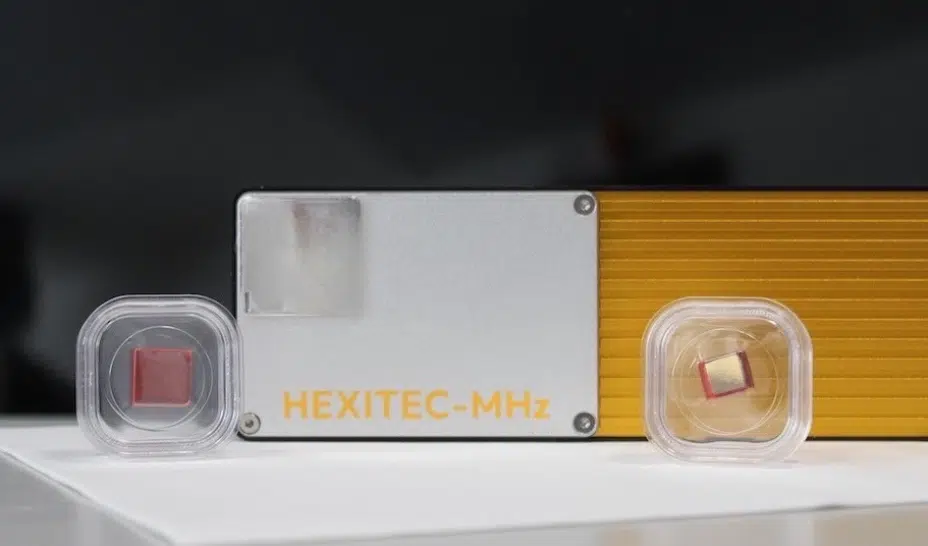
Through PICASO, Clarity will combine its sensors with the STFC’s HEXITEC-MHz readout technology, a UK-developed X-ray imaging system that can operate at one million frames per second. Dr. Matthew Veale of the STFC Detector Development Group said the combination “represents an exciting opportunity to widen access to affordable colour CT imaging.”
What the Project Includes
- Production: pilot-scale sensor production at its Cambridge facility, with quality management controls, to move from lab-scale development toward quality-controlled manufacturing
- Health economics: an examination of the economic and clinical implications of wider photon-counting CT adoption in the NHS
- Patient involvement: an advisory group and two workshops with the NIHR Cambridge Biomedical Research Centre on attitudes to CT imaging, radiation exposure and screening
If it succeeds, manufacturers could bring the technology to a broader range of healthcare settings, including district general hospitals and community diagnostic centres.
Context
The award comes amid a run of 2026 European funding for medical imaging and semiconductor-enabled health technology, including Siloton’s €9.98 million Innovate UK contract, Cerca Magnetics’ €4.3 million, MintNeuro’s €4.4 million and SamanTree Medical’s €20 million EIB financing. EU-Startups puts the group at about €38.7 million, or €40.9 million including the full Clarity Sensors award.