









































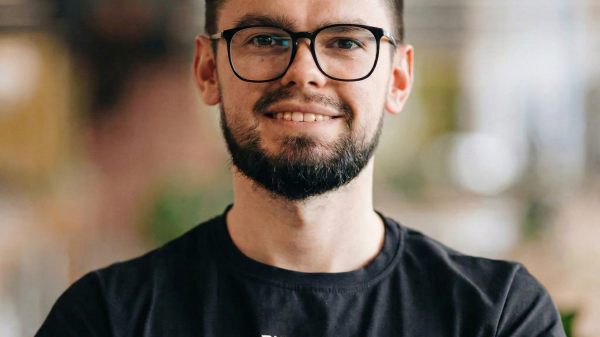










“Automation is a game-changer for growth,” says Roman K., CFO and Product Owner at a global premium baby stroller brand. “Once you automate, you finally make Excel your ex and get the freedom to actually run your business.” Behind the joke is a familiar story for any founder scaling past the first few dozen employees — the tools that got the business off the ground start actively working against it.
Wetelo, an EU-based company building custom ERP development projects and business automation platforms, has spent the past year solving exactly this problem for two very different clients. One needed to rebuild an entire supply chain around a single system. The other needed to get wholesale partners out of email threads and into a system they could use themselves.
In both cases, Wetelo didn’t start from a template. It mapped how the client’s team already worked — procurement chains, approval logic, partner relationships — and built custom business software around that, instead of asking the business to bend to a generic tool.
Where spreadsheets stop working
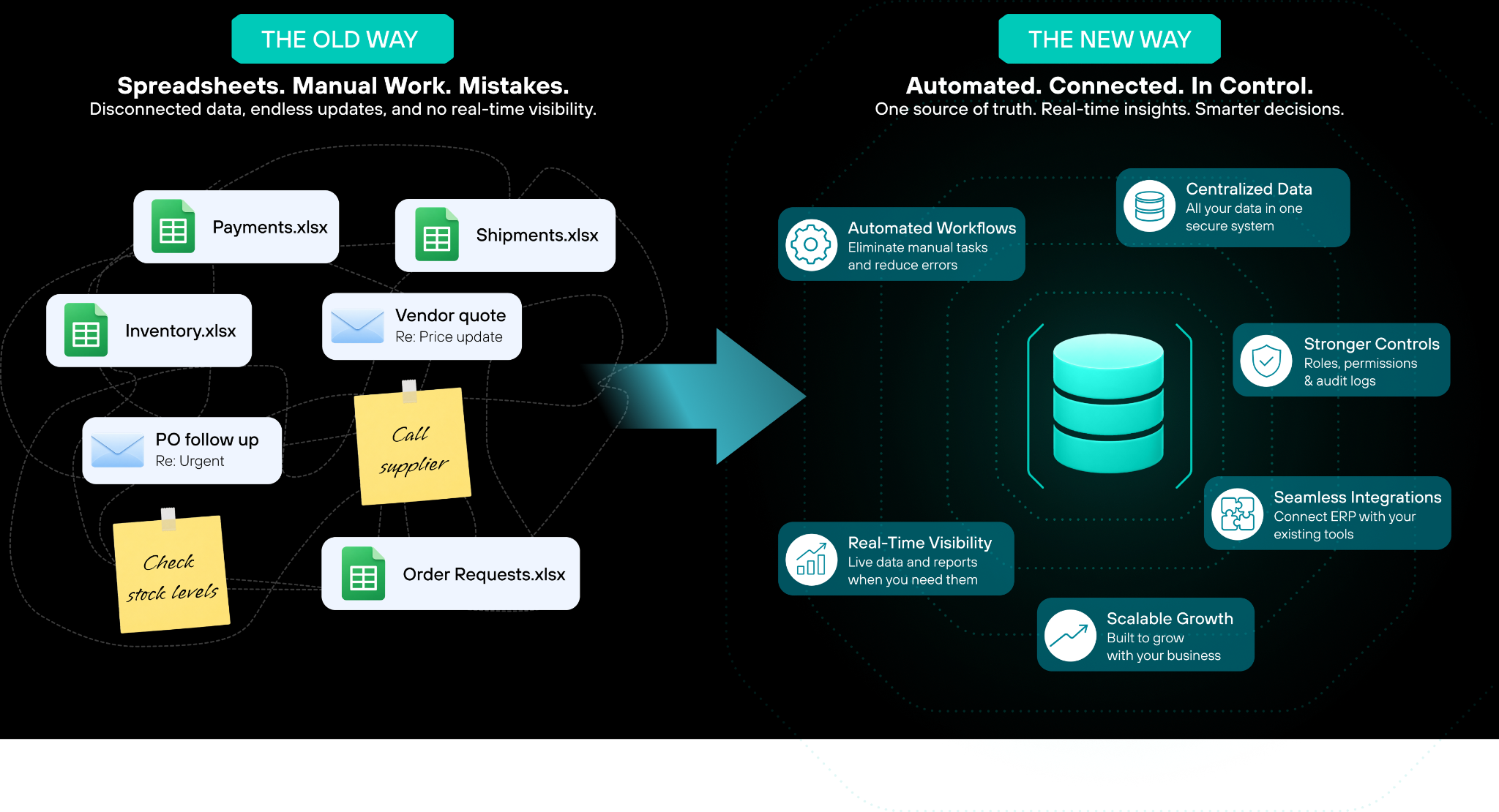
The warning signs repeat across fast-growing companies, regardless of industry. Data lives in five different places and none of them agree with each other. Stock numbers in an inventory management system go stale the moment a supplier ships early or late. Payment approvals move through email threads nobody can audit later. A manager becomes the only person who knows why an order is stuck.
None of this is a technology failure — it’s a scale failure. The processes that worked at 20 people buckle at 200, and by the time the cracks show, they’ve already cost real money and slower decisions.
Case one: rebuilding an ERP around a global supply chain
The first client, a premium baby stroller brand with factories, warehouses, and suppliers spread across several countries, ran procurement, shipments, inventory, and finance approvals across disconnected spreadsheets and email chains. Nobody had a full picture of the business at any given moment — inventory data was outdated, approvals dragged on for days, and no one could trace who had changed what.
Wetelo spent 40 weeks and 20+ sprints building a custom ERP platform that brought logistics, inventory, finance, and workflow automation into one system, shipping 17 modules across four phases — starting with core infrastructure and role-based access, ending with financial automation, invoice lifecycle automation, and cash-flow forecasting.
The results: 60% fewer manual operations, 40% faster shipment planning, 50% faster approvals, and a 90% drop in manual stock reconciliation. Financial visibility went from partial and delayed to real-time.
Case two: turning wholesale partners into self-service users
The second client faced a different version of the same problem. An international product brand with a growing network of wholesale distributors managed orders, deliveries, and invoices through Viber, email, and PDF tables. Every question a partner had — is this in stock, where’s my shipment, what do I still owe — landed on an account manager’s desk.
Wetelo built a mobile-first B2B portal in five sprints, splitting it into a partner-facing side (catalog, ordering, delivery tracking, invoices, debt) and a backoffice for internal teams (approvals, credit limits, availability by market). Fifty modules shipped in total, including integration with the client’s existing ERP system and Polish invoice compliance (KSEF).
The projected impact: 60% fewer repetitive requests to managers, 50% faster order processing, and 40% faster access to product availability — plus, for the first time, full visibility into partner debt and credit limits in one place.
What both cases have to teach founders
The two projects solved different problems — one was about internal operations, the other about external partners. Automation doesn’t remove people from the business; it removes the bottleneck of people being the only source of information. As Roman K. puts it: “Wetelo helped us build a scalable ERP ecosystem that standardized workflows, made them smoother and easier, and gave management real-time operational control.”
For a founder trying to spot the moment to act, a few signs tend to show up before the business admits it has a problem: reconciling numbers by hand at month-end, approvals that live in someone’s inbox instead of a system, and a team that can answer “what’s happening right now” only by asking around. Getting ahead of that, rather than fixing it after the fact, is usually what scalability for enterprise growth actually depends on.
For comments or interview requests: i@wetelo.com