
































































Sheffield-headquartered SCI Semiconductor, the UK company behind what it says is the world’s first memory-safe computer chip, has raised £5 million to accelerate production in response to what it describes as overwhelming demand.
The Round
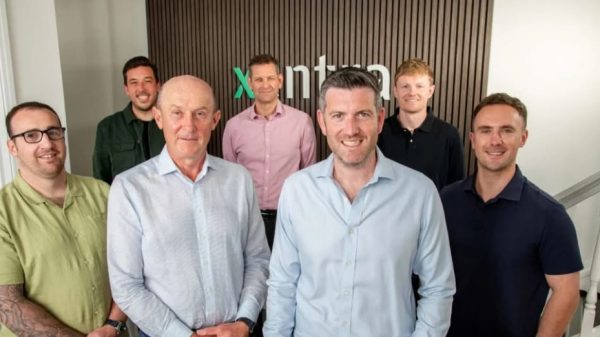
The heavily oversubscribed round was led by two Northern Powerhouse Investment Fund II (NPIF II) fund managers, PXN Ventures and Mercia Ventures, responsible respectively for NPIF II – PXN Equity Finance and NPIF II – Mercia Equity Finance. It also included investment from specialist cybersecurity seed investor Osney Capital, US-based Black Opal Ventures, and private investors. The round follows a £2.5 million investment led by NPIF II and Mercia Ventures a year earlier.
SCI Semiconductor has already fabricated its first devices and secured orders worth over £2 million. It has also won government contracts totalling £7.7 million and agreed partnerships with Google Research and Microsoft.
Haydn Povey, CEO of SCI Semiconductor, said: “The problem of memory safety is finally being taken seriously. As AI is identifying hundreds of critical vulnerabilities, it is clear that huge swathes of technology are open to attack. Additionally with so much code generated by AI, the question is how much of it is fit for purpose and what risk that could pose to systems. Memory safe technology helps overcome these challenges. Since unveiling our ICENI chip earlier this year, demand has been overwhelming. The funding will enable us to step up production and develop a new generation of chips here in the UK.”
Will Schaffer, Investment Director at Mercia Ventures, added: “SCI Semiconductor brings together some of the leading minds in the industry. They have developed an elegant solution to a trillion-dollar problem – one that has so far eluded other players – and the business has quickly gained traction. We are pleased to continue supporting them and look forward to seeing them go from strength to strength.”
Dr Elizabeth Young, Investment Manager at PXN Ventures, said: “We’re proud to be backing the SCI Semiconductor team, who are doing incredibly important work addressing rising threats to critical infrastructure and other key sectors with hardware-level cybersecurity, particularly as these threats become more sophisticated.”
Paul Wilkes, Partner at Osney Capital, added: “SCI Semiconductor is exactly the type of UK company Osney Capital seeks to support: world-leading technologists tackling global cyber security problems with commercial energy, focussed on execution. Memory safety is a genuinely massive opportunity and we are delighted to be working with Haydn and the broader team.”
The Problem
Memory safety is a factor in around 70% of cyber attacks. Traditional software allows memory to be freely accessed, giving developers flexibility but creating vulnerabilities hackers can exploit — and meaning that coding flaws can bring down an entire system, as seen in the 2024 CrowdStrike outages.
With SCI’s approach, security is embedded directly in the computer architecture: memory is divided into trusted compartments with tightly controlled access. The company’s ICENI range are the first chips built on CHERI technology, a government-backed framework for memory-safe computing, and SCI has been appointed a core supplier in the UK government’s Accelerated CHERI Adoption Programme.
The launch comes amid concerns that AI tools capable of surfacing deep flaws in computer systems could fuel a new wave of cyber attacks, with critical infrastructure, defence, and medical sectors seen as particularly at risk. The UK’s National Cyber Security Centre (NCSC) has warned that software patching alone may not be sufficient protection and is urging companies to adopt memory-safe technology. SCI’s chip will also help users meet many of the reporting requirements of the European Cyber Resilience Act (CRA), which comes into force in September.
The Company
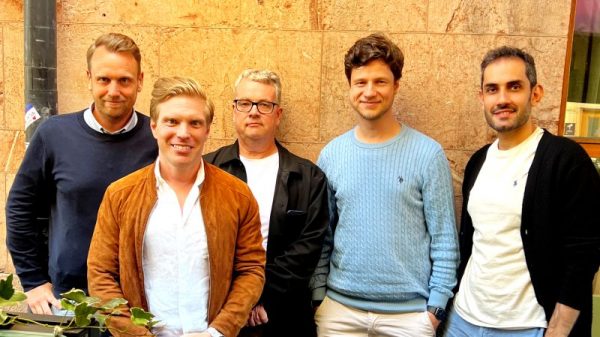
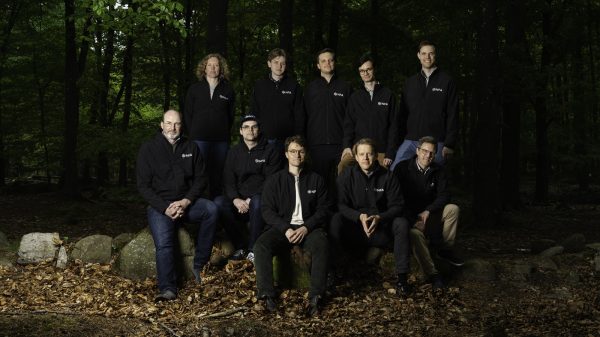
SCI Semiconductor was founded in 2022 by industry veteran Haydn Povey, Silicon Valley executive Krishna Anne, and Microsoft Research specialist Dr David Chisnall, alongside academics from the Universities of Cambridge and Manchester. The company currently employs 35 staff across its headquarters in Sheffield and its Cambridge office, with plans to create another 15 jobs over the next year. Its semiconductors are designed and packaged in the UK, with fabrication carried out in Germany.
About the Investors
PXN Ventures is the venture capital arm of PXN Group, formed when two of the North’s leading fund managers, Praetura Ventures and Par Equity, came together. With offices in Manchester, Edinburgh, Leeds, and London, PXN Ventures delivers investment programmes at scale across the Northern economy, backing founders in deep tech, life sciences, and software. Its portfolio includes Northern success stories such as Modern Milkman, Phlo, AccessPay, Street Group, and Advanced Electric Machines. Beyond its EIS, VCT, and institutional funds — including the GMC Life Sciences Fund II — PXN Ventures serves as the North West fund manager for the Northern Powerhouse Investment Fund II, managed on behalf of the British Business Bank.
Mercia Ventures is a proactive venture capital investor making equity investments of up to £10 million across all sectors, with specialisms in software, consumer, healthcare, and deep tech. It’s a trading name of funds managed by Mercia Fund Management Limited and Mercia Regional Ventures Limited, part of the Mercia Asset Management PLC Group, which also runs private equity, debt, and proprietary balance sheet operations. The Group operates 11 offices across the UK, with a 48-strong investment team drawing on backgrounds as founders, PhD scientists, software engineers, corporate financiers, and management consultants. As of September 2023, Mercia Asset Management PLC held approximately £1.5 billion in assets under management and is listed on AIM under the ticker “MERC.”
Osney Capital is a sector-specialist venture capital firm focused exclusively on the UK’s early-stage cyber sector, built around supporting UK cyber founders through their earliest stages of growth. The firm is led by founding partners Adam Cragg, Joshua Walter, and Paul Wilkes.
Sarah Newbould, Senior Investment Manager at the British Business Bank, commented on the broader mission behind NPIF II: “Through the Northern Powerhouse Investment Fund II, we are committed to improving access to finance for ambitious businesses across the North. Supporting companies like SCI Semiconductor demonstrates how NPIF II is helping to scale innovative, high-growth businesses, supporting the UK’s Modern Industrial Strategy while strengthening key technology clusters in regions such as South Yorkshire.”
About the Northern Powerhouse Investment Fund II
Operated by the British Business Bank, the £660 million Northern Powerhouse Investment Fund II (NPIF II) provides a mix of debt and equity funding, spanning smaller loans from £25k to £100k, debt finance from £100k to £2m, and equity investment up to £5 million. It works alongside Combined Authorities, Local Enterprise Partnerships (LEPs), Growth Hubs, and local intermediaries such as accountants, fund managers, and banks to support smaller businesses across the North of England at every stage of development.
The fund is open to businesses with material operations, or plans to establish them, across Greater Manchester, Lancashire, Cheshire & Warrington, Cumbria, Liverpool City Region, Leeds City Region, South Yorkshire Combined Mayoral Authority, York & North Yorkshire, Humber and East Yorkshire, Northumberland, County Durham, and Tyne & Wear. It’s supported by Nations and Regions Investments Limited, a subsidiary of the British Business Bank, itself a development bank wholly owned by HM Government.