









































How the Estonian government has built trust with its people
By Mike Southon,
All political parties promise freedom, prosperity, and a great quality of life. At election time, the only question for voters is: ‘do we trust them?’ In Estonia, the government’s original and creative approach for enhancing long-term trust with their electorate was to combine Justice with Digital Affairs.
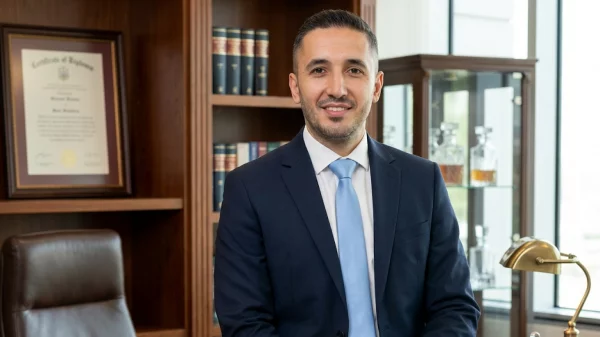
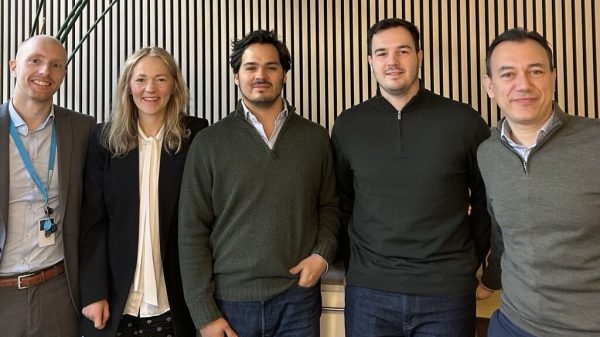
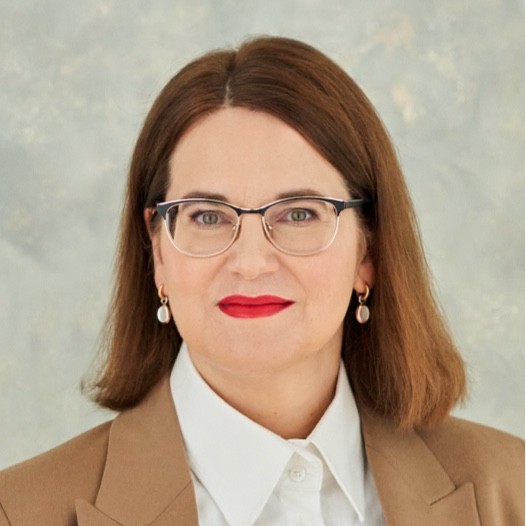
I met with Liisa Pakosta the Minister responsible for delivering this complex brief.
The mission statement on her LinkedIn profile says:
“As Minister, I lead the ministry in building the world’s most efficient fully digital state, providing secure digital services while safeguarding fundamental rights, freedoms, and democracy grounded in the rule of law.
My role includes strengthening Estonia’s digital infrastructure and cybersecurity resilience against evolving threats, ensuring effective coordination in combating crime, and upholding swift and efficient legal proceedings with accessible, high-quality legal assistance.
I focus on creating a robust foundation for economic growth by protecting economic rights, fostering fair competition, ensuring effective enforcement processes, and maintaining high standards for notarial services and state registries—all while promoting forward-thinking HR policies to attract, retain, and empower ambitious colleagues.”
She explained that the Estonians had inherited a corrupt and broken justice system in 1991, when they emerged from the former Soviet Union.
They knew they had to build new prisons, focused on rehabilitation not punishment. Dealing with endemic corruption was more complex but was greatly assisted by their radical move to becoming an e-Economy, where everything government and finance-related was moved on-line.
Central to this was the acceptance of this process by an electorate formerly used to a corrupt and controlling government. They had to be shown that having an e-identity, owned by themselves not the government, would bring significant benefits.
The Estonian government was greatly assisted by the banking industry, who enabled ease of use with unbreakable electronic security. The medical system was fully automated, with every citizen firmly in control of their own data and given swift access to the right care, fuelled by leading-edge diagnostics.
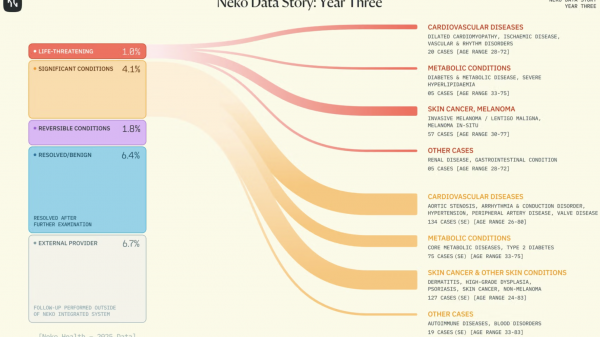
In the world of medicine, prevention is better than cure, so the Estonians have integrated a genome project, allowing citizens to identify potential future issues via their genetic data.
The key outcomes of this entrepreneurial approach to government are half-empty prisons and the fact that since 2000, Estonia’s life expectancy has increased more than any other EU country.
I just spent a week in Estonia and some people I met were sceptical that the merger of Justice and Digital Affairs would be a success. The challenge that every entrepreneur faces is scepticism. We are used to being told ‘that will never work’, and then proving the doubters were wrong.
I have spent my long career as a large company entrepreneur (or ‘intrapreneur’) dealing with sensible objections and overcoming them by delivering tangible outcomes such as increased revenue, reduced cost, or both.
Estonia is unambiguously the most entrepreneurial country on earth. It has more unicorns (billion-dollar valuation companies) per capita than anywhere else. When you meet government officials there is a significant chance that they will have real-life commercial experience. If not, they are invariably advised by people who do.
An excellent example of this approach in action is the very existence of the Accelerate Estonia programme under the Ministry of Economic Affairs and Communications, whose compelling tagline is ‘making illegal things legal’.
They create policy recommendations for the Estonian government that help companies overcome regulatory barriers and unlock new markets.
Headed up by serial entrepreneur Olari Püvi, who commented: “Our job is to ensure regulatory obstacles which are blocking societal or economic value,
are removed wherever possible. The idea is that, instead of changing new products to fit the regulations, let’s change the regulations so that new innovative solutions can come to market”.
I also spoke at the Future of Education Summit, which was focused on recent advances in Education Technology and Artificial Intelligence. This was organised by Alistair Starling of European Diplomats, who ensured the agenda did not just extol the wonders of new technology, but also addressed sensible concerns around privacy and regulation.
Mr Starling explained: “The intersection between education and technology is extremely exciting right now because of its significance in preparing learners for a world where global politics is as hot as it has ever been. Estonia is the place to debate such things being at the top of the OECD Pisa school rankings.”
It could be argued that Estonia is one of the most regulated countries on earth. Unless you have an e-Identity you cannot do even the simplest things such as make significant purchases or access medical care.
But the upside is that uncontrolled inward economic migration is not a problem in Estonia. Their borders had to be closed to counter the very real threat of Russian invasion. Those migrants who show that they do add genuine value, and commit to learning the language, are issued with the same e-identity as a newly born Estonian child, thus immediately receiving all the key benefits.
But for the rest of us, the Estonian Government offers e-Residency, which, while not offering a passport or the right to live there permanently, enables you to form an EU-based business.
This took me less than an hour to complete, and I’m raring to go! The major selling point for me is never having to fill in a tax form ever again. The system does it automatically.
I can just concentrate on running my business.
As Ms Pakosta says:
“Trust is the foundation of Estonia’s effective digital state. People trust the government with their data because they know it is protected by very high cybersecurity standards.
They can also track precisely who has accessed their data and, most importantly, both individuals and businesses benefit, from seamless and fast services to the point where government bureaucracy goes unnoticed.
In the current geopolitical context, the reliability of the state is crucial for safeguarding democracy.”
You can find details of Estonian e-Residency here: https://www.e-resident.gov.ee